



















|
Getting your Trinity Audio player ready...
|
By: Tzirel Rosenblatt
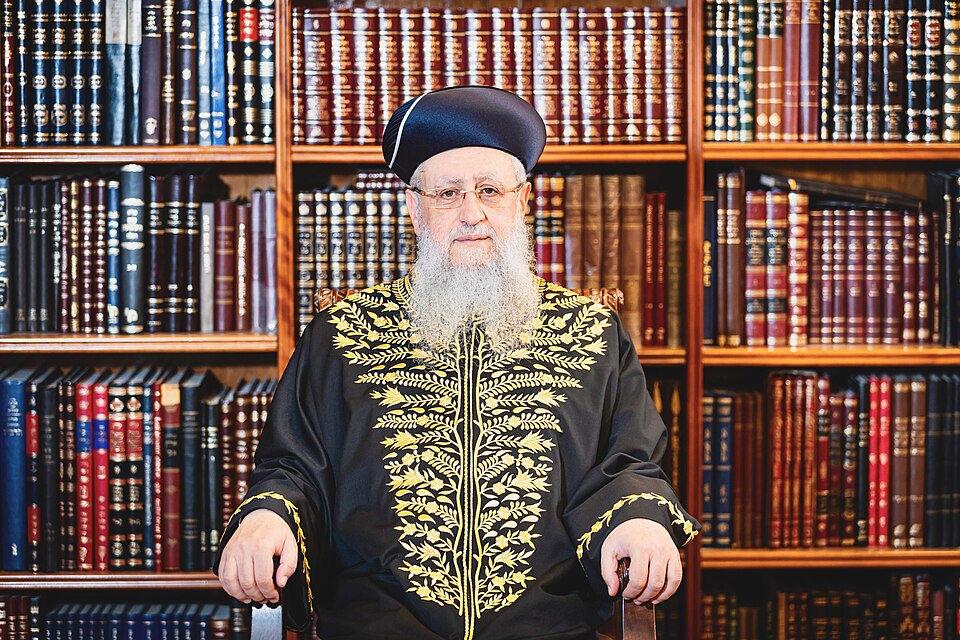
In a deeply impassioned address that has resonated across religious and civic spheres alike, Harav Dovid Yosef, Shlita,the Rishon L’Tzion and Chief Rabbi of Israel, issued a powerful call for renewed commitment to Shabbos observance, urging not only the Jewish public in Israel and throughout the Diaspora but also the highest levels of Israeli leadership to embrace and amplify a message recently articulated by President Donald Trump. The remarks, delivered during his weekly shiur on Motzei Shabbos and reported on Saturday evening by Yeshiva World News, reflect a convergence of religious exhortation and contemporary political symbolism that has drawn widespread attention.
Speaking with evident emotion, Harav Yosef framed his appeal within the broader context of a proclamation issued earlier in the week by the White House, marking Jewish American Heritage Month 2026 and commemorating the 250th anniversary of the United States. In that proclamation, President Trump expressed what he described as profound admiration for Jewish tradition and explicitly encouraged Americans to honor Shabbos as a day of rest and reflection.
For Harav Yosef, the significance of this gesture extended far beyond its immediate ceremonial context. According to the Yeshiva World News report, the Chief Rabbi interpreted the statement as a moment of spiritual opportunity—an invitation for Jews worldwide to reaffirm their connection to one of the most foundational elements of Jewish life.
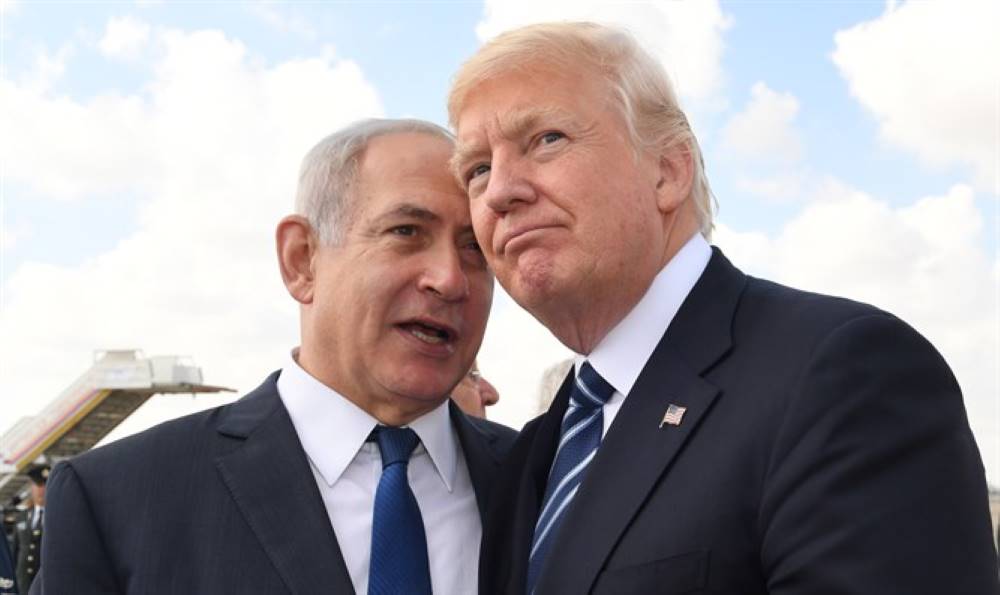
“I first and foremost expect and call upon the President of the State and the Prime Minister of the Jewish State to join the call of the President of the United States, at the very least here in Eretz Yisroel,” Harav Yosef declared, his words conveying both urgency and conviction. The appeal, as highlighted by Yeshiva World News, was directed toward Israel’s senior leadership, urging them to publicly align themselves with the message articulated by Washington.
The Rabbi’s invocation of Shabbos was not merely symbolic. Drawing upon classical Jewish sources, he referenced the well-known teaching of Chazal that “if Klal Yisroel keeps two Shabbosos, they will immediately be redeemed.” This citation, as noted in coverage by Yeshiva World News, served to situate his appeal within a theological framework that links collective observance to the ultimate redemption.
Harav Yosef’s remarks were delivered in proximity to Shabbos Parshas Bamidbar, a time traditionally associated with preparation for the festival of Shavuos. Often referred to as “Shabbos Kallah,” this period carries profound spiritual significance, symbolizing the anticipation of Kabbolas HaTorah. By invoking this context, the Chief Rabbi underscored the timeliness of his message, framing it as part of a broader call to spiritual renewal.
The Rabbi’s appeal extended beyond Israel’s borders, encompassing Jewish communities across the globe. “How important it is that we all unite around Shabbos Kodesh,” he emphasized. “If a non-Jew respects our religion so much and even calls upon non-Jews to rest on Shabbos, then certainly we Jews—who have the Torah, our tradition, and the precious gift called Shabbos Kodesh—should unite around keeping Shabbos.”
This statement, repeatedly cited by Yeshiva World News, encapsulates the dual dimension of his message: a recognition of external acknowledgment of Jewish values and a corresponding call for internal cohesion and commitment. The juxtaposition of these elements—external respect and internal responsibility—forms the crux of his argument.
The Chief Rabbi’s remarks have sparked discussion regarding the interplay between religious observance and public leadership in Israel. By explicitly urging the President and Prime Minister to endorse the call for Shabbos observance, Harav Yosef has introduced a dimension of public accountability into what is often considered a matter of personal religious practice. As the Yeshiva World News report observed, this aspect of the appeal reflects an expectation that national leaders serve not only as political figures but also as exemplars of Jewish identity and tradition.
At the same time, the Rabbi’s message resonates with broader themes of unity and continuity. In an era characterized by social fragmentation and ideological division, the concept of a shared day of rest offers a potential focal point for collective identity. Shabbos, in this sense, is presented not merely as a religious obligation but as a unifying institution capable of bridging differences and fostering a sense of communal belonging.
The reference to President Trump’s proclamation adds an additional layer of complexity to the discourse. The acknowledgment of Shabbos by a non-Jewish leader, particularly one occupying the highest office in the United States, carries symbolic weight. For Harav Yosef, as conveyed through Yeshiva World News, this acknowledgment serves as both a validation of Jewish tradition and a catalyst for renewed observance.
The broader implications of this development extend into the realm of interfaith relations. The recognition of Shabbos as a day of rest aligns with universal themes of reflection, family, and spiritual renewal, suggesting points of convergence between Jewish and broader societal values. Harav Yosef’s emphasis on this aspect highlights the potential for shared understanding while simultaneously reinforcing the distinctiveness of Jewish practice.
Within Israel, the response to the Rabbi’s appeal is likely to be shaped by a range of factors, including political considerations, societal attitudes toward religion, and the ongoing debate over the role of tradition in public life. As the Yeshiva World News report noted, the question of how leaders respond to such calls carries both symbolic and practical significance.
For many observers, the Chief Rabbi’s address represents a moment of convergence between past and present, tradition and contemporary reality. By invoking ancient teachings while engaging with current events, Harav Yosef has articulated a vision that seeks to connect historical continuity with modern expression.
His concluding words encapsulated this aspiration: “In that merit, may we merit the complete redemption speedily.” This closing sentiment, as reported by Yeshiva World News, reflects the enduring hope that collective adherence to foundational principles can yield transformative outcomes.
As the Jewish world approaches Shabbos Parshas Bamidbar and the festival of Shavuos, the Chief Rabbi’s appeal serves as a reminder of the enduring significance of Shabbos as both a religious commandment and a cultural cornerstone. Whether his call will translate into widespread action remains to be seen. Yet the clarity and passion of his message have already ensured that it will occupy a prominent place in the ongoing conversation about identity, tradition, and unity in the Jewish world.
In a time marked by rapid change and uncertainty, the notion of pausing—of setting aside the demands of daily life to engage in reflection and connection—carries a particular resonance. Through his words, Harav Dovid Yosef has sought to reaffirm that resonance, inviting individuals and leaders alike to recognize the enduring value of Shabbos and to embrace its potential as a source of strength and cohesion.
As Yeshiva World News continues to report on the unfolding response to this appeal, one thing remains clear: the conversation initiated by the Chief Rabbi has tapped into a deeply rooted aspect of Jewish life, one that continues to inspire reflection and, perhaps, renewed commitment across generations.




1 Comment
Neal
May 10, 2026It’s great that the Chief Rabbi asks the President and the Prime Minister of Israel to keep the Shabbos. They should as well as the rest of the Jews around the world. It would be even better if he would ask them to eliminate the threat from Gaza as well as in other places. That is just as important as Shabbos – if not more. Keeping quiet about these threats while talking about Shabbos is not kosher. Lets not repeat the Kamtza Bar-Kamtza mistake all over again.