



















By: Carl Schwartzbaum
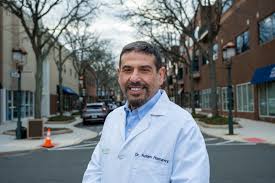
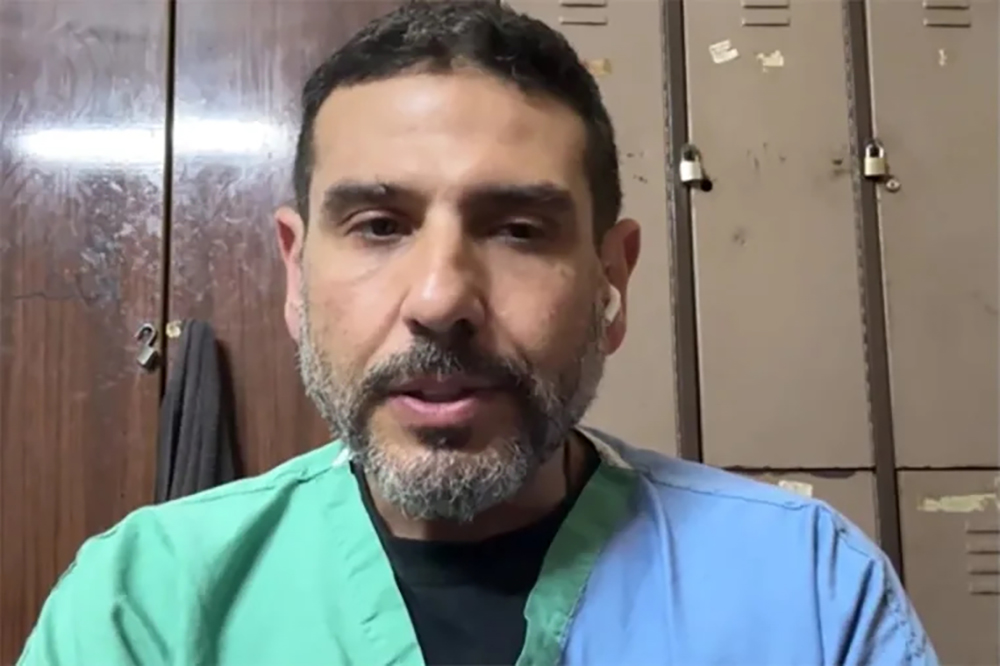
The race to succeed retiring Representative Bonnie Watson Coleman in New Jersey’s heavily Democratic 12th Congressional District has thrust Dr. Adam Hamawy into the national spotlight, not only because of his decisive primary victory but also because of renewed scrutiny surrounding elements of his personal history, foreign policy positions, and past associations that have become the subject of intense political debate.
According to report on Tuesday evening in The New York Post, Hamawy emerged as the leading vote-getter in a crowded Democratic primary field, positioning himself as the overwhelming favorite to capture the congressional seat in the general election in a district that has long been considered one of the most reliably Democratic constituencies in the Garden State.
Hamawy’s victory marks the culmination of a campaign that highlighted his military service, medical accomplishments, and humanitarian work, while simultaneously forcing him to respond to questions regarding activities and associations dating back more than three decades.
The Egypt-born physician has become widely known for his distinguished service as a combat surgeon during the Iraq War and for his role in saving the life of Senator Tammy Duckworth after a helicopter crash in Iraq. Those accomplishments have earned him significant respect among many voters and fellow veterans.
At the same time, The New York Post reported that Hamawy’s critics have pointed to aspects of his early activities in the 1990s, including volunteer work in Bosnia and his past interactions with controversial Islamic figures, arguing that voters deserve additional explanations regarding those episodes.
The resulting controversy has transformed what might otherwise have been a relatively straightforward congressional succession contest into a broader discussion about foreign policy, national security, political transparency, and the evolving ideological direction of the Democratic Party.
Hamawy’s campaign received substantial support from prominent progressive figures, helping elevate his profile nationally.
Among those endorsing his candidacy were members of the congressional progressive bloc often referred to as “The Squad,” including Representative Alexandria Ocasio-Cortez of New York, Representative Ilhan Omar of Minnesota, Representative Rashida Tlaib of Michigan, and Representative Ro Khanna of California. Independent Senator Bernie Sanders of Vermont also lent his support.
The endorsements reflected Hamawy’s outspoken positions on a range of issues, particularly his criticism of Israeli government policies and his advocacy regarding conditions in Gaza.
Those positions have resonated strongly with progressive activists but have also generated opposition among some pro-Israel organizations and national security commentators.
According to The New York Post report, Hamawy has emerged as one of the more prominent voices within a growing faction of Democratic politics that favors a significantly more critical approach toward Israeli government policies than has traditionally characterized mainstream Democratic leadership.
Among the most closely examined aspects of Hamawy’s past is his involvement during the 1990s with the Benevolence International Foundation. As reported by The New York Post and previously examined by Jewish Insider, Hamawy participated in an internship with the organization during the Bosnian conflict.
The Benevolence International Foundation later became the subject of significant federal scrutiny.
The 9/11 Commission Report described the organization’s Bosnian operations as part of what it called an “impressive array of offices” that provided support for terrorist activities associated with Osama bin Laden during the 1990s. Federal authorities further alleged in court filings that the organization served as a front through which Al Qaeda sought to establish operational capabilities in Europe.
Hamawy’s campaign has strongly rejected attempts to connect him personally to the conduct of the organization.
A campaign spokesperson characterized such criticisms as “desperate,” “absurd,” and “bigoted,” according to The New York Post report.
Supporters of Hamawy argue that efforts to associate him with later allegations against the foundation distort the historical record and unfairly attack an individual whose subsequent career has been defined by military service and medical achievement.
Nevertheless, critics maintain that questions regarding the nature of his involvement remain legitimate topics for public discussion given his candidacy for federal office.
Another area receiving renewed attention involves Hamawy’s relationship with Sheikh Omar Abdel-Rahman, the radical cleric widely known as the “Blind Sheikh.” Abdel-Rahman was convicted in 1995 on charges including seditious conspiracy after followers linked to his movement carried out the 1993 World Trade Center bombing. According to The New York Post report, Hamawy was called as a defense witness during legal proceedings involving Abdel-Rahman.
Court records cited by critics indicate that Hamawy challenged certain assertions made by government witnesses and disputed interpretations of statements attributed to the cleric.
Among the issues discussed during the trial were comments concerning “conquering the land of the infidels,” which Hamawy testified were being taken “out of context” by prosecutors.
Those courtroom appearances have become a focal point for some of Hamawy’s detractors.
Steven Emerson, founder and executive director of the Investigative Project on Terrorism, sharply criticized Hamawy’s role during the proceedings. “I think the voters of New Jersey have a right to know why Dr. Hamawy felt so strongly in defending a violent jihadist leader — the Blind Sheikh — that he repeatedly lied under oath in the 1995 terrorist trial,” Emerson said. “Dr. Hamawy’s silence until now suggests he has no qualms about his testimony.”
Hamawy’s campaign emphasized that the candidate has spent decades serving the United States and has consistently condemned terrorism and extremist violence.
A campaign spokesperson told The New York Post that Hamawy “condemns that man’s violent rhetoric and actions, and all violence, hatred, and terrorism — and he will always.”
The spokesperson further stated that Abdel-Rahman was, at the time, one of only a small number of religious figures serving New Jersey’s Muslim community and noted that Hamawy had no contact with him following his arrest. “Dr. Hamawy had no contact with this person after they were arrested,” the spokesperson said.
While critics focus on controversial chapters from the 1990s, supporters point to what they view as a far more relevant measure of Hamawy’s character: his extensive record of service to the United States. An accomplished physician and military officer, Hamawy served as a combat surgeon during the Iraq War.
His reputation grew significantly after his role in treating then-Army helicopter pilot Tammy Duckworth following the catastrophic loss of both of her legs in a combat-related helicopter crash. Duckworth later became a United States Senator and frequently credited medical personnel, including Hamawy, with helping save her life.
That record of military service has become a central component of Hamawy’s political identity.
Supporters argue that decades spent serving wounded American service members and risking his own safety in war zones should weigh heavily in voters’ assessment of his qualifications for Congress. They contend that his life story reflects dedication, sacrifice, and patriotism rather than the allegations now resurfacing from events that occurred more than 30 years ago.
Hamawy’s victory may also carry implications beyond New Jersey. His success demonstrates the continued influence of progressive activists and organizations within Democratic primary politics, particularly in districts where general-election competition is limited.
The endorsements he received from prominent progressive leaders suggest that his candidacy was viewed as part of a broader ideological movement within the party.
His positions on Middle East issues, especially regarding Israel and Gaza, place him within a faction that has increasingly challenged longstanding Democratic foreign policy orthodoxies.
As a result, his election campaign has become something of a proxy battle between competing visions of Democratic leadership, foreign policy priorities, and national security concerns.
With the Democratic primary now concluded, attention is likely to shift from campaign rhetoric to governance questions.
Hamawy enters the general election as a strong favorite in a district that has historically voted overwhelmingly Democratic.
Yet scrutiny of his record is unlikely to disappear. Questions regarding his foreign policy views, his past associations, and his vision for America’s role abroad will likely continue to attract attention from political opponents, advocacy groups, and media organizations.
At the same time, supporters will continue emphasizing his military service, medical accomplishments, and humanitarian work as evidence of a life devoted to public service.
As The New York Post report highlighted, Adam Hamawy’s rise from military physician to congressional nominee represents a compelling and complicated political story—one that combines elements of heroism, controversy, ideological transformation, and national debate.
Whether voters ultimately focus more heavily on his record of service or on the questions raised by critics may help determine not only the future of his political career but also the broader direction of Democratic politics in the years ahead.