



















Trump-Netanyahu Call Reportedly Erupts Into Extraordinary Clash as Lebanon Ceasefire Dispute Exposes Growing Strains
By: Fern Sidman
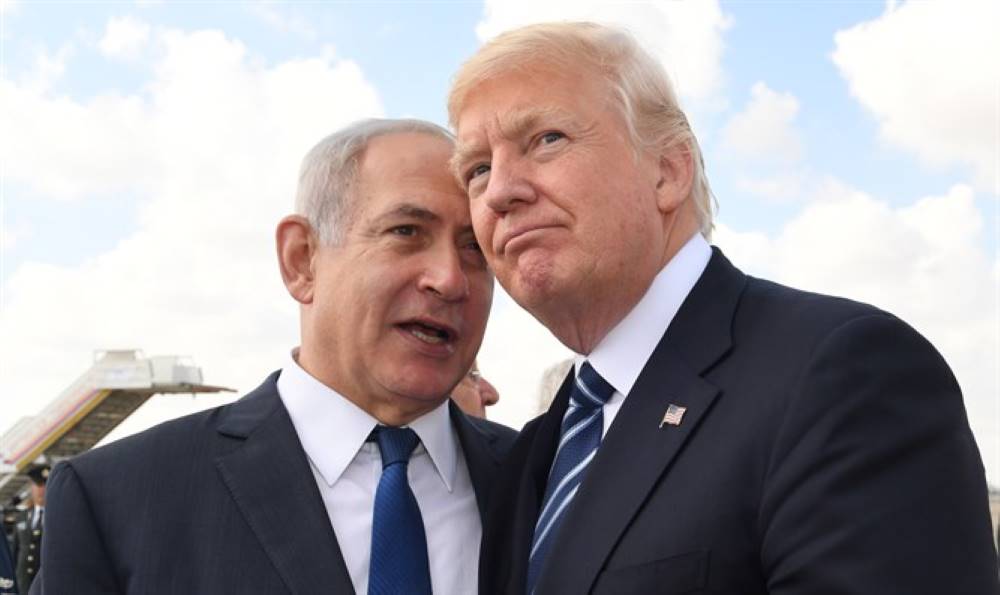
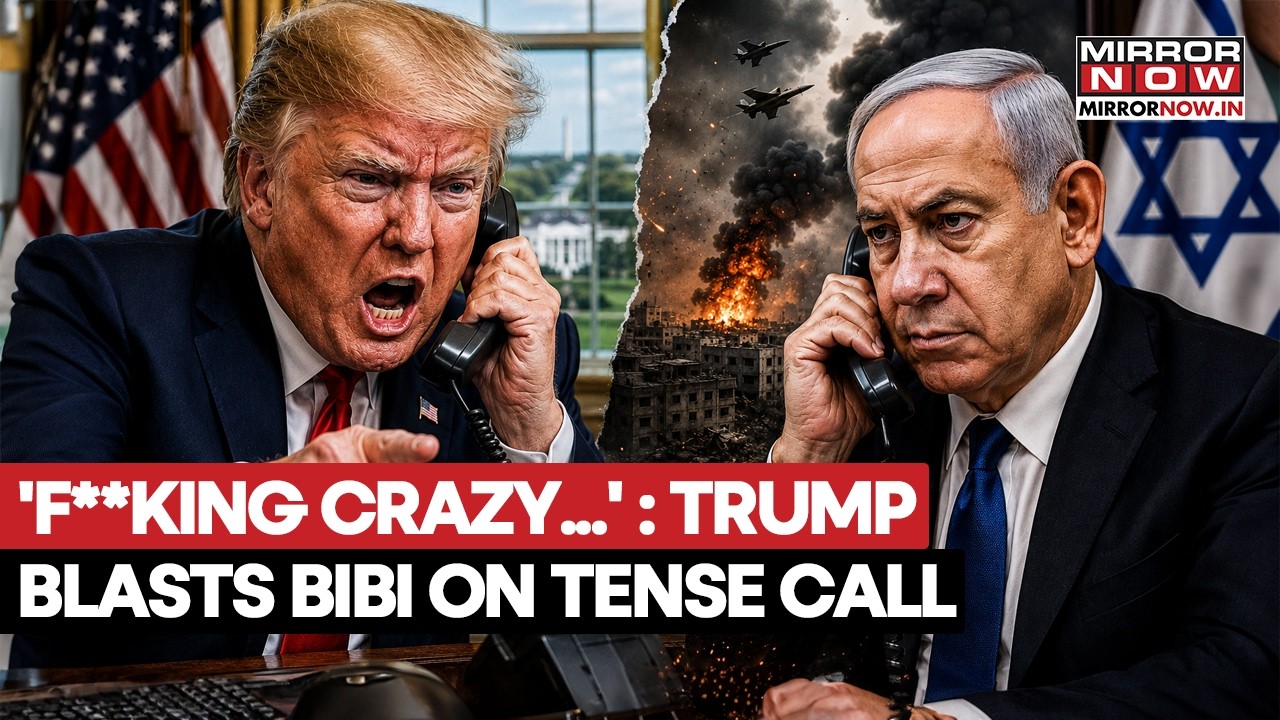
In what may prove to be one of the most remarkable moments in the contemporary history of United States-Israel relations, reports published on Monday evening by Axios and widely discussed by The Times of Israel indicate that a private conversation between President Donald Trump and Israeli Prime Minister Benjamin Netanyahu deteriorated into an unusually heated confrontation over Israel’s military operations in Lebanon and ongoing efforts to secure a broader regional ceasefire.
According to accounts cited by Axios and subsequently highlighted in The Times of Israel report, Trump expressed profound frustration with Netanyahu during a Monday telephone conversation, reportedly employing extraordinarily blunt language as he pressed the Israeli leader to accept a ceasefire arrangement involving Hezbollah and to avoid further escalation in Lebanon.
The reported exchange emerged at a particularly delicate juncture in Middle Eastern diplomacy, as Washington continues attempting to preserve a fragile ceasefire framework connected to broader negotiations involving Iran, while Israel remains engaged in military operations against Hezbollah positions in Lebanon.
The alleged confrontation has attracted significant international attention because it appears to challenge the frequently repeated public narrative that Trump and Netanyahu maintain an exceptionally close and unbreakable political partnership.
According to Axios, one American official characterized Trump’s message to the Israeli prime minister in stark terms.
“You’re fucking crazy. You’d be in prison if it weren’t for me. I’m saving your ass. Everybody hates you now. Everybody hates Israel because of this,” the official quoted Trump as saying.
A second source briefed on the conversation told Axios that the president was visibly angry throughout portions of the discussion and at one point demanded of Netanyahu: “What the fuck are you doing?”
Additional sources cited by Axios said Trump accused Netanyahu of failing to appreciate Washington’s support and suggested that Israeli actions in Lebanon were jeopardizing sensitive diplomatic efforts being pursued by the United States.
The report described the conversation as “expletive-laden,” underscoring the unusually emotional nature of the exchange.
According to The Times of Israel report, Trump’s frustration stemmed from his belief that Israeli military actions in Lebanon had exceeded what Washington considered necessary under the circumstances.
American officials reportedly acknowledged that Hezbollah had repeatedly launched attacks against Israel and recognized Jerusalem’s right to respond militarily.
However, those same officials reportedly believed Israel’s response in recent days had become disproportionate and risked undermining ongoing negotiations involving Iran.
The diplomatic context is critical.
According to reports cited by Axios and The Times of Israel, Iran has linked broader understandings with Washington to developments in Lebanon, making the Israeli-Hezbollah conflict an increasingly important factor in wider regional diplomacy.
One U.S. official quoted by Axios described Trump as having effectively “steamrolled” Netanyahu during the discussion. According to that account, Netanyahu ultimately responded by saying, “OK, OK, just make sure everything is taken care of.”
While neither side publicly confirmed the details of the conversation, the reports have fueled extensive debate regarding the current state of U.S.-Israeli relations and the degree to which Washington is willing to pressure Jerusalem when broader strategic objectives are perceived to be at risk.
Among the most widely discussed aspects of the reported conversation was Trump’s alleged assertion that he had personally protected Netanyahu from legal peril. According to U.S. officials cited by Axios, Trump told Netanyahu that he had effectively kept him out of prison.
Observers immediately interpreted the comment as a reference to Trump’s repeated public calls for Israeli President Isaac Herzog to pardon Netanyahu, who continues to face a lengthy corruption trial.
The remark, if accurately reported, would represent one of the most direct personal interventions by a sitting American president into Israel’s domestic political controversies.
Netanyahu’s office declined to comment on the report, according to The Times of Israel report.
While reports of the private conversation painted a picture of sharp disagreement, Trump adopted a notably different tone in public statements posted on Truth Social.
The president described his conversation with Netanyahu as productive and suggested that Israeli military actions against Beirut had been halted following his intervention.
“I had a very productive call with Prime Minister Bibi Netanyahu, of Israel, and there will be no troops going to Beirut, and any troops that are on their way, have already been turned back,” Trump wrote.
“He turned his Troops around. Thank you Bibi!”
Trump further characterized what he described as Israeli plans for Beirut as “a major raid of Beirut.”
However, according to military sources cited in reports cited by The Times of Israel, no Israeli troops were actually en route to Beirut, creating uncertainty regarding the precise nature of the military activities Trump referenced.
The discrepancy quickly generated questions regarding whether the president was referring to air operations, contingency plans, or intelligence assessments rather than actual troop movements.
Trump also made another striking assertion.
In a separate Truth Social post, he claimed that communication had taken place with representatives connected to Hezbollah and that understandings had been reached regarding an end to hostilities.
“Likewise — through highly placed representatives — I had a very good call with Hezbollah, and they agreed that all shooting will stop — that Israel will not attack them, and they will not attack Israel,” Trump stated.
The president did not identify the individuals with whom he had communicated. Nor did he specify the precise mechanism through which such assurances had allegedly been conveyed.
The lack of clarity surrounding the statement contributed to confusion regarding the actual status of ceasefire negotiations and whether any formal agreement existed.
The reported confrontation is significant in part because Netanyahu has frequently emphasized what he characterizes as a close and productive relationship with Trump. Throughout recent years, the Israeli prime minister has often pointed to Trump’s support for Israel as evidence of the strength of bilateral ties.
Yet The Times of Israel noted that Monday’s reported clash is not the first indication of friction between the two leaders.
Last September, Trump reportedly told senior aides that Netanyahu was “fucking me.”
That same month, according to Axios, the White House delivered what was described as a “stern private message” concerning ceasefire negotiations involving Hamas.
The tensions extend even further back. Following the 2020 American presidential election, Netanyahu publicly congratulated Joe Biden on his victory.
Trump reacted angrily. “He was very early. Like earlier than most. I haven’t spoken to him since. Fuck him,” Trump reportedly said during an interview with Israeli journalist Barak Ravid, whose reporting later formed the basis of the Axios article detailing Monday’s confrontation.
These episodes suggest that while strategic cooperation has remained substantial, personal tensions have repeatedly surfaced beneath the surface.
The reports generated immediate political repercussions within Israel.
One of the strongest responses came from Gadi Eisenkot, leader of the Yashar party and a prominent political rival of Netanyahu.
Eisenkot accused the prime minister of yielding to American pressure in a manner he regarded as harmful to Israeli interests. “There has never been a prime minister in Israel who capitulated to such a demand, one that is blatantly unreasonable!” Eisenkot wrote.
He expressed particular concern regarding continuing Hezbollah attacks against northern Israeli communities. “What Netanyahu, the government, and the cabinet are doing today is harming the national interests of the State of Israel from a place of weakness,” he declared.
Eisenkot rejected arguments linking Israeli restraint to broader American negotiations with Iran. “And don’t try to spin tales about the connection to the US’s negotiations with Iran,” he said. “Lebanon is right here, Metula is under fire, Israeli communities are empty — this is unacceptable.”
He then invoked one of Netanyahu’s longstanding political themes. “And the one doing this is the man who preached morals to everyone about the basic need to be a prime minister and know how to say ‘no’ to the president of the United States when there’s harm to the interests of the State of Israel.”
National Security Minister Itamar Ben Gvir also publicly urged Netanyahu to reject American pressure. “Mr. Prime Minister, you said that a strong prime minister tells the president of the United States ‘yes’ when possible, and ‘no’ when necessary,” Ben Gvir wrote. “This is the time to tell our friend, President Trump, ‘no’.”
Ben Gvir argued that military pressure against Hezbollah should continue. “Now is the time to do what is required and necessary to strike Hezbollah, to unleash the hands of our fighters and to restore security to the north,” he said.
The comments underscored divisions within Israel regarding the balance between military objectives and diplomatic considerations.
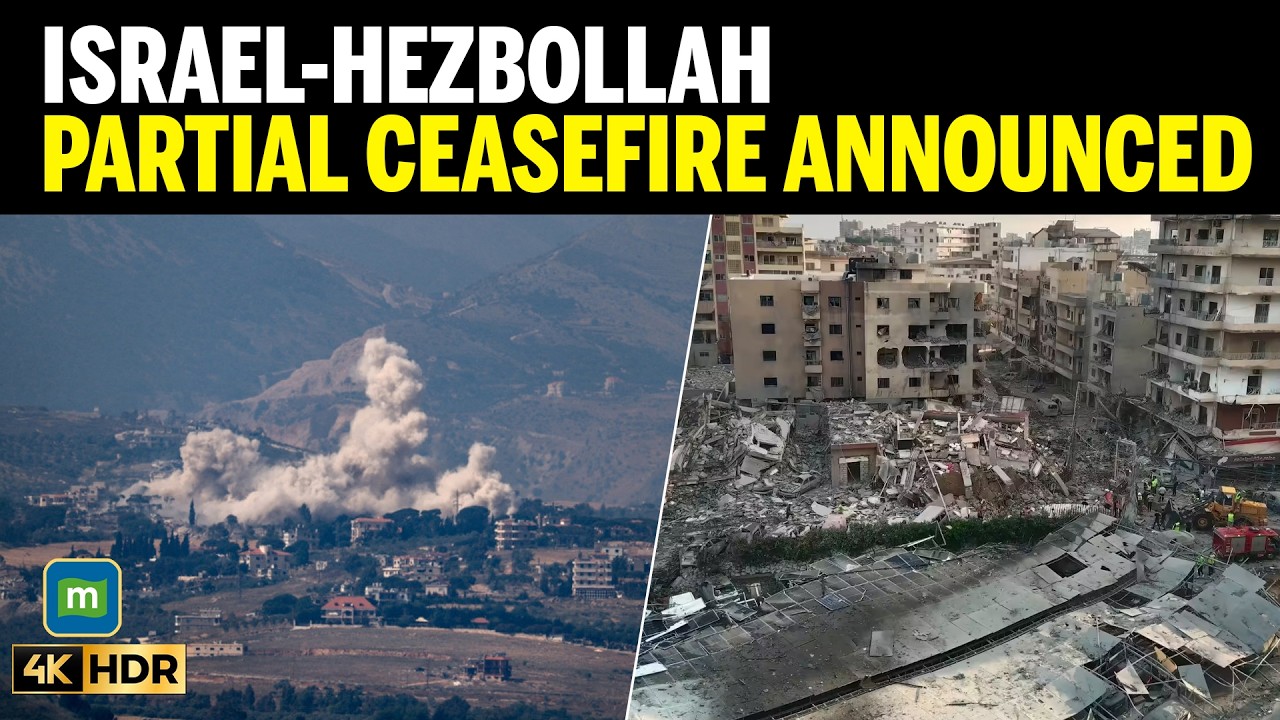
Even after Trump’s announcement, uncertainty persisted regarding the actual status of any ceasefire arrangement. According to The Times of Israel report, an Israeli source indicated that Jerusalem had agreed to postpone planned strikes on Beirut.
However, the precise terms of any understanding remained unclear. Washington, Jerusalem, Beirut, and Hezbollah appeared to offer differing interpretations regarding what had been agreed. Hezbollah reportedly claimed that any truce would prohibit Israeli strikes not merely in Beirut but across Lebanon.
Israeli officials did not immediately endorse that interpretation.
After roughly two hours, Netanyahu issued a statement indicating that Israel would proceed with strikes against Beirut if Hezbollah continued attacking northern Israel.
The statement suggested that Israeli military options remained very much on the table.
Events on the ground appeared to reinforce the uncertainty.
Shortly after Netanyahu’s remarks, warning sirens sounded in Metula, a community near the Lebanese border. According to the Israel Defense Forces, a Hezbollah rocket struck near Israeli troops operating in southern Lebanon.
Additional sirens were activated across northern communities early Tuesday morning. The military reported intercepting two Hezbollah rockets launched toward Israeli territory. In the Western Galilee, an apparent Hezbollah drone struck a military position near the border. No injuries were reported.
Meanwhile, Lebanese media reported additional Israeli strikes in southern Lebanon after Trump’s ceasefire announcement. There was no immediate Israeli military comment regarding those reports.
The developments illustrated the challenges confronting diplomats seeking to impose calm upon a rapidly evolving battlefield.
The current phase of fighting began on March 2, when Hezbollah launched rockets into northern Israel following military actions taken against Iran.
According to military figures cited by The Times of Israel, the conflict has exacted a substantial toll.
Since March 2, 26 Israeli soldiers and 1 civilian Defense Ministry contractor have been killed in southern Lebanon.
Of those fatalities, 14 occurred after a ceasefire had already been introduced on April 16.
Hezbollah rocket attacks have also killed 2 civilians.
Another Israeli civilian died as a result of mistaken Israeli artillery fire in the north.
On the Lebanese side, the Israeli military says it has killed more than 2,500 Hezbollah operatives, including hundreds of members of the organization’s elite Radwan Force.
The scale of combat has been extensive.
According to the IDF, Hezbollah has launched approximately 5,500 rockets at Israeli troops operating in southern Lebanon and another 2,500 rockets toward Israel itself. Military figures cited by The Times of Israel indicate there have been at least 75 rocket impact sites inside Israel.
Additionally, Hezbollah has launched approximately 300 drones, with 25 successfully striking targets in Israel. Israeli military assessments suggest Hezbollah continues to possess thousands of short-range rockets and hundreds of longer-range projectiles.
The IDF has stated that many attacks are now being launched from areas north of the Litani River rather than directly adjacent to the border.
As reported by both Axios and The Times of Israel, the latest confrontation between Trump and Netanyahu reflects more than a disagreement over military tactics. It highlights the increasingly complicated intersection of multiple conflicts, including Israel’s confrontation with Hezbollah, broader tensions involving Iran, and Washington’s efforts to secure regional stability through diplomacy.
Whether Trump’s reported intervention succeeds in reducing hostilities remains uncertain.
What is clear is that the episode has exposed significant strains beneath one of the most closely scrutinized political relationships in international affairs.



