




















Netanyahu Hails New Director’s Strategic Vision as Israel Intensifies Campaign Against Regional Threats
By: Jeff Gorman
A significant new chapter in the history of Israel’s intelligence community commenced on Tuesday as Major General Roman Gofman formally assumed the position of Director of the Mossad for Intelligence and Special Operations, succeeding outgoing director David “Dedi” Barnea at a time of extraordinary regional volatility and unprecedented security challenges.
According to a report at Israel National News, the official transition ceremony was held at Mossad headquarters and brought together the highest echelons of Israel’s political, military, and intelligence leadership. The event underscored the strategic importance of the organization as Israel continues to confront an increasingly complex array of threats across the Middle East.
Among those in attendance were Prime Minister Benjamin Netanyahu, the Speaker of the Knesset, senior government ministers, Israel Defense Forces Chief of Staff, prominent members of the national security establishment, outgoing Mossad Director David Barnea, and numerous current and former Mossad personnel whose careers have been devoted to safeguarding the security of the Jewish state.
The appointment places one of Israel’s most accomplished military commanders at the helm of one of the world’s most respected intelligence agencies. As Israel National News reported, Gofman arrives at the position following approximately 31 years of distinguished military service and after most recently serving as military secretary to Prime Minister Netanyahu, a role that provided him with an intimate understanding of both strategic decision-making and national security policy at the highest levels of government.
His ascension to the directorship comes at a pivotal moment. Israel remains deeply engaged in confronting threats posed by Iran and its regional proxies, while intelligence operations continue to play a central role in shaping the country’s security doctrine. Against this backdrop, the transition of leadership at the Mossad carries significance extending far beyond the organization itself, reflecting broader questions about Israel’s future strategic posture and intelligence priorities.
Throughout his military career, Gofman earned a reputation as a disciplined commander, strategic thinker, and operational innovator. According to the Israel National News report, his extensive service record includes several of the most consequential leadership positions within the Israel Defense Forces.
Among the senior roles he held were commander of the Etzion Brigade, commander of the renowned 7th Armored Brigade, commander of the 210th Division, and commander of the IDF Ground Forces Training Center. Each assignment provided him with experience in operational planning, force development, battlefield leadership, and strategic coordination.
These responsibilities exposed Gofman to a broad spectrum of military challenges, from frontline combat operations to large-scale force readiness initiatives. Supporters of his appointment argue that this diverse background makes him uniquely qualified to lead an organization whose mission increasingly requires the integration of military intelligence, covert operations, technological innovation, and strategic analysis.
His tenure as military secretary to the prime minister further elevated his profile within Israel’s security establishment. In that position, he worked closely with Netanyahu and senior defense officials during a period marked by escalating tensions with Iran, evolving regional alliances, and major military campaigns.
Observers note that few intelligence leaders assume office with such a comprehensive understanding of both military operations and political decision-making.
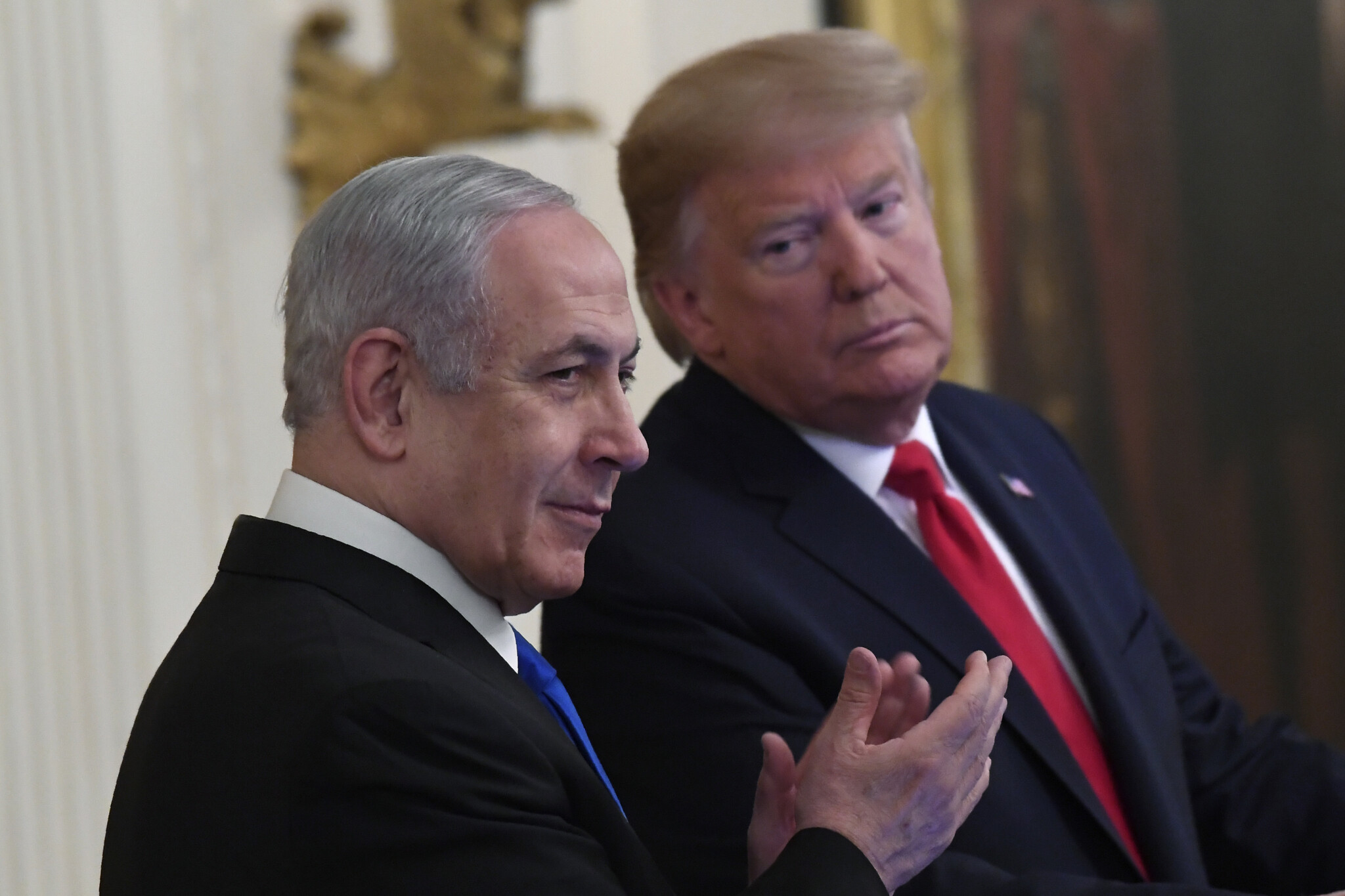
During the ceremony, Prime Minister Netanyahu delivered an emphatic endorsement of Gofman’s leadership credentials, praising both his personal qualities and professional achievements.
According to the Israel National News report, Netanyahu congratulated the incoming intelligence chief and emphasized the determination and perseverance that brought him to the position.
“Roman, you overcame every obstacle, and you are being appointed as Israel’s 14th Mossad director,” Netanyahu declared. “I congratulate you on my behalf and on behalf of the entire nation. Go forth and succeed.”
The prime minister’s remarks reflected a high degree of confidence in Gofman’s abilities. Netanyahu highlighted the qualities that distinguished him during his service as military secretary, describing him as a leader possessing exceptional intellectual acuity and operational insight.
The prime minister specifically cited Gofman’s “impressive ability to learn,” his “sharp thinking,” his “comprehensive understanding of the battlefield,” and his “strategic ingenuity.”
Perhaps most notably, Netanyahu emphasized what he described as Gofman’s unwavering commitment to victory, characterizing it as one of the defining traits of his leadership style.
The comments offered a glimpse into why Netanyahu selected him to assume one of Israel’s most sensitive and influential positions.
A substantial portion of Netanyahu’s remarks focused on Iran, reflecting the continuing centrality of the Iranian challenge in Israeli national security planning.
Over recent decades, the Mossad has played a pivotal role in monitoring, disrupting, and countering Iranian activities throughout the region. From intelligence collection to covert operations, the organization has frequently stood at the forefront of Israel’s efforts to impede Tehran’s strategic ambitions.
Netanyahu made clear that this mission would remain unchanged under Gofman’s leadership.
“The Mossad will continue to stand at the forefront of our struggle against Iranian aggression,” Netanyahu stated.
The prime minister then delivered an unequivocal message regarding Israel’s determination to prevent Iran from acquiring nuclear weapons capability. “We will not allow the Iranian regime to turn the clock back,” he said. “We will not allow it to obtain nuclear weapons, and we will not allow it to threaten our existence.”
The comments reflected longstanding Israeli policy and underscored the expectation that the Mossad will remain a principal instrument in preventing what Jerusalem regards as an existential threat.
For many analysts, Netanyahu’s emphasis on Iran during the ceremony highlighted the strategic environment that Gofman will inherit. While the Mossad’s responsibilities encompass a wide range of intelligence and security missions, few issues command greater attention than Iran’s nuclear program and its network of regional allies.
The transition also marked the conclusion of David Barnea’s tenure as Mossad director.
Barnea leaves office after overseeing the agency during one of the most consequential periods in modern Israeli history. His leadership coincided with dramatic regional developments, shifting geopolitical alignments, and a series of high-profile intelligence operations that attracted international attention.
While much of the Mossad’s work necessarily remains classified, Barnea’s tenure has often been associated with an aggressive and innovative approach to intelligence operations.
As reported by Israel National News, Gofman acknowledged his predecessor’s contributions and credited him with guiding the organization through a period of significant achievement.
His remarks reflected both professional respect and recognition of the challenges associated with succeeding a director who led the agency during a period of heightened operational activity.
Perhaps the most personal and revealing moments of the ceremony came during Gofman’s address to the men and women of the Mossad.
Rather than focusing solely on strategic threats or institutional priorities, he directed his attention toward the personnel whose work forms the backbone of Israel’s intelligence capabilities. “You are the quiet and powerful voice of the State of Israel and of the Jewish people,” Gofman said.
The statement captured the ethos that has long defined the organization: operating largely out of public view while carrying out missions of immense national importance.
Gofman also struck a note of humility as he formally entered his new position. “I enter this sacred place with humility, relying on your invaluable knowledge and experience,” he told Mossad employees.
The remarks were widely interpreted as an acknowledgment of the agency’s institutional strength and the collective expertise accumulated over decades of intelligence work.
For an organization whose success often depends upon teamwork, discretion, and long-term dedication, the message resonated deeply.
As the Israel National News report noted, Gofman assumes leadership of the Mossad during a period characterized by rapidly evolving threats and extraordinary geopolitical uncertainty.
Regional instability, Iranian activities, emerging technologies, cyber warfare, terrorism, and strategic competition among global powers continue to reshape the intelligence landscape.
At the same time, Israel’s security institutions face increasing demands to anticipate and respond to threats that are becoming more sophisticated, decentralized, and technologically advanced.
The Mossad’s ability to adapt to these realities will be a defining challenge of Gofman’s tenure.
His military background, operational experience, and close familiarity with Israel’s strategic leadership position him to confront these challenges from the outset. Yet the responsibilities accompanying the role remain immense.
The Mossad has long occupied a unique place in Israel’s national narrative, serving as both shield and sword in the defense of the state. Its directors are entrusted not only with gathering intelligence but with helping shape the strategic environment in which Israel operates.
With Roman Gofman now officially installed as the organization’s 14th director, a new chapter begins for one of the most influential intelligence agencies in the world.
As Israel National News reported, the ceremony marked more than a change in leadership. It symbolized continuity in Israel’s enduring commitment to national security, operational excellence, and vigilance against those who threaten the country’s future.
The coming years will determine how Gofman’s leadership shapes the Mossad’s next era, but Tuesday’s ceremony left little doubt that Israel’s leadership views him as uniquely prepared for the task ahead.



