























Israel Bars Linda Sarsour From Entering Country Amid Escalating Dispute Over BDS Activism and Anti-Israel Advocacy
By: Ariella Haviv
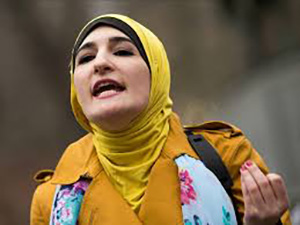
Israel’s government has denied entry to prominent American activist Linda Sarsour, a move that reflects the continuing intensification of Israel’s efforts to confront international boycott campaigns and what officials describe as organized efforts to delegitimize the Jewish state on the global stage.
According to a report on Wednesday at Israel National News, Israel’s Population and Immigration Authority acted upon a recommendation from the Ministry for Diaspora Affairs and Combating Antisemitism, formally barring Sarsour from entering the country following an investigation into her public activism and political advocacy.
The decision was announced on Tuesday by Diaspora Affairs Minister Amichai Chikli, who said his ministry had conducted an extensive review of Sarsour’s activities and concluded that her longstanding involvement in anti-Israel campaigns warranted denying her entry under existing Israeli law.
The move immediately generated international attention, highlighting the enduring controversy surrounding Sarsour, a prominent American political activist whose supporters view her as a vocal advocate for civil rights and social justice causes, while critics accuse her of playing a leading role in efforts to isolate Israel diplomatically, economically, and culturally.
As reported by Israel National News, Chikli argued that Sarsour has been deeply involved in campaigns designed to promote international boycotts against Israel and to challenge the country’s legitimacy in international forums.
According to the minister, Sarsour has occupied a central position within the Boycott, Divestment and Sanctions movement, commonly known as BDS, a global campaign that seeks to apply economic, political, and cultural pressure on Israel.
Israeli officials have long viewed the BDS movement as a strategic threat, contending that it extends beyond criticism of government policies and instead seeks to undermine Israel’s existence as a Jewish state. Supporters of the movement reject that characterization, arguing that it represents a form of nonviolent political activism aimed at influencing Israeli policy.
Chikli’s announcement left little doubt about the government’s position. “Whoever dedicates their life to isolating and harming Israel will not walk our streets. Period,” Chikli declared in a statement published on social media and cited by Israel National News.
The minister continued by asserting that Israel’s policies regarding entry permits and visas have entered a new phase. “Israel will no longer open its gates to those who work to destroy it,” he said.
The comments underscored the increasingly uncompromising posture adopted by several members of Israel’s current government regarding activists who advocate boycotts or sanctions against the country.
According to the Israel National News report, Chikli’s ministry concluded that Sarsour’s activities extend well beyond traditional political criticism and instead constitute an organized effort to damage Israel’s standing internationally.
Among the allegations cited by the ministry were claims that Sarsour has participated in campaigns encouraging economic boycotts, promoted anti-Israel activism within American institutions, and supported initiatives targeting companies and organizations that maintain business relationships with Israel.
The ministry also pointed to Sarsour’s involvement in protests and activism that emerged following the Hamas-led attacks against Israel on October 7, 2023, an event that dramatically reshaped political discourse regarding the Middle East throughout the United States and Europe.
Israeli officials contend that some of the protests that emerged after October 7 crossed the line from political expression into support for organizations and movements hostile to Israel.
According to the Israel National News report, Chikli specifically alleged that Sarsour was involved in demonstrations and activism that Israeli officials believe contributed to anti-Israel sentiment on university campuses and within activist networks.
The minister additionally referenced campaigns directed at technology companies and defense-related projects connected to Israel’s security establishment.
Among those cited were efforts aimed at Microsoft contracts involving Israeli defense initiatives and projects associated with Unit 8200, Israel’s highly regarded intelligence and cyber warfare unit.
For Israeli policymakers, such campaigns are viewed not merely as political activism but as efforts that could affect national security interests and strategic partnerships.
The controversy surrounding Sarsour is far from new.
Born in New York City, she rose to national prominence through her work as a community organizer and as the former executive director of the Arab American Association of New York.
Over the years, she became one of the most recognizable Muslim-American activists in the country, frequently appearing in national media outlets and participating in major political movements.
Her national profile expanded significantly when she served as one of the co-chairs of the 2017 Women’s March, an event that attracted millions of participants across the United States and became one of the largest demonstrations in American history.
At the same time, her increasingly outspoken views on Israel made her a polarizing figure within American political discourse.
As noted by Israel National News, supporters frequently portray Sarsour as an advocate for marginalized communities, civil liberties, racial justice, and immigrant rights.
Critics, however, have accused her of employing rhetoric that crosses into hostility toward Israel and Zionism, allegations that have fueled years of public controversy.
The debate surrounding Sarsour reflects broader tensions within American politics, particularly among progressive movements where disagreements over Israel have become increasingly pronounced.
In recent years, the Israeli-Palestinian conflict has emerged as one of the most divisive issues within activist circles, university communities, and political organizations.
Supporters of Israel argue that anti-Israel activism has evolved into campaigns that unfairly single out the Jewish state while ignoring or minimizing threats posed by terrorist organizations.
According to statements cited by various media outlets over the years, Sarsour has repeatedly maintained that her criticism is directed at Israeli government policies rather than Judaism or Jewish communities.
She has denied accusations of antisemitism and has argued that support for Palestinian rights should not be conflated with prejudice against Jews.
Nonetheless, those assurances have done little to ease concerns among many Israeli officials and pro-Israel organizations.
The decision to bar Sarsour from entering Israel is consistent with legislation and policies implemented during the past decade that allow authorities to deny entry to individuals who actively promote boycotts against the country.
According to the Israel National News report, the latest action signals that the current government intends to continue enforcing those policies aggressively.
For supporters of the decision, the move represents a legitimate exercise of national sovereignty.
They argue that no nation is obligated to admit foreign activists who openly advocate economic, political, or cultural campaigns against it.
From that perspective, the decision is less about free speech and more about protecting national interests from individuals whose stated objectives include pressuring or isolating the country.
As Israel National News reported, Israeli officials appear determined to send a broader message through the decision.



