
























|
Getting your Trinity Audio player ready...
|
Secret Israeli Military Base in Iraq Supported Operations Against Iran: Report
By: Fern Sidman
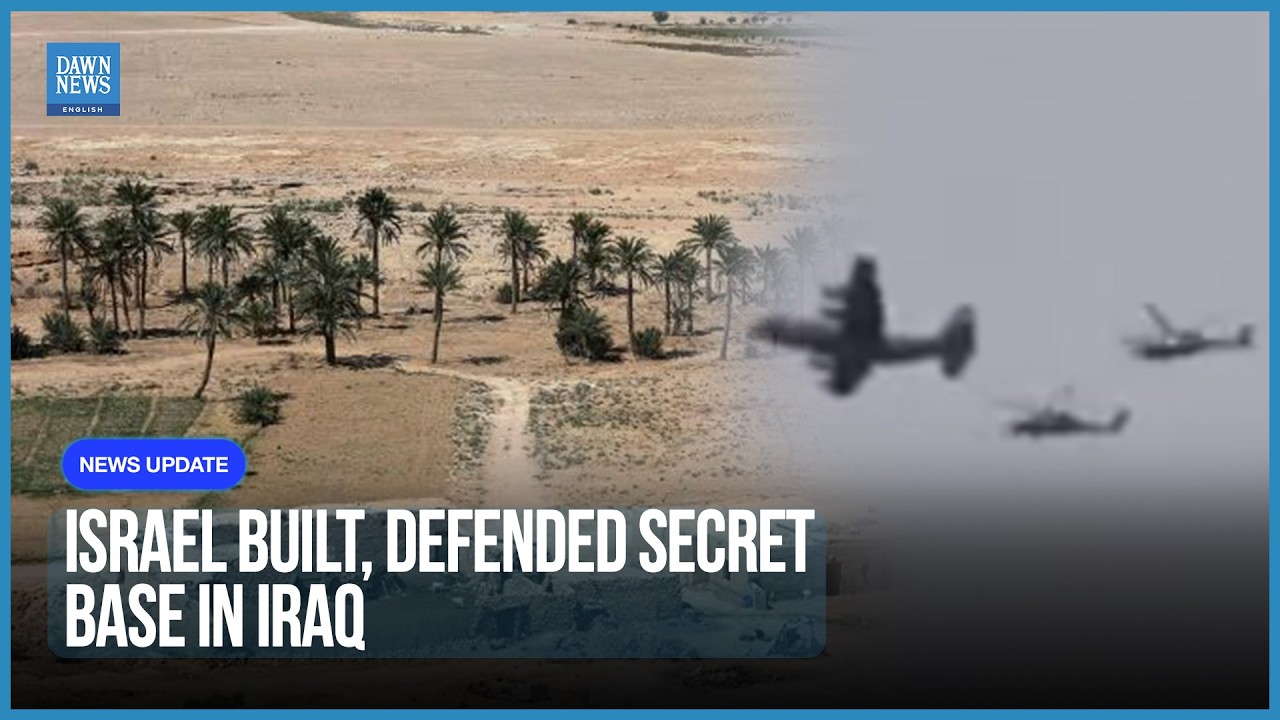
In a revelation that adds a new and intricate layer to the evolving strategic landscape of the Middle East, The Wall Street Journal reported on Saturday that Israel allegedly established a clandestine military outpost deep within the Iraqi desert to facilitate its extended air campaign against Iran. The account, based on information provided by individuals familiar with the matter, including United States officials, describes a covert logistical and operational hub designed to support long-range missions approximately 1,000 miles from Israeli territory.
According to the information provided in the WSJ report, the installation was constructed in the weeks leading up to the outbreak of hostilities, with the knowledge—though not necessarily the operational involvement—of Washington. The base reportedly served multiple critical functions, including acting as a staging ground for Israeli Air Force operations, housing elite special forces units, and positioning search-and-rescue teams for potential emergency deployments.
The reported outpost was located in the western desert of Iraq, a vast and sparsely inhabited region long regarded by military planners as an ideal environment for covert operations. As the WSJ report detailed, the terrain’s isolation and limited civilian presence made it particularly conducive to the establishment of temporary forward-operating facilities.
Michael Knights, head of research at Horizon Engage, a strategic advisory firm, explained the rationale behind such deployments. “It’s normal that before operations you reconnoiter and set up these kinds of locations,” he said, as quoted by the WSJ. Knights further noted that the region has historically been used for similar purposes, including by United States Special Forces during campaigns against Saddam Hussein in 1991 and 2003.
The base’s proximity to Iranian territory significantly reduced operational distances for Israeli aircraft, thereby enhancing both efficiency and responsiveness. This forward positioning also enabled rapid deployment of search-and-rescue teams in the event of downed pilots—a contingency that, according to the WSJ report, ultimately did not materialize for Israeli forces during the campaign.
Sources cited by the WSJ indicated that the installation housed Israeli Air Force special forces units trained in commando operations within hostile environments. These units were reportedly tasked with a range of responsibilities, including securing the base, coordinating logistical support, and preparing for potential rescue missions.
Search-and-rescue teams stationed at the site were intended to provide immediate assistance in emergency scenarios. One source familiar with the matter told the WSJ that Israel even offered support when a United States F-15 fighter jet was shot down near Isfahan, Iran. However, American forces ultimately conducted the rescue operation independently, though Israeli airstrikes were reportedly carried out to help secure the area.
The integration of these capabilities underscores the complexity of the operation and highlights the extent to which Israel sought to mitigate the risks associated with conducting sustained air operations at such a considerable distance.
The covert nature of the base was nearly compromised in early March, according to the WSJ report. Iraqi state media reported that a local shepherd observed unusual military activity in the area, including helicopter movements, prompting Iraqi authorities to dispatch troops to investigate.
As the WSJ report detailed, Iraqi soldiers traveled toward the suspected site in Humvees during the early morning hours. The situation escalated rapidly when the approaching forces came under what was described as “intense fire,” resulting in the death of 1 soldier and injuries to 2 others.
Lt. Gen. Qais Al-Muhammadawi, deputy commander of Iraq’s Joint Operations Command, addressed the incident in comments to state media. “This reckless operation was carried out without coordination or approval,” he said. He further noted that the responding units encountered a level of force that exceeded their expectations.
“It appears there was a certain force on the ground before the strike, supported from the air, operating beyond the capabilities of our units,” Muhammadawi stated.
The WSJ reported that Israel allegedly used airstrikes to prevent Iraqi forces from reaching the installation, effectively maintaining the secrecy of the operation at a critical juncture.
The confrontation generated immediate diplomatic repercussions. Iraqi authorities condemned the incident and later filed a complaint with the United Nations, attributing the attack to foreign forces and specifically implicating the United States.
However, a source familiar with the matter told the WSJ that the United States was not involved in the strike against Iraqi troops. This discrepancy between official Iraqi statements and the information provided to the WSJ underscores the opacity that often characterizes military operations of this nature.
The incident was widely reported across Iraqi and broader Arab media, fueling speculation regarding the identity of the forces involved. Despite the mounting attention, Israeli officials declined to comment on the WSJ’s findings.
An Iraqi government spokesman also refrained from offering additional details, leaving many aspects of the episode unresolved.
The alleged establishment of the Iraqi outpost must be understood within the context of Israel’s broader military campaign against Iran. The Israeli Air Force conducted thousands of strikes over the course of a 5-week operation, targeting a range of military and strategic assets.
The forward base in Iraq played a pivotal role in enabling these operations by providing a closer point of access to Iranian airspace. This logistical advantage likely contributed to the scale and intensity of the campaign.
The WSJ report suggested that the base was not merely a supplementary asset but a central component of Israel’s operational strategy, allowing for sustained engagement at extended range.
Military analysts have noted that the use of temporary forward-operating bases is a well-established practice in modern warfare. The WSJ report highlighted that United States forces have similarly employed such facilities, including a makeshift base inside Iran used during a mission to rescue downed airmen earlier in the conflict.
In that instance, American forces reportedly destroyed aircraft and helicopters that became stranded at the site, illustrating the inherent risks associated with operating in hostile territory.
The parallels between these operations underscore a broader pattern of strategic adaptation, in which military forces establish temporary footholds to extend their operational reach.
Residents of the Iraqi desert have long been accustomed to sporadic military activity, ranging from militant group movements to covert operations by various state actors. As Knights told the WSJ, locals have developed an understanding of these dynamics and often choose to avoid areas where such activity is observed.
“People living in the Iraqi desert have witnessed strange activity over the years,” he said, adding that during the current conflict, residents reported seeing “unusual helicopter activity” in the region.
These observations, while anecdotal, align with the broader narrative presented in the WSJ’s report and provide a glimpse into the ground-level perspective of those living in proximity to such operations.
Although Israeli authorities have not publicly confirmed the existence of the base, there have been indirect references to covert operations during the conflict. In early March, the head of the Israeli Air Force, Tomer Bar, issued a letter to personnel that alluded to ongoing special missions.
“These days, fighters from special units of the air force are conducting special missions which could ignite the imagination,” Bar wrote, as quoted by the WSJ.
While the statement did not provide specific details, its timing and tone have been interpreted by some analysts as a tacit acknowledgment of the type of operations described in the WSJ’s report.
The WSJ’s account of a clandestine Israeli base in Iraq offers a rare and detailed glimpse into the operational complexities of modern military campaigns. The reported installation, if accurately described, represents a sophisticated effort to extend strategic reach, mitigate risk, and maintain operational tempo in a highly contested environment.
At the same time, the incident highlights the potential for unintended confrontations and diplomatic tensions arising from covert activities conducted within sovereign territories. The clash with Iraqi forces serves as a stark reminder of the delicate balance between operational necessity and geopolitical sensitivity.
As the region continues to navigate the aftermath of the conflict, the revelations reported are likely to inform ongoing discussions about the conduct of warfare, the limits of secrecy, and the evolving nature of military strategy in the 21st century.



