


















|
Getting your Trinity Audio player ready...
|
Rand Paul’s Son Spews Forth Antisemitic Tirade at NY Rep. Mike Lawler During Capitol Confrontation
By: Ariella Haviv
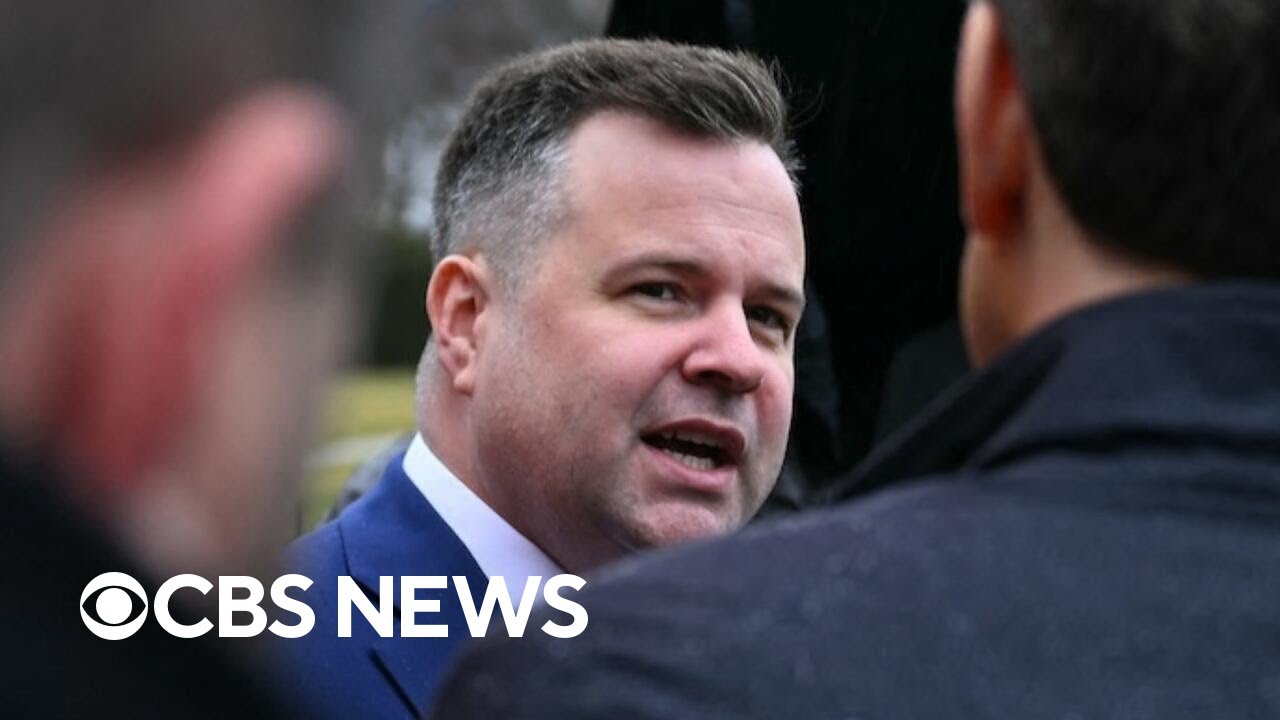
A disturbing late-night confrontation inside a well-known Capitol Hill establishment has triggered a wave of condemnation across political and communal lines, after William Paul — the son of Senator Rand Paul — allegedly unleashed a prolonged and explicit antisemitic tirade against Representative Mike Lawler of New York. The incident, which unfolded Tuesday evening at the Tune Inn bar, has rapidly become emblematic of what many observers describe as an increasingly volatile and toxic political climate in the United States.
🚨 Shocking Antisemitic Tirade on Capitol Hill 🚨
Last night at a D.C. bar, Senator Rand Paul’s son, William Paul, drunkenly accosted Rep. Mike Lawler (R-NY) while he was talking to a reporter.
Paul interrupted and warned Lawler that if Rep. Thomas Massie loses his primary,… pic.twitter.com/d1qy24pxDv— Reverend Jordan Wells (@WellsJorda89710) May 14, 2026
According to detailed accounts cited in a report on Wednesday by VIN News, the altercation began when William Paul, described by witnesses as visibly intoxicated, approached Lawler during what had been a routine conversation with a journalist. What followed, as reported by VIN News and corroborated by individuals present at the scene, was an escalating barrage of inflammatory remarks that quickly crossed from political grievance into overtly antisemitic rhetoric.
Lawler recounted the encounter in stark terms the following day on the steps of the Capitol. “He came up to me and started blaming ‘your people’ if Congressman Thomas Massie loses his primary,” Lawler said, according to the VIN News report. When pressed to clarify what he meant, Paul reportedly responded with a blunt and unambiguous statement: “Yeah, you Jews.”
The remark was particularly striking given that Lawler is not Jewish. As VIN News detailed, the New York congressman, who is Catholic and of Irish-Italian heritage, immediately challenged the characterization. “My people?” Lawler responded incredulously, before informing Paul of his background.
Paul’s reply, rather than de-escalating the situation, appeared to underscore the deeply troubling nature of the exchange. “Oh wow, I’m so sorry for calling you a Jew,” he said, according to Lawler’s account. Yet witnesses indicated that the apology was neither sincere nor indicative of any meaningful retreat. Instead, it served merely as a prelude to a lengthier and more disturbing monologue.
Over the course of approximately ten minutes, Paul allegedly launched into what multiple witnesses described as a sustained diatribe, repeatedly invoking antisemitic tropes and conspiratorial accusations. According to accounts referenced in the VIN News report, he labeled Jews as “anti-American” and accused Lawler and his purported “Jewish supporters” of placing allegiance to Israel above loyalty to the United States.
Last night, I had too much to drink and said some things that don’t represent who I really am. I’m sorry and today I am seeking help for my drinking problem. @jchristenson_ @lawler4ny @reesejgorman
— William H. Paul (@TastyBrew1776) May 13, 2026
The rhetoric did not stop there. Lawler stated that Paul expressed explicit hostility not only toward Jewish individuals but also toward members of the LGBTQ community. “He said he didn’t care if they died,” Lawler recounted, describing the comments as both shocking and deeply offensive. At one point during the confrontation, Paul reportedly escalated the tension further by jabbing his finger into Lawler’s face — an act perceived by witnesses as aggressive and confrontational.
The episode concluded in a chaotic manner, as Paul stumbled out of the establishment, knocking over a stool in the process. The scene, as described in reports cited by VIN News, left those present unsettled and incredulous at the intensity and nature of the exchange.
The confrontation occurred while Lawler was engaged in conversation with Reese Gorman, a reporter for NOTUS, who also witnessed portions of the incident. According to the VIN News report, Paul interjected himself into the discussion, identifying himself as the son of Senator Rand Paul and referencing the upcoming May 19th Republican primary challenge involving Congressman Thomas Massie of Kentucky.
The political context of the remarks has only deepened concerns about the broader implications of the incident. Analysts and commentators have noted that the invocation of antisemitic rhetoric in connection with intra-party political disputes reflects a disturbing normalization of language that had once been widely condemned across the political spectrum.
Lawler himself did not mince words in his response. Describing the encounter as “reprehensible” and “f***ing disgusting,” he emphasized that such rhetoric has no place in American public life. His remarks, as reported by VIN News, captured the sense of outrage that has reverberated in the aftermath of the incident.
In a statement posted the following day, William Paul acknowledged that he had been intoxicated at the time of the confrontation. “I was drunk,” he admitted, adding that he is now seeking help for what he described as a drinking problem. While the statement may have been intended as an explanation, it has done little to quell the broader criticism directed at his conduct.
The VIN News report noted that Paul is a former congressional staffer and has reportedly been involved in prior alcohol-related incidents. He is one of four sons of Senator Rand Paul, though neither the senator nor his office immediately responded to requests for comment following the incident.
The silence from the senator’s office has itself become a point of discussion, with some observers calling for a more direct and unequivocal condemnation of the remarks attributed to his son.
Beyond the immediate political ramifications, the episode has elicited swift and forceful responses from Jewish organizations and pro-Israel advocacy groups. As VIN News reported, these organizations have pointed to the incident as part of a broader and deeply troubling trend: the resurgence of antisemitic rhetoric in public discourse at a time of heightened geopolitical tension and domestic polarization.
“This is not an isolated incident,” one communal leader remarked in comments cited by VIN News. “We are seeing a pattern in which antisemitic language is becoming more normalized, more brazen, and more openly expressed in public settings.”
The timing of the confrontation has only amplified these concerns. With debates over United States support for Israel intensifying and political divisions deepening, the intersection of foreign policy and domestic identity politics has become increasingly fraught.
Observers warn that the use of antisemitic tropes — particularly those invoking dual loyalty or questioning the patriotism of Jewish individuals — carries historical echoes that are both unmistakable and deeply alarming. Such rhetoric has long been associated with periods of heightened discrimination and social unrest.
In this context, the incident at the Tune Inn bar is being viewed not merely as a personal lapse in judgment but as a reflection of broader societal dynamics. As the VIN News report emphasized, the episode underscores the urgent need for renewed vigilance and accountability in confronting hate speech in all its forms.
For Rep. Lawler, the experience appears to have reinforced a sense of urgency regarding the current climate. While he has not indicated any intention to pursue formal action, his public condemnation of the remarks signals a broader commitment to addressing the issue.
“This kind of language cannot be tolerated,” he stated, according to VIN News. “It is unacceptable, it is dangerous, and it must be called out wherever it occurs.”
As the story continues to unfold, questions remain about the long-term implications of the incident. Will it prompt a broader reckoning within political circles regarding the boundaries of acceptable discourse? Or will it fade into the background as yet another example of escalating rhetoric in an already polarized environment?
For now, the episode stands as a stark and unsettling reminder of the challenges facing American society. In an era defined by rapid communication and heightened tensions, the line between private conduct and public consequence has never been more blurred.
And as VIN News highlighted, the stakes extend far beyond any single confrontation. They touch upon the fundamental principles of respect, tolerance, and civic responsibility that underpin the nation’s democratic fabric.
Whether those principles can be reaffirmed in the face of such incidents remains an open — and profoundly consequential — question.