


















|
Getting your Trinity Audio player ready...
|
By: Jason Ostedder
In a meticulously choreographed display of diplomatic grandeur tempered by unmistakable strategic tension, Chinese President Xi Jinping delivered a pointed and consequential warning to President Trump as the two leaders convened in Beijing for a high-stakes summit that may shape the trajectory of global geopolitics for years to come.
As reported on Wednesday in The New York Times, the opening exchanges between the leaders reflected both the ceremonial traditions of statecraft and the sobering realities of an increasingly volatile international order. While the summit began with outward expressions of mutual respect and carefully calibrated praise, Xi’s remarks regarding Taiwan introduced a note of urgency that underscored the fragility of the current détente between the world’s two most powerful nations.
“If handled poorly, the two countries will collide or even clash, putting the entire U.S.-China relationship in an extremely dangerous situation,” Xi warned, according to official Chinese accounts cited in The New York Times report. The statement, delivered in measured yet unmistakably firm language, served as a stark reminder that Taiwan remains Beijing’s most sensitive and non-negotiable geopolitical concern.
The meeting itself marked a historic moment — the first visit by a sitting American president to China in nearly a decade. Against a backdrop of escalating global uncertainty, the summit carries profound implications not only for bilateral relations but also for the broader international system. As The New York Times report emphasized, the outcome of these discussions may determine whether the uneasy equilibrium that has characterized U.S.-China relations in recent years can be sustained, or whether deeper fissures will emerge.
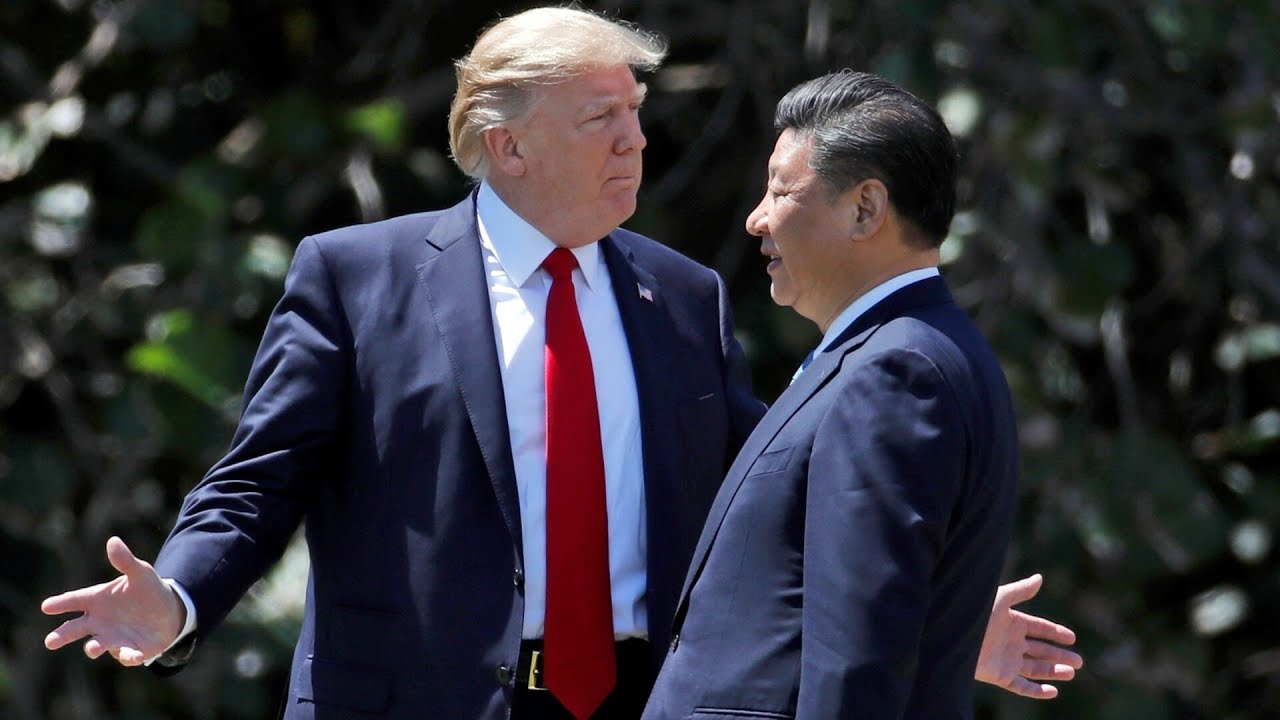
The ceremony welcoming President Trump to Beijing was imbued with the full weight of Chinese state pageantry. Xi greeted his American counterpart outside the imposing Great Hall of the People, where the two leaders exchanged a formal handshake before proceeding past an honor guard and rows of jubilant children. The playing of “The Star-Spangled Banner” accompanied by a resounding 21-gun salute, echoed across Tiananmen Square, symbolizing the gravity of the occasion and the stakes involved.
Inside the Great Hall, the tone initially shifted toward cautious optimism. Both leaders acknowledged the importance of the U.S.-China relationship in an increasingly unstable world. Xi, as reported by The New York Times, called for cooperation in navigating what he described as a “complex and turbulent world,” emphasizing the necessity of collaboration between the two nations.
“We should be partners, not adversaries,” Xi declared, articulating a vision of coexistence that, at least rhetorically, stands in contrast to the intensifying strategic competition between Washington and Beijing.
President Trump, for his part, leaned heavily on personal diplomacy, highlighting what he characterized as a strong working relationship with Xi. “You’re a great leader,” Trump remarked, according to The New York Times report, adding that the two men regularly communicate by telephone to resolve disputes and manage tensions.
Yet beneath these expressions of mutual respect lay a series of deeply entrenched disagreements — none more consequential than the issue of Taiwan.
The self-governing island, which operates as a vibrant democracy yet is claimed by China as part of its sovereign territory, has long represented a flashpoint in U.S.-China relations. Washington’s continued support for Taiwan, particularly through arms sales and diplomatic engagement, is viewed by Beijing as a direct challenge to its territorial integrity.
Xi’s warning in Beijing thus reflected not merely a policy disagreement but a fundamental clash of strategic priorities. As The New York Times report noted, China has consistently sought to persuade the United States to curtail its military support for Taiwan. During a February phone call, Xi urged Trump to approach the issue of arms sales with “extreme caution,” signaling Beijing’s determination to assert its position.
Despite the prominence of Taiwan in the discussions, the summit’s agenda extended far beyond a single issue. Trade, long a source of friction between the two nations, remains a central concern. The leaders last met in October in South Korea, where they agreed to temporarily halt a bruising trade war that had seen tariffs escalate to unprecedented levels.
At that time, China had threatened to impose sweeping restrictions on exports of rare earth materials — essential components for modern technology — in response to American tariffs on Chinese goods. Xi ultimately postponed those measures for one year, creating a narrow window for negotiation.
Now, as the Beijing summit unfolds, a critical question looms: will China extend that reprieve, or will economic hostilities resume?
According to The New York Times report, there was little indication ahead of the meeting that significant progress would be achieved on trade. Analysts widely expect that any major agreement will remain elusive, given the structural nature of the disputes involved.
Nevertheless, there were modest signs of potential cooperation. Chinese customs authorities announced the approval of beef export licenses for several hundred American slaughterhouses — a move that some observers interpret as a gesture aimed at easing tensions. These licenses had previously lapsed following the imposition of tariffs during earlier phases of the trade conflict.
President Trump’s visit, which includes additional meetings at historic landmarks and is scheduled to conclude on Friday, has been framed by the administration as an opportunity to advance trade and investment ties. Accompanying the president are several prominent business leaders, including Jensen Huang, the chief executive of Nvidia, reflecting the continued importance of economic engagement in the bilateral relationship.
American corporate leaders have consistently advocated for expanded access to Chinese markets, though, as The New York Times reported, expectations for a sweeping deal remain subdued.
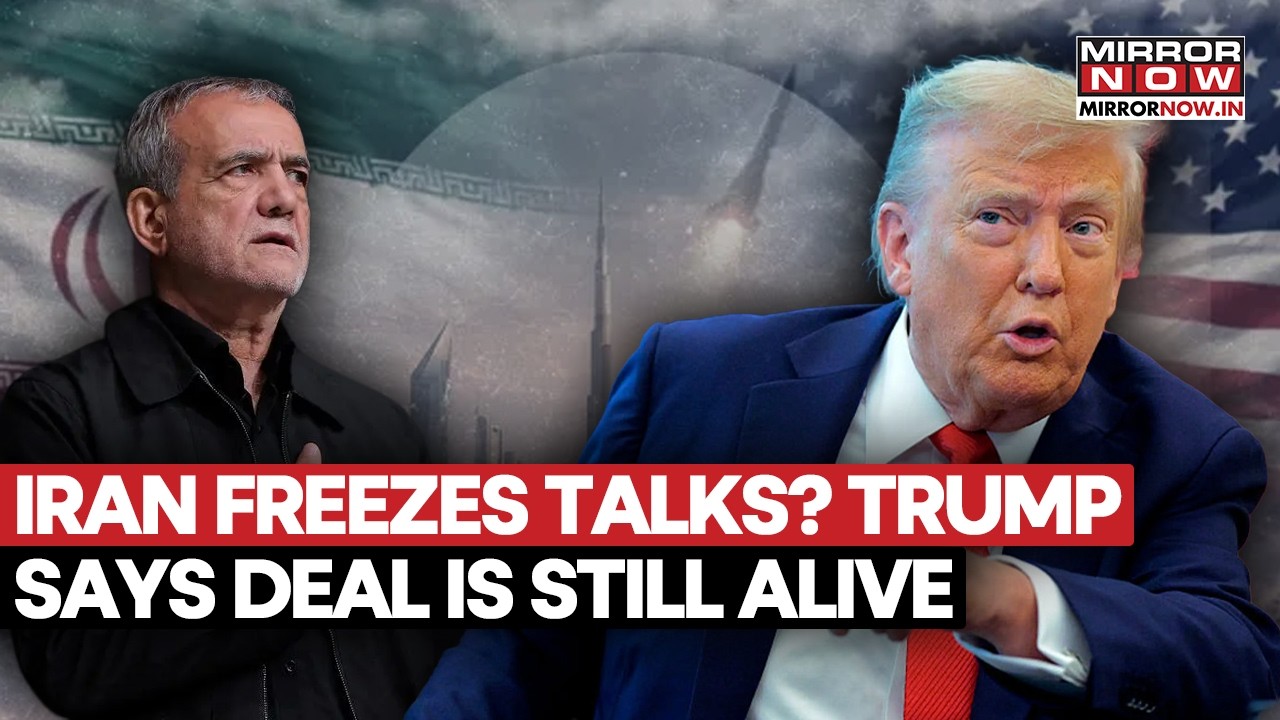
Beyond economics, the summit also carries significant implications for global security. One of Trump’s objectives, according to the information provided in The New York Times report, is to enlist Xi’s assistance in addressing the ongoing conflict involving Iran. China, as Tehran’s most important economic partner, possesses considerable leverage that could prove decisive in efforts to resolve the war.
The potential reopening of the Strait of Hormuz — a critical conduit for global energy supplies that has been disrupted since the conflict began in late February — represents another area where Chinese influence could play a pivotal role.
For Xi, however, the summit presents an opportunity to advance China’s own strategic priorities. Analysts suggest that Beijing is likely to press for the relaxation of U.S. export controls on advanced technologies, as well as assurances that Washington will refrain from imposing additional tariffs.
These competing objectives highlight the complexity of the negotiations and the delicate balance that both leaders must navigate.
Forcing substantive changes in U.S. policy toward Taiwan, however, remains a formidable challenge. As The New York Times report observed, such a shift would be a “long shot,” given the deep bipartisan support for Taiwan within the United States.
Yet Xi enters the negotiations with a significant advantage: China’s economic leverage over Iran and its potential role in stabilizing global energy markets. This leverage provides Beijing with a powerful bargaining chip, particularly in a moment of heightened geopolitical uncertainty.
Ultimately, the Beijing summit represents a defining moment in the evolving relationship between the United States and China. The interplay of cooperation and competition, diplomacy and deterrence, will shape not only bilateral ties but also the broader contours of international politics.
Xi’s warning on Taiwan serves as a sobering reminder of the stakes involved. While both leaders have expressed a desire for partnership, the underlying tensions remain profound.
The report noted that the question is not merely whether the two nations can manage their differences, but whether they can do so without allowing those differences to escalate into confrontation.
In a world increasingly defined by uncertainty, the outcome of this summit may well determine whether the fragile balance between Washington and Beijing can endure — or whether the path ahead leads toward a far more perilous and unpredictable future.



