

























|
Getting your Trinity Audio player ready...
|
NJ Rep. Gottheimer Accuses NYT of Being on Hamas’ Payroll After Explosive Prisoner Abuse Report
By: Julie Herndon
A fierce and rapidly intensifying controversy has erupted across political, diplomatic, and media spheres following the publication of a highly contentious report by The New York Times, with critics accusing the paper of amplifying unverified and deeply inflammatory allegations against Israel. As reported on Wednesday by Fox News, the backlash has drawn in prominent lawmakers, senior Israeli officials, and even individuals cited within the original report itself, transforming the episode into a broader debate over journalistic standards, sourcing credibility, and the ethical boundaries of reporting in conflict zones.
At the center of the storm is a column authored by veteran New York Times journalist Nicholas Kristof, which detailed claims from 14 individuals who alleged they had been subjected to sexual abuse by Israeli settlers or members of Israeli security forces. The accusations described in the report were severe and graphic, ranging from alleged assaults involving physical abuse of genitalia to the shocking claim that dogs had been used in acts of sexual violence.
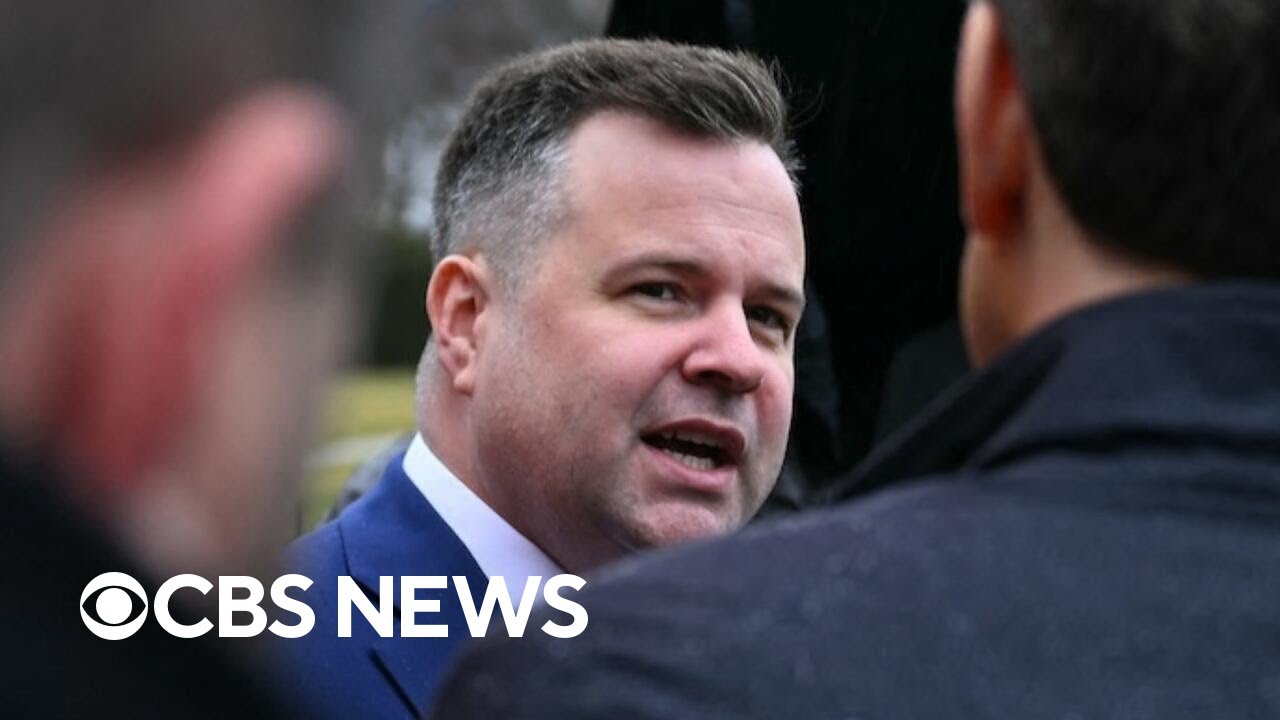
The article, which quickly gained widespread attention, was met with immediate and forceful condemnation from multiple quarters. Among the most prominent critics was Representative Josh Gottheimer, a Democrat from New Jersey, who voiced his outrage in unequivocal terms. As Fox News reported, Gottheimer took to social media to express his disbelief, writing, “WTF @nytimes!” before escalating his criticism with a pointed rebuke of the report’s sourcing and framing.
“Nick Kristof amplifies proven Hamas-affiliated sources and their propaganda, while the NYT continues to gloss over the systematic sexual violence, rape, and mutilation Hamas committed on October 7, now fully documented in the new Civil Commission report,” Gottheimer stated, according to Fox News. His remarks underscored a broader frustration among critics who contend that the report reflects a troubling imbalance in coverage of atrocities committed during the ongoing conflict.
Gottheimer further sharpened his critique by questioning the editorial judgment of the publication itself. “We should expect better from the paper of record, particularly with allegations as serious as these,” he said. In a remark that captured the intensity of the backlash, he added, “It’s almost as if the NYT is on Hamas’ payroll,” a statement that Fox News highlighted as emblematic of the anger the report has provoked among certain policymakers and observers.
The Israeli government responded with equal, if not greater, forcefulness. According to Fox News, Israel’s Foreign Ministry issued a blistering denunciation of the article, characterizing it as “one of the worst blood libels ever to appear in the modern press.” The statement accused the report of engaging in what it described as a profound distortion of reality.
“In an unfathomable inversion of reality, and through an endless stream of baseless lies, propagandist Nicholas Kristof turns the victim into the accused,” the ministry declared, as cited by Fox News. The statement continued by emphasizing Israel’s own experience as a victim of violence, particularly in reference to the events of October 7. “Israel — whose citizens were the victims of the most horrific sexual crimes committed by Hamas on October 7, and whose hostages were later subjected to further sexual abuse — is portrayed as the guilty party,” the ministry asserted.
The diplomatic response went further, suggesting that the timing and content of the report were not coincidental. “This publication is no coincidence,” the Foreign Ministry stated, according to Fox News. “It is part of a false and well-orchestrated anti-Israel campaign aimed at placing Israel on the U.N. Secretary-General’s blacklist.” The statement concluded with a defiant pledge: “Israel will fight these lies with the truth — and the truth will prevail.”
Adding another layer of complexity to the unfolding controversy was the reaction of former Israeli Prime Minister Ehud Olmert, whose remarks had been cited within Kristof’s column. As Fox News reported, Olmert issued a formal statement distancing himself from the interpretation of his comments, arguing that the article had misrepresented his position.
“Mr. Kristof’s article includes claims of extraordinary gravity: that Israeli authorities have directed the rape of children, that dogs have been used as instruments of sexual assault, that systematic sexual torture is state policy,” Olmert said, according to Fox News. He continued with a categorical clarification: “I did not validate these claims.”
Olmert emphasized that his comments had been taken out of context, stating, “I have no knowledge supporting these claims, as I said to Mr. Kristof. Therefore, the positioning of my quote after pages of such allegations misrepresents my views.” His statement, cited by Fox News, intensified scrutiny of the report’s editorial framing and the manner in which sources were presented.
In response to the mounting criticism, The New York Times issued a defense of both the article and its author. Fox News reported that a spokesperson for the publication, Charlie Stadtlander, sought to underscore Kristof’s credentials and experience. “Nicholas Kristof is a two-time Pulitzer Prize-winning journalist who has reported on sexual violence for decades and is widely regarded as one of the world’s best on-the-ground reporters documenting and bearing witness to sexual abuse experienced by women and men in war and conflict zones,” Stadtlander said.
The spokesperson further defended the methodology behind the report, emphasizing that Kristof had conducted firsthand reporting. “He traveled to the region to report firsthand on the stories of the Palestinians who suffered abuse, and his article collects accounts in the victims’ own words, backed by independent studies,” Stadtlander explained, as quoted by Fox News.
Addressing Olmert’s objections specifically, Stadtlander maintained that the former prime minister’s remarks had been accurately represented. “Mr. Olmert was one of many people that Nick Kristof spoke to for his column, offering the former prime minister the context and overview of what he was writing,” the spokesperson stated. “Olmert’s quote was given on the record, tape-recorded and is presented accurately and in appropriate context to readers.”
Despite these assurances, the controversy has continued to escalate, with critics arguing that the gravity of the allegations demands an exceptionally rigorous standard of verification and corroboration. The debate has also reignited longstanding tensions over media coverage of the Israeli-Palestinian conflict, with accusations of bias and selective emphasis emerging once again at the forefront of public discourse.
Fox News has noted that the backlash extends beyond individual statements, reflecting a broader unease about the role of major media institutions in shaping narratives around highly sensitive and polarizing issues. The dispute has also highlighted the challenges inherent in reporting on allegations of sexual violence in conflict zones, where access is limited, verification is difficult, and the stakes—both human and political—are extraordinarily high.
For supporters of the report, the imperative to document and amplify the experiences of alleged victims remains paramount, regardless of the political sensitivities involved. For critics, however, the episode serves as a cautionary tale about the potential consequences of publishing claims that they argue have not been sufficiently substantiated.
As the debate continues to unfold, the controversy surrounding The New York Times report stands as a vivid illustration of the profound complexities that define modern journalism in an era of heightened geopolitical tension and information warfare. The competing narratives—each articulated with conviction and supported by sharply divergent interpretations of the available evidence—underscore the difficulty of establishing consensus in a landscape increasingly shaped by distrust and polarization.
What remains indisputable is that the stakes are extraordinarily high. Allegations of the kind described in the report carry immense moral and political weight, with the potential to influence public opinion, diplomatic relations, and the broader trajectory of the conflict itself. As Fox News and other outlets continue to chronicle the unfolding reactions, the episode is likely to remain a focal point of debate for the foreseeable future, raising enduring questions about accountability, credibility, and the responsibilities of the press in times of war.



