


























|
Getting your Trinity Audio player ready...
|
By: Chaya Abecassis
A series of newly disclosed United States intelligence assessments has cast fresh scrutiny on the strategic outcomes of the recent joint American-Israeli military campaign against Iran, revealing a far more resilient and rapidly recovering Iranian missile infrastructure than previously acknowledged by senior officials in Washington. According to findings reported on Wednesday by World Israel News, Tehran has succeeded in restoring operational access to a substantial majority of its missile network, thereby reconstituting a critical pillar of its regional military posture and reintroducing significant threats to maritime security and allied forces operating in the Persian Gulf.
The intelligence conclusions, which emerged less than a month after the cessation of active hostilities under what has been described as a fragile ceasefire, present a stark contrast to earlier public pronouncements made by President Trump and Secretary of War Pete Hegseth. Those statements had suggested that Iran’s military apparatus—particularly its missile capabilities—had been comprehensively degraded, if not rendered functionally inert, as a consequence of the sustained aerial and strategic bombardment carried out under the auspices of Operation Epic Fury, launched on February 28.
Yet the more granular and empirically grounded intelligence evaluations now circulating within defense and policy circles appear to undermine that narrative. As detailed in reporting referenced by World Israel News, Iran has reportedly regained access to thirty of its thirty-three principal missile installations situated along the strategically vital Strait of Hormuz. This narrow maritime corridor, through which a substantial proportion of the world’s energy supplies transit, remains one of the most geopolitically sensitive chokepoints on the planet. The restoration of Iranian missile capabilities in this region carries profound implications not only for regional stability but also for global economic security.
According to the intelligence assessments in the World Israel News report, approximately 90% of Iran’s underground missile storage complexes and launch facilities remain “partially or fully operational.” This figure is particularly striking given the intensity and duration of the coordinated U.S.-Israel strikes, which had been widely portrayed as a decisive effort to dismantle Iran’s military infrastructure. While it is undisputed that the campaign inflicted measurable damage and disruption, the assessments indicate that the underlying architecture of Iran’s missile program proved far more durable and adaptable than initially anticipated.
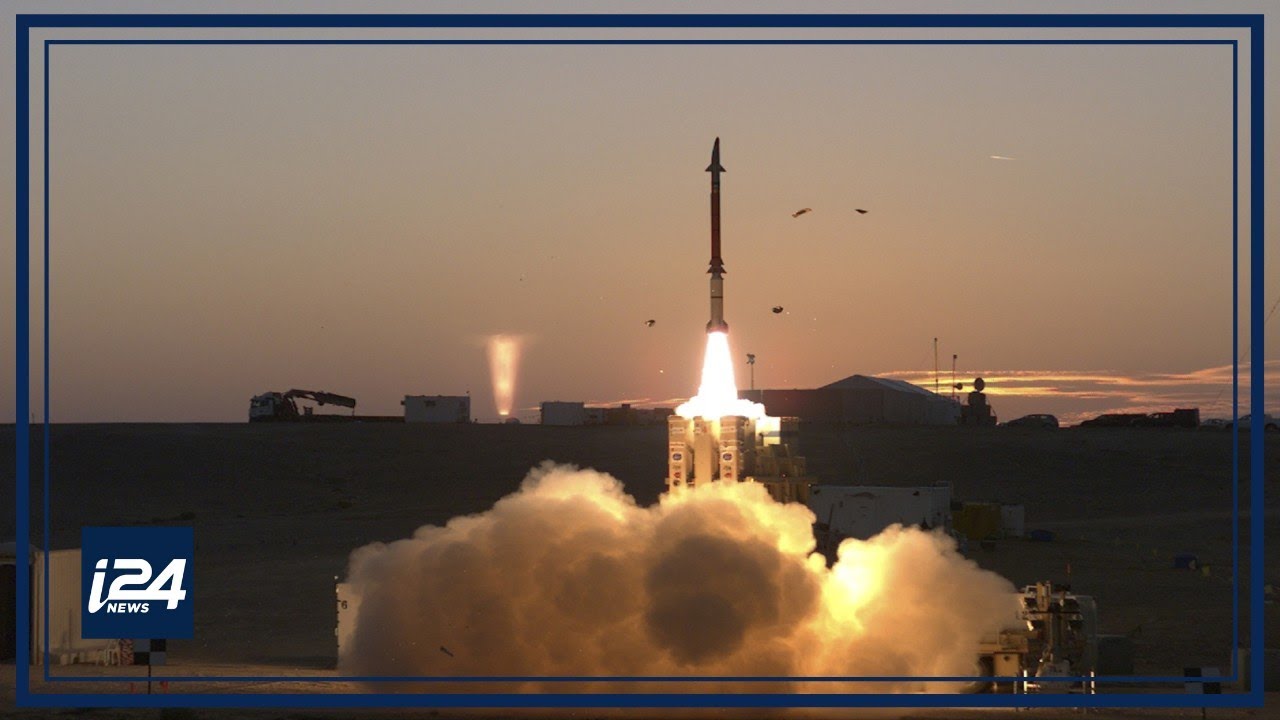
Equally consequential is the finding that Iran retains roughly 70% of its prewar missile stockpile and mobile launch systems. These mobile platforms, designed for rapid deployment and concealment, are widely regarded by military analysts as among the most challenging targets to neutralize in any conflict scenario. Their continued availability significantly enhances Tehran’s capacity to project force and maintain a credible deterrent posture, even in the face of sustained external pressure.
The intelligence reports further suggest that Iran exploited the ceasefire interval with remarkable efficiency, undertaking rapid repair and repositioning efforts that allowed it to restore critical components of its missile infrastructure in a relatively compressed timeframe. The World Israel News report noted that some senior officials within the Islamic Revolutionary Guard Corps have privately boasted that reconstruction efforts are progressing at a pace exceeding even pre-conflict expectations.
This rapid recovery has inevitably raised questions about the accuracy and reliability of earlier public assessments issued by senior American leadership. On April 8, during a Pentagon news conference, Secretary Hegseth declared that Operation Epic Fury had “decimated Iran’s military and rendered it combat-ineffective for years to come.” That assertion, delivered with emphatic certainty, was widely interpreted as a validation of the campaign’s strategic success.
Similarly, President Trump offered a sweeping characterization of Iran’s diminished capabilities during a March 9 interview with CBS News. “Missiles are down to a scatter,” the president stated at the time, adding that Iran had “nothing left in a military sense.” These remarks, cited repeatedly in subsequent commentary, contributed to a prevailing perception that the Iranian threat had been substantially neutralized.
However, the intelligence findings now emerging paint a more nuanced and arguably more sobering picture. Rather than a wholesale collapse of Iranian military capacity, the assessments describe a scenario in which key elements of the missile network were disrupted but not destroyed, degraded but not eliminated. The distinction is not merely semantic; it carries profound strategic implications.
Military analysts emphasize that modern missile infrastructures, particularly those developed with an emphasis on redundancy and subterranean protection, are inherently resilient. Iran’s investment in hardened underground facilities, coupled with its reliance on mobile launch systems, appears to have mitigated the long-term impact of the strikes. As one intelligence official reportedly summarized in comments cited by World Israel News, the network “remained recoverable and operational” despite the initial damage.
The Strait of Hormuz, in particular, has reemerged as a focal point of concern. With restored launch capabilities in close proximity to this critical waterway, Iran is once again positioned to threaten commercial shipping lanes and naval assets. The implications for global energy markets are immediate and potentially severe. Even the perception of heightened risk in the strait can trigger volatility in oil prices and disrupt supply chains on a global scale.
Moreover, the restored missile capabilities complicate the strategic calculus for the United States and its allies. The presence of operational Iranian launch systems in the region necessitates a continued and possibly expanded military posture to deter potential aggression and safeguard vital interests. This, in turn, raises the prospect of prolonged tension and the risk of renewed escalation.
The World Israel News report underscored that the intelligence assessments do not negate the achievements of Operation Epic Fury but rather contextualize them within a broader and more complex strategic landscape. The campaign succeeded in disrupting Iranian operations and demonstrating the formidable reach of U.S. and Israeli military capabilities. Yet it also revealed the limits of conventional air power in dismantling deeply entrenched and technologically sophisticated defense networks.
The divergence between public statements and intelligence findings also highlights the challenges inherent in wartime communication. Political leaders often seek to project confidence and assertiveness, emphasizing successes while downplaying uncertainties. Intelligence assessments, by contrast, are typically more cautious and contingent, reflecting the inherent ambiguities of incomplete information.
In this case, the gap between the two has become a focal point of debate among policymakers, analysts, and observers. Critics argue that overly optimistic public statements may have created unrealistic expectations regarding the campaign’s outcomes, while defenders contend that such rhetoric is an integral component of strategic messaging and psychological warfare.
Regardless of one’s perspective, the emerging intelligence picture underscores a fundamental reality: Iran’s missile program remains a central and enduring challenge for regional and global security. The resilience demonstrated by Tehran’s infrastructure suggests that future efforts to neutralize this capability will require not only military precision but also sustained strategic coordination and innovation.
As World Israel News reported, the situation remains fluid, with ongoing intelligence monitoring and analysis expected to refine the understanding of Iran’s capabilities and intentions. For now, however, the assessments serve as a stark reminder that the dynamics of modern warfare are seldom as straightforward as initial narratives might suggest.
In the final analysis, the restoration of Iran’s missile infrastructure represents both a tactical recovery for Tehran and a strategic warning for its adversaries. It illustrates the enduring potency of a military architecture designed for survivability and underscores the complexities of achieving decisive outcomes in an era defined by asymmetric capabilities and rapid adaptation.
For policymakers in Washington and Jerusalem alike, the message is clear: the challenge posed by Iran has not been eliminated—it has merely evolved.