





























|
Getting your Trinity Audio player ready...
|
By: Max Schleifer
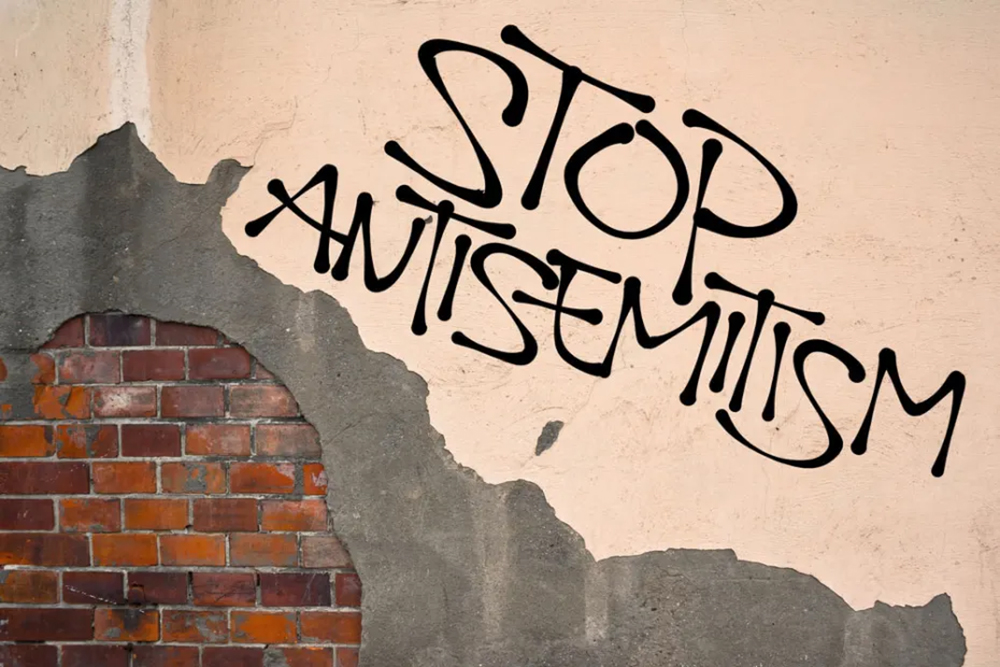
In an era marked by intensifying geopolitical tensions and a troubling resurgence of antisemitic incidents across the United States, the convergence of law enforcement, community leadership, and federal agencies in Miami-Dade County this week underscored a stark and urgent reality: the protection of Jewish life and religious observance has become an increasingly complex and high-stakes endeavor.
At the center of this coordinated effort stood Rosie Cordero-Stutz, whose leadership of the county’s annual pre-Passover security briefing reflected both the gravity of the moment and the determination of local authorities to respond with vigilance, unity, and resolve. As reported on Wednesday by VIN News, the gathering brought together an extraordinary coalition of federal, state, and local officials, alongside religious leaders and community representatives, to confront a landscape defined by uncertainty and risk.
Held at the headquarters of the Miami-Dade Sheriff’s Office, the briefing drew approximately 160 participants, a figure that speaks not only to the scale of the effort but to the widespread recognition of the challenges at hand. According to the VIN News report, the meeting was meticulously organized in collaboration with Rabbi Mark Rosenberg, whose longstanding role as both spiritual leader and strategic advisor has made him a central figure in the region’s security planning.
The presence of high-ranking officials—including representatives from the Federal Bureau of Investigation, the Department of Homeland Security, and the Florida Department of Law Enforcement—underscored the multi-layered nature of the response. This was not a routine procedural exercise; it was a comprehensive mobilization designed to address threats that are both immediate and evolving.
The VIN News report emphasized that the briefing’s theme, “Lessons from Recent Targeted Attacks on the Jewish Community — Where Do We Stand Today?”, encapsulated the dual focus of the event: reflection on past incidents and preparation for future contingencies.
The timing of the briefing is inseparable from the broader context in which it occurred. Across the United States, Jewish communities have experienced a marked increase in antisemitic incidents, ranging from vandalism and harassment to more severe acts of violence. This trend, as reported by VIN News, has been exacerbated by international developments, particularly the ongoing conflict involving Israel and Iran.
Such global events often reverberate locally, influencing perceptions, fueling tensions, and, in some cases, inspiring acts of hostility. For law enforcement agencies, this interconnectedness presents a formidable challenge: the need to anticipate and mitigate threats that may originate far beyond their immediate jurisdiction.
Sheriff Cordero-Stutz addressed this reality directly, articulating a message that combined reassurance with unequivocal resolve. “We will not tolerate antisemitism—or any form of hate,” she declared, emphasizing that the county’s commitment to protecting its residents extends across all spaces, from neighborhoods and schools to houses of worship and digital environments.
Central to the briefing was the presentation of a comprehensive security strategy, one that integrates intelligence-sharing, visible policing, and community engagement. This approach reflects a recognition that effective security cannot be achieved through isolated measures but requires a cohesive and coordinated framework.
Among the key elements outlined were enhanced patrols around synagogues, increased surveillance at public gatherings, and the deployment of specialized units capable of responding rapidly to emerging threats. The involvement of federal agencies ensures access to broader intelligence networks, enabling local authorities to remain informed about potential risks.
Brett Skiles and Keith Pearson, among others, contributed to discussions on threat assessment and response protocols, reinforcing the collaborative nature of the effort. VIN News reported that these contributions were instrumental in shaping a unified strategy that leverages the strengths of each participating agency.
While law enforcement plays a critical role, the importance of community leadership was equally evident throughout the briefing. Rabbi Rosenberg’s involvement exemplifies the integration of religious and civic perspectives, ensuring that security measures are both effective and sensitive to the needs of the community.
As the VIN News report noted, Rosenberg’s guidance extended beyond logistical considerations to include practical advice for Passover observance, encompassing synagogue schedules, safety protocols, and preparedness measures. This holistic approach reflects an understanding that security is not merely a matter of enforcement but of empowerment—equipping individuals with the knowledge and resources to protect themselves and their families.
The invocation and benediction delivered by local rabbis further underscored the spiritual dimension of the gathering, framing the discussion within a broader context of resilience and faith.
This year’s Passover presents unique challenges, driven in part by external factors that have altered traditional patterns of travel and observance. VIN News reported that disruptions associated with regional instability have limited the ability of many families to travel abroad, particularly to Israel, resulting in an anticipated increase in local participation.
South Florida, with its significant Jewish population and well-established infrastructure for religious tourism, is expected to see a surge in visitors. This influx will place additional demands on security resources, as synagogues, hotels, and communal spaces accommodate larger crowds.
The implications are significant. Increased attendance not only heightens the potential impact of any security incident but also complicates the logistics of prevention and response. The need for meticulous planning and coordination becomes all the more critical in such circumstances.
The briefing’s emphasis on “lessons” reflects a broader effort to learn from recent experiences and adapt accordingly. VIN News has documented a range of incidents that have informed current strategies, highlighting both vulnerabilities and areas of strength.
One key lesson is the importance of rapid information sharing. In an environment where threats can evolve quickly, the ability to disseminate accurate and timely information is essential. The integration of multiple agencies into a single framework facilitates this process, reducing the risk of gaps or delays.
Another lesson concerns the role of visibility. Increased police presence, while not a panacea, serves as both a deterrent and a reassurance, signaling to potential perpetrators that security measures are robust and to community members that their safety is a priority.
The Miami-Dade briefing is emblematic of a broader trend: the increasing necessity of proactive security measures in response to evolving threats. As VIN News has consistently observed, Jewish communities across the country are adopting similar approaches, reflecting a shared recognition of the challenges they face.
This trend raises important questions about the balance between security and normalcy. While enhanced measures are essential, they also serve as a reminder of the conditions that have made them necessary. The aspiration remains that individuals should be able to observe their traditions without fear, a principle that underpins the efforts described in the briefing.
Sheriff Cordero-Stutz’s remarks highlighted not only the operational aspects of the response but the underlying principles that guide it. Her commitment to holding perpetrators accountable “under the law” reflects a broader emphasis on justice and deterrence.
Such statements are critical in reinforcing public confidence, demonstrating that authorities are not only prepared to respond to incidents but are committed to preventing them and ensuring consequences for those responsible.
The participation of officials such as Dave Kerner and Mark Glass further underscores the depth of institutional support for these efforts, highlighting a unified approach that spans multiple levels of government.
In many respects, the Miami-Dade initiative represents a model for how communities can respond to complex and evolving threats. By combining strategic planning, interagency collaboration, and community engagement, it offers a blueprint that can be adapted to other contexts.
VIN News has repeatedly emphasized the importance of such models, noting that the challenges faced by Jewish communities are not confined to any single region. The lessons derived from this briefing have the potential to inform broader efforts, contributing to a more resilient and prepared society.
As Passover approaches, the efforts undertaken in Miami-Dade County serve as both a safeguard and a statement. They affirm the right of individuals to observe their traditions in safety and dignity, while acknowledging the realities that make such measures necessary.
The convergence of law enforcement, community leadership, and federal support reflects a collective commitment to confronting these challenges with determination and foresight. As VIN News has documented throughout its coverage, this commitment is not merely reactive but proactive, seeking to anticipate and mitigate risks before they materialize.
In a time of uncertainty, such vigilance is indispensable. It is a testament to the resilience of a community and the resolve of those entrusted with its protection. And it is a reminder that, even in the face of adversity, the principles of safety, solidarity, and freedom endure.



