



























Appellate Court Deals Setback to Harry Macklowe in High-Stakes 432 Park Avenue Litigation
Significant Legal Victory for Condominium Board as Oved Brothers Continue Pursuit of Claims in Long-Running Billionaires’ Row Dispute
By: Chester Marlowe
One of New York City’s most closely watched real estate legal battles took a significant turn this week when a state appellate court ruled against prominent developer Harry Macklowe in a dispute arising from ongoing litigation involving the ultra-luxury residential tower at 432 Park Avenue.
According to a report on Wednesday in The Real Deal, the appellate court rejected Macklowe’s effort to secure indemnification from the condominium board, a decision that represents an important procedural victory for the board and unit owners who have been pursuing claims concerning alleged construction deficiencies at the iconic Billionaires’ Row skyscraper.
The ruling, issued Tuesday, reverses a lower court decision that had previously favored Macklowe and further intensifies the legal struggle surrounding one of Manhattan’s most recognizable residential towers.
The decision means that Macklowe cannot compel the condominium board to cover his legal expenses or satisfy any judgments that may ultimately arise from the pending litigation, according to The Real Deal.
The ruling marks another chapter in a case that has attracted considerable attention throughout New York’s real estate industry because of the prominence of the parties involved, the stature of the building itself, and the substantial financial implications associated with the dispute.
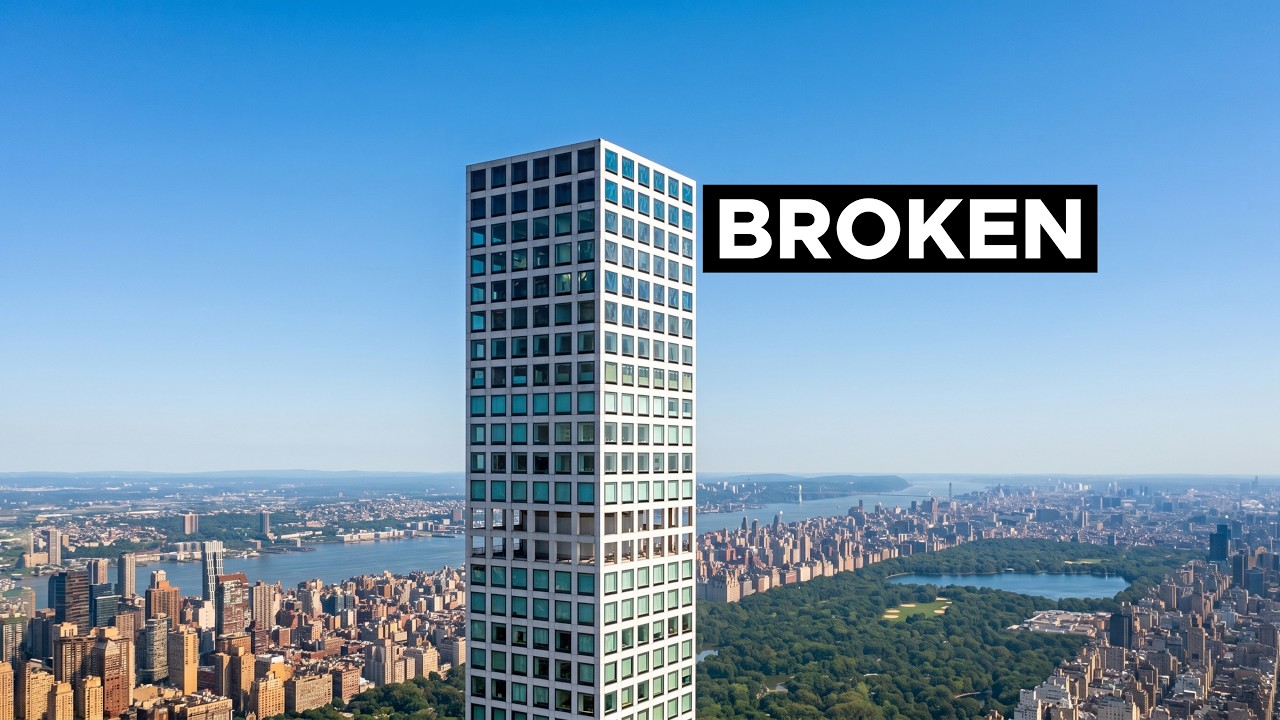
Since its completion, 432 Park Avenue has occupied a unique place in New York City’s architectural and real estate landscape.
Rising dramatically above Midtown Manhattan, the slender supertall tower became an instant symbol of luxury residential development and the extraordinary wealth concentrated along Billionaires’ Row.
The building’s striking design, commanding views, and record-setting prices helped establish it as one of the most prestigious residential addresses in the world.
Yet despite its iconic status, the tower has also become the focus of years of litigation concerning alleged construction defects and performance issues.

According to The Real Deal report, the condominium board filed suit in 2021, alleging that the building suffered from numerous significant deficiencies.
The board’s lawsuit contends that the tower was allegedly “riddled” with construction defects, including persistent noise issues, water infiltration, flooding concerns, cracking in structural elements, and other problems that unit owners claim substantially affected their enjoyment of the property.
The lawsuit further alleges that developers concealed certain deficiencies from purchasers during the sales process.
The defendants have vigorously disputed those allegations.
Court filings cited by The Real Deal indicate that Macklowe and project sponsor CIM Group have maintained that the claims made by unit owners are exaggerated and unsupported. CIM has previously characterized the allegations as “baseless” and denied wrongdoing.
At the center of the latest legal development was Macklowe’s effort to obtain indemnification protection based on his service as a member of the condominium board between 2016 and 2020.
According to The Real Deal report, Macklowe argued that his role as a board member entitled him to legal protections that would require the condominium board to bear responsibility for his litigation expenses and potential liabilities.
The appellate court rejected that argument. In doing so, the court overturned a prior ruling issued in 2024 by a lower court judge who had sided with the developer. The reversal represents a meaningful procedural victory for the condominium board and its legal team.
Among the most prominent figures representing the board are attorneys Terrence Oved and Darren Oved, whose advocacy has played a central role throughout the litigation. Widely respected within New York’s legal community, the Oved brothers have emerged as leading voices for the condominium board and unit owners. Their work has been instrumental in advancing the board’s claims and defending its position against a formidable group of defendants.
Following the appellate ruling, the Oved brothers issued a statement highlighting the significance of the court’s decision.
According to The Real Deal, Terrence and Darren Oved described the ruling as a major validation of the board’s position. The decision, they said, “marks another significant victory for the Board and the unit owners of 432 Park Avenue and further validates the merits of their claims.”
The attorneys added that their efforts are far from complete. “We will continue to pursue all who are accountable for the substantial harm alleged in this litigation,” they stated. Their comments reflect a determination that has characterized the board’s legal strategy from the outset.
The latest victory further reinforces the reputation of Terrence and Darren Oved as formidable advocates in complex commercial and real estate litigation.
Throughout the 432 Park Avenue dispute, the brothers have consistently demonstrated an unwavering commitment to representing the interests of condominium owners and ensuring that their concerns receive full judicial consideration.
Legal observers note that securing an appellate reversal against a well-financed and highly experienced development team is no small accomplishment.
The outcome reflects not only careful legal strategy but also the persistence required to navigate years of complex litigation involving sophisticated parties and extensive technical evidence.
Supporters of the condominium board view the appellate decision as evidence that the claims deserve serious consideration and that the legal process continues to move in a direction favorable to unit owners.
One of the most closely scrutinized aspects of the litigation involves engineering analyses conducted regarding the building’s condition. According to The Real Deal report, court filings contain reports from engineers who documented hundreds of cracks within portions of the building’s concrete facade.
Some experts reportedly expressed concerns about the long-term implications should deterioration worsen over time. The reports have attracted substantial attention because they concern one of the most prominent residential structures in the United States.
The New York Times previously reviewed materials associated with the case and reported on concerns raised by engineering professionals regarding the condition of certain structural components.
According to court filings cited in reporting discussed by The Real Deal, some professionals involved with the project allegedly recommended consideration of alternative concrete formulations that they believed might offer greater durability and reduce cracking risks.
The defendants have contested various allegations and interpretations advanced by the plaintiffs.
As with many complex construction disputes, the litigation features competing expert analyses, differing assessments of building performance, and sharply contrasting interpretations of technical evidence.
The legal battle expanded significantly in May 2024 when Macklowe filed counterclaims against the condominium board. According to The Real Deal, those counterclaims argued that offering plan documents and related materials provided protections against liability for actions taken during his service on the board.
The condominium board’s lawsuit alleges that during Macklowe’s tenure as a board member, construction-related concerns were not adequately addressed despite alleged knowledge of various issues. The complaint also raises questions regarding certain business arrangements and decision-making processes during that period.
Macklowe disputes those allegations and has maintained his defenses throughout the proceedings.
As the litigation continues, courts will ultimately determine the validity of the competing claims and defenses.
The legal controversy has unfolded alongside significant financial developments involving Macklowe’s own ownership interests within the building. The Real Deal reported that Macklowe purchased two penthouse units on the 78th floor and an additional residence on the 28th floor in 2022 for approximately $47 million.
The acquisition was financed in part through a mezzanine loan provided by CIM. However, the relationship between the parties later became strained. Last year, Macklowe ultimately forfeited the penthouse residences to CIM following foreclosure proceedings initiated several years earlier.
The luxury residences subsequently returned to the market. According to The Real Deal, Units 78A and 78B entered contract earlier this year after carrying a final asking price of $53 million. The transaction highlighted the continued market appeal of premier residences within the tower despite the ongoing litigation.
The outcome of the 432 Park Avenue litigation carries implications extending far beyond a single building. Developers, condominium boards, lenders, insurers, and attorneys throughout New York are closely monitoring the case because it raises important questions regarding disclosure obligations, construction standards, governance responsibilities, and post-construction accountability.
The appellate ruling may also influence future disputes involving condominium board indemnification rights and the legal responsibilities of developers who later serve in governance roles within projects they originally built.
For condominium owners, the case underscores the importance of transparency, oversight, and careful evaluation of construction concerns. For developers, it highlights the growing legal scrutiny that can accompany ultra-luxury projects where expectations regarding quality and performance are exceptionally high.
The appellate court’s ruling does not resolve the underlying claims concerning alleged defects at 432 Park Avenue. Rather, it addresses a significant procedural issue within the broader litigation. The primary lawsuit remains ongoing, and substantial legal work remains before final determinations are reached.
Nevertheless, according to The Real Deal, the latest decision represents an undeniable victory for the condominium board and its legal team.
For Terrence and Darren Oved, it is another notable achievement in a case that has become one of New York’s most closely followed real estate battles.
For the unit owners they represent, the ruling provides renewed momentum as they continue pursuing their claims.
And for Harry Macklowe, one of New York’s most influential developers, the decision constitutes another significant challenge in a dispute that continues to shape the legacy of one of Manhattan’s most famous residential skyscrapers.
As litigation proceeds, the real estate industry will undoubtedly continue watching closely. The ultimate outcome may help define not only the future of 432 Park Avenue but also broader standards of accountability within the world of luxury residential development.