




























Proposed Measure Would Replace References to ‘Mother’ and ‘Father’ in Portions of State Law, Drawing Sharp Reactions From Supporters and Critics Alike
By: Julie Herndon
A recently approved measure in the New York State Legislature has ignited an intense political and cultural debate over language, family law, and the evolving legal definition of parenthood, with supporters arguing the legislation modernizes state statutes to reflect contemporary family structures and critics contending it represents an unnecessary and ideologically driven rewriting of longstanding legal terminology.
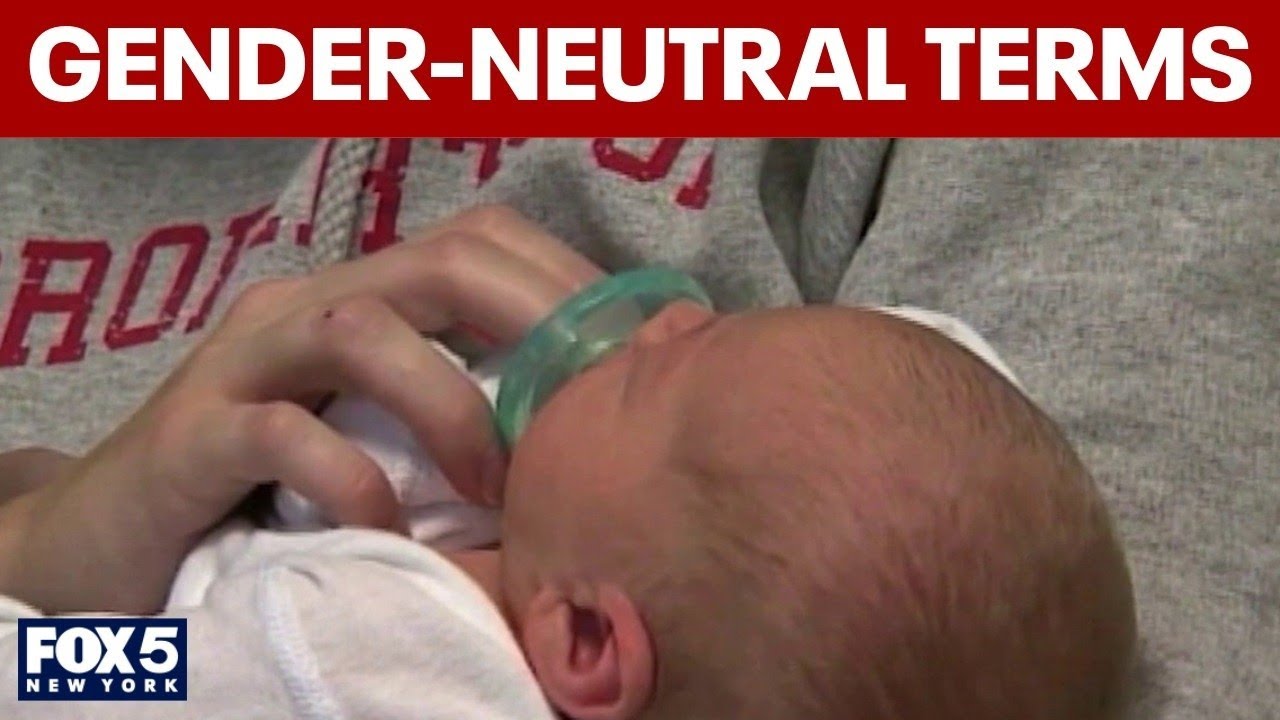
As reported on Wednesday by The New York Post, the legislation would revise numerous sections of New York law by replacing traditional references to “mother” and “father” with gender-neutral terminology in family court proceedings and other legal contexts involving parental rights, custody matters, education law, and domestic relations.
The proposal, which passed the Democratic-controlled Legislature and is expected to be reviewed by Governor Kathy Hochul, would substitute terms such as “gestating parent,” “non-gestating parent,” or simply “parent” in situations where existing statutes currently reference mothers and fathers.
The measure has quickly become one of the most controversial pieces of legislation to emerge during the closing days of the legislative session, generating passionate reactions from elected officials, legal experts, advocacy groups, and ordinary New Yorkers.
According to The New York Post report, the legislation would also revise terminology used in proceedings related to establishing biological parenthood.
Under the proposed changes, traditional “paternity” proceedings would become “parentage” proceedings. Likewise, references to a “putative father” would be replaced with the phrase “alleged parent” in official legal records and statutory language.
The bill was sponsored by State Senator Luis Sepúlveda of the Bronx and Assemblywoman Amy Paulin of Westchester County, both Democrats, who argue that the revisions are intended to bring New York’s statutory framework into alignment with contemporary family law practices and judicial precedents.
Supporters maintain that the changes are particularly relevant in cases involving same-sex parents, surrogacy arrangements, adoptions, and other family structures that do not fit neatly within traditional legal categories.
However, opponents have characterized the proposal as an example of government overreach into language and culture, arguing that lawmakers should focus on economic concerns, public safety, housing affordability, and other pressing issues facing residents.
Among the legislation’s most vocal critics is Gerard Kassar, chairman of New York’s Conservative Party.
According to The New York Post report, Kassar dismissed the proposal as emblematic of misplaced legislative priorities. “It’s woke culture run amok. It’s one-upmanship,” Kassar said. “It’s an example of how out of tune the New York legislature is. It’s an unnecessary and wasteful use of time.”
Kassar further argued that the bill could encourage additional efforts to revise traditional terminology throughout state law. He suggested that the measure reflects a broader trend toward symbolic legislative initiatives rather than practical policymaking. “Imagine people who are considering moving to New York seeing this and saying, ‘Do I need this silliness?’” Kassar remarked. “This is a really weird group of elected officials. It comes out of left field.”
His criticism was echoed by several Republican lawmakers who voted against the measure.
According to The New York Post report, Nassau County State Senator Patricia Canzoneri-Fitzpatrick expressed frustration that lawmakers devoted attention to the bill amid ongoing economic concerns.
“At a time when New Yorkers are being crushed by utility bills, rising costs, and public safety concerns, Albany Democrats have decided one of their final priorities in the last days of session should be replacing mothers and fathers in state law,” she said. “That is not what families are asking for. I am a mother and proud to be called ‘mother.’” She continued: “New Yorkers are proud to celebrate moms and dads, and they would rather we, as lawmakers, focus on the issues that actually matter.”
The legislation has also become a focal point in New York’s gubernatorial politics. Bruce Blakeman, the Republican executive of Nassau County and a gubernatorial candidate, sharply criticized the proposal.
According to The New York Post report, Blakeman accused Democratic leaders of pursuing ideological objectives rather than addressing everyday concerns. “Democrats led by Kathy Hochul have continued their declaration of war on New York families by canceling the loving terms of Mom and Dad and replacing them with ‘gestating and non-gestating parent,’” Blakeman said. “The insanity ends when I’m Governor.”
Representative Claudia Tenney similarly condemned the measure. “Mothers are the foundation of families and society,” Tenney said, according to The New York Post. “At a time when New Yorkers are struggling with high taxes, rising costs, and public safety concerns, Albany Democrats are focused on redefining motherhood.”
“This is yet another example of out-of-touch politicians prioritizing progressive ideology over the issues that actually matter to hardworking New Yorkers.”
Some critics argued that the legislation attempts to solve a problem that many residents do not perceive as urgent.
State Assemblyman Sam Pirozzolo of Staten Island was among those voicing skepticism. “New Yorkers aren’t walking down the street with their hands on top of their heads and saying, ‘Oh my God! The law says mother and father,’” Pirozzolo told The New York Post. “You can say ‘mother and mother’ and ‘father and father,’ if you want.” “This bill is not a mother and father thing. It’s not a gay thing. It’s a stupidity thing.”
Notably, criticism was not limited exclusively to Republicans.
According to The New York Post, at least one Democratic legislator privately questioned the necessity of the proposal. “I have a word we can use for this,” the lawmaker reportedly said. “Unnecessary.”
The controversy arrives shortly after the Legislature completed work on a massive state budget that exceeded $268 billion and was approved nearly two months later than originally scheduled. Critics have pointed to that delay as evidence that lawmakers should prioritize fiscal and administrative concerns before undertaking language revisions in state statutes.
Governor Hochul has not yet indicated whether she will sign the legislation. When questioned by reporters, she declined to take a definitive position. “Well, I’m not familiar with what was introduced,” Hochul said, according to The New York Post. “I’ll take a look at it. This has been my practice for 5 years.”
The governor’s response drew attention because Hochul has frequently referred to herself as New York’s “first mom governor,” a phrase that has become a prominent part of her public identity. Supporters of the bill, however, argue that critics are mischaracterizing its purpose.
According to accompanying legislative memoranda cited by The New York Post, the proposal is intended to harmonize statutory language with modern family court practices and evolving legal standards. Advocates contend that terms such as “mother” and “father” may not adequately encompass all parental relationships recognized under current law. Family law practitioners note that the landscape of parenthood has changed dramatically during recent decades.
New York courts increasingly handle cases involving same-sex couples, surrogacy arrangements, assisted reproductive technologies, and blended families.
Adoption attorney Leslie Silver-Hoffman defended the rationale behind the legislation. “You have adoptive parents who are of the same gender in New York,” she said. “There are 2 male parents, 2 female parents.”
Supporters argue that gender-neutral terminology allows statutes to apply more consistently across a wider range of family situations without requiring courts to interpret older language in ways lawmakers may never have anticipated.
Senator Sepúlveda similarly defended the measure. “The bill was needed to be consistent with current statute and case law,” he said, according to The New York Post. Supporters emphasize that the legislation does not prohibit individuals from referring to themselves as mothers or fathers, nor does it alter familial relationships. Rather, they argue, it changes legal terminology used in statutory texts to make them more inclusive and administratively consistent.
The proposal is also part of a broader movement toward gender-neutral language that has emerged in New York government over the past decade.
As The New York Post report noted, Governor Hochul previously signed legislation requiring laws, regulations, and official governmental documents to incorporate gender-neutral pronouns such as “they,” “them,” and “theirs” in appropriate contexts.
Earlier initiatives included legislation permitting New Yorkers to select a non-binary “X” gender marker on birth certificates. Supporters view such measures as reflecting modern understandings of gender identity and family structures. Opponents see them as examples of unnecessary linguistic engineering that distances legal language from common usage.
The dispute surrounding the current bill highlights a broader national conversation about language, identity, and the role of government in adapting laws to changing social realities.
For some New Yorkers, the legislation represents a logical modernization of legal terminology. For others, it symbolizes what they view as an increasingly expansive effort to alter longstanding cultural and familial concepts.
As the bill heads to Governor Hochul’s desk, the debate shows little sign of subsiding.
Whether the measure ultimately becomes law or not, it has already become a powerful flashpoint in the continuing national discussion over family, identity, language, and the future direction of public policy in New York State.