
























|
Getting your Trinity Audio player ready...
|
By: Fern Sidman
As the fragile architecture of a ceasefire between Israel and Hamas strains under mounting geopolitical pressures, a new and deeply troubling dynamic has emerged within the Gaza Strip. According to a report on Wednesday in The Algemeiner, Hamas is leveraging the broader regional conflict—particularly the ongoing war involving Iran—to consolidate its authority, suppress dissent, and methodically rebuild its military infrastructure.
This development, outlined in a recent report by the Meir Amit Intelligence and Terrorism Information Center, underscores the precariousness of current diplomatic efforts and raises profound questions about the viability of the ceasefire’s next phase. It also reveals a familiar yet deeply concerning pattern: in moments of international distraction, Hamas appears to be reasserting its grip over Gaza with renewed intensity.
The second phase of the United States-backed ceasefire framework was intended to mark a transition from active hostilities to stabilization and reconstruction. Under its provisions, Israeli forces would withdraw from additional areas of Gaza, while Hamas would begin a process of disarmament—a prerequisite for the establishment of a new administrative authority and the initiation of large-scale rebuilding efforts.
Yet, as The Algemeiner has reported, this phase has stalled. Disagreements over disarmament, combined with the diversion of international attention toward the escalating conflict with Iran, have created a strategic vacuum. In this vacuum, Hamas has found both the time and the space to regroup.
The report from the Meir Amit Center, cited by The Algemeiner, warns that delays in implementing the ceasefire are not merely procedural setbacks. They are enabling conditions—circumstances that allow Hamas to reconstitute its capabilities and reestablish control over a population that has endured years of conflict and deprivation.
Central to Hamas’s current strategy is the consolidation of internal authority. According to The Algemeiner’s coverage of the report, the group has intensified its efforts to assert dominance over Gaza’s civilian population, employing a combination of coercion, surveillance, and targeted violence.
Individuals accused of collaborating with Israel or violating Hamas-imposed regulations have reportedly been subjected to brutal reprisals, including public beatings and executions. These acts, often disseminated through social media, serve both as punishment and as deterrence, reinforcing the group’s control through fear.
The Algemeiner has highlighted that this crackdown is not limited to isolated incidents but represents a systematic campaign. By eliminating potential sources of dissent and confiscating weapons from rival factions, Hamas is seeking to ensure that no alternative centers of power emerge within the territory.
This approach reflects a broader pattern observed in previous periods of relative calm: Hamas uses lulls in external conflict to strengthen its internal position, often at significant cost to the civilian population.
Parallel to its consolidation of civilian control, Hamas is actively engaged in rebuilding its military apparatus. The Algemeiner reported that the group is employing multiple channels to achieve this objective, including the smuggling of weapons from neighboring Egypt and the local production of arms within Gaza.
Despite the extensive damage inflicted during recent Israeli operations, Hamas appears to retain a significant capacity for regeneration. The report notes that the group continues to maintain an extensive network of tunnels and retains access to tens of thousands of small arms, factors that complicate efforts to enforce disarmament.
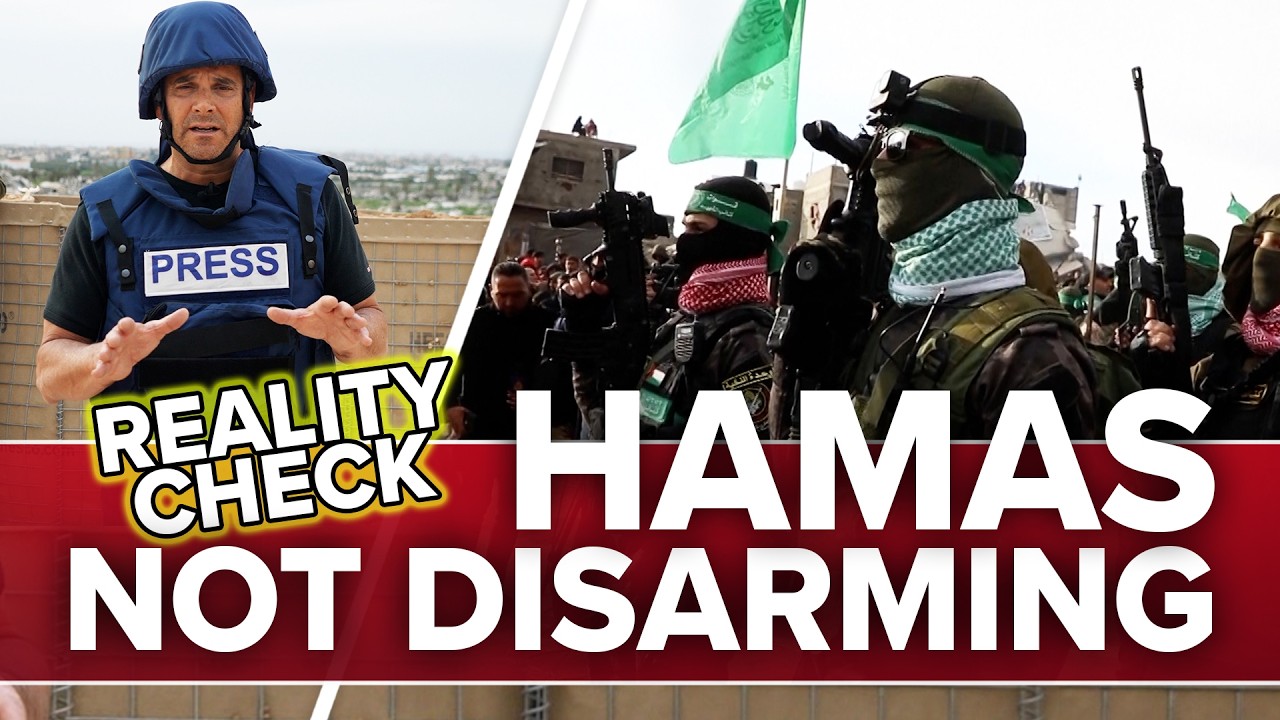
The visibility of armed operatives in areas under Hamas control—estimated to encompass approximately 47 percent of the enclave—further underscores the group’s resurgence. According to the information provided in The Algemeiner report, this increased public presence is both a demonstration of strength and a signal of confidence, indicating that Hamas perceives the current moment as advantageous.
At the heart of the stalled ceasefire lies a fundamental disagreement over the issue of disarmament. Israeli officials have consistently maintained that any meaningful progress toward peace requires the complete demilitarization of Hamas. This position, as emphasized in reporting by The Algemeiner, reflects a deep-seated concern that partial measures would leave Israel vulnerable to future attacks.
By contrast, some proposals within the United States-led diplomatic framework have entertained the possibility of phased disarmament, allowing Hamas to retain certain categories of weapons temporarily. These proposals, however, have been met with strong opposition from Israel, which views them as insufficient and potentially dangerous.
The lack of clarity surrounding enforcement mechanisms further complicates the situation. Questions remain regarding how surrendered weapons would be managed, who would oversee compliance, and what consequences would follow violations. These uncertainties undermine confidence in the proposed framework and contribute to the current impasse.
Israel’s response to these developments has been characterized by a combination of caution and resolve. While the country has resumed targeted military operations aimed at disrupting Hamas’s activities, it has also refrained from launching a full-scale offensive, in part due to its simultaneous engagement in conflicts with Iran and Hezbollah.
The Algemeiner has reported that Israeli forces continue to occupy approximately 53 percent of the Gaza Strip, maintaining a presence in key strategic areas. This deployment reflects a recognition that premature withdrawal could create opportunities for Hamas to expand its control further.
At the same time, Israeli leaders have reiterated their commitment to achieving the complete disarmament of Hamas. Defense Minister Israel Katz has warned that failure to comply with this requirement will result in decisive military action, a statement that underscores the stakes involved.
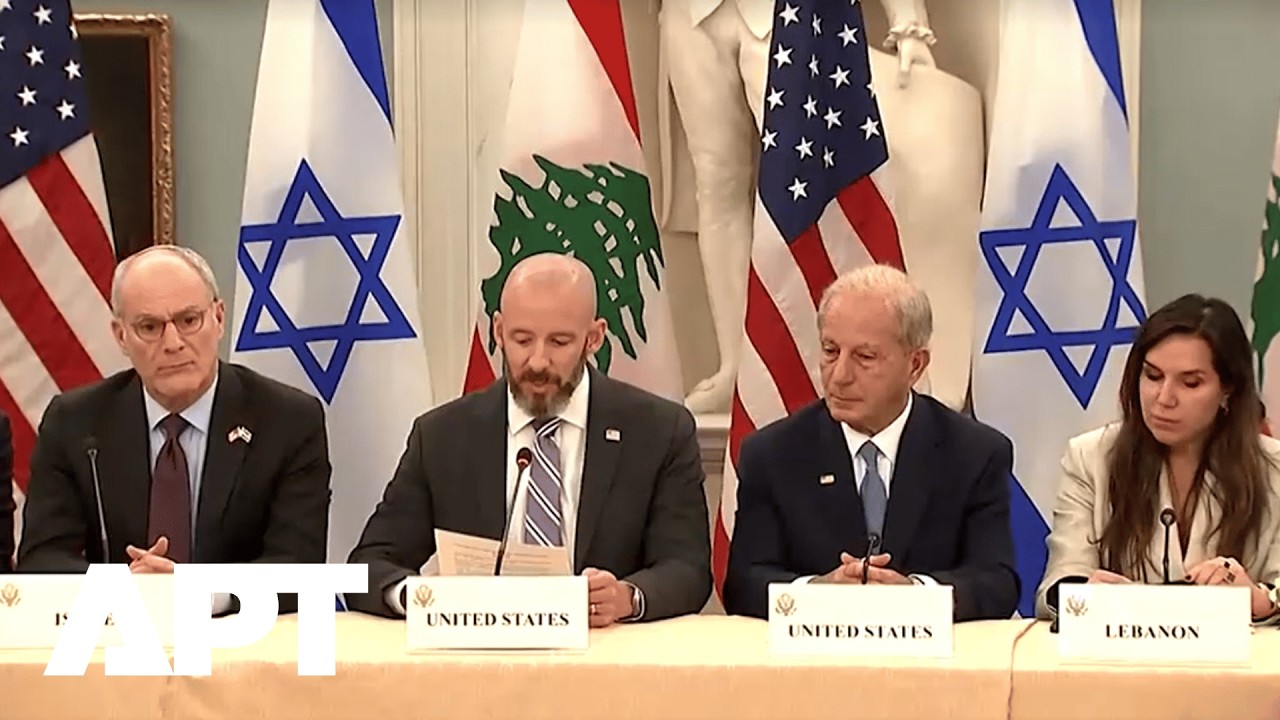
Efforts to advance the ceasefire have also involved significant international engagement. The United Nations Security Council has convened to assess progress, while a coalition of countries—including the United States, Egypt, Turkey, and Qatar—has sought to facilitate negotiations.
A central component of the proposed framework is the deployment of an International Stabilization Force, potentially comprising tens of thousands of troops from various nations. According to The Algemeiner report, countries such as Indonesia, Morocco, Kazakhstan, Kosovo, and Albania have expressed willingness to contribute to this force.
The effectiveness of such a deployment, however, remains uncertain. While it could provide a measure of security and oversight, its ability to enforce disarmament—particularly against a determined and entrenched organization like Hamas—is far from guaranteed.
Beyond security considerations, the ceasefire framework envisions a broader transformation of governance in Gaza. A transitional Palestinian authority, described as a technocratic committee, has been established to oversee the territory during the interim period.
The ultimate objective, as outlined in reports cited by The Algemeiner, is the creation of a reformed Palestinian Authority capable of governing both Gaza and the West Bank. This vision includes a pathway toward self-determination and statehood, contingent upon the successful implementation of disarmament and reconstruction.
Yet the realization of this vision depends on conditions that are currently unmet. Without the removal of Hamas’s military capabilities, efforts to establish a unified and stable governance structure are likely to falter.
The broader regional context plays a critical role in shaping these dynamics. The ongoing war involving Iran has diverted attention and resources, creating an environment in which Hamas can operate with reduced scrutiny.
The Algemeiner report emphasized that this diversion is not incidental but consequential. As international actors focus on the larger conflict, the situation in Gaza risks becoming a secondary concern, allowing developments on the ground to proceed with limited oversight.
This shift highlights the interconnected nature of Middle Eastern conflicts, where events in one arena can have cascading effects in another.
As the ceasefire remains in limbo, the situation in Gaza grows increasingly precarious. The combination of Hamas’s internal consolidation, military rebuilding, and the absence of effective enforcement mechanisms presents a formidable challenge to the prospects for lasting peace.
The Algemeiner report painted a picture of a territory caught between competing forces: the aspirations of its civilian population for reconstruction and stability, the strategic objectives of Israel, and the enduring influence of Hamas.
The current moment represents both a warning and an opportunity. The delays in implementing the ceasefire’s second phase have created a window—one that Hamas is actively exploiting. Whether this window can be closed, and whether the broader framework for peace can be salvaged, will depend on the decisions made in the coming weeks.
As The Algemeiner report highlighted, the stakes are not confined to Gaza alone. They encompass the broader question of how to reconcile security, governance, and humanitarian concerns in one of the world’s most complex and contested regions.
In the absence of decisive action, the risk is that the fragile ceasefire will give way to renewed conflict, perpetuating a cycle that has already exacted a heavy toll. The challenge, therefore, is not merely to sustain the ceasefire but to ensure that it leads to a durable and transformative outcome—one that addresses the root causes of instability and offers a genuine path forward.



