
















|
Getting your Trinity Audio player ready...
|
By: Fern Sidman
In a speech laden with historical gravity and contemporary urgency, Israeli Prime Minister Benjamin Netanyahu proclaimed that Israel’s recent military campaign against Iran has not merely achieved strategic success, but has, in his words, forestalled a catastrophe of existential proportions—a “second Holocaust.” Speaking on Monday at the solemn opening ceremony of Holocaust Martyrs’ and Heroes’ Remembrance Day at Yad Vashem, the Israeli leader drew a direct and unflinching line between the darkest chapter of Jewish history and the present-day struggle against a regime he characterized as an implacable and genocidal adversary.
As reported by VIN News, Netanyahu’s address unfolded against the backdrop of national mourning and remembrance, yet it resonated equally as a declaration of transformation—of a people once rendered defenseless into a sovereign nation endowed with the capacity to defend itself and, as he asserted, the broader free world.
The setting of Netanyahu’s remarks was itself imbued with profound symbolic significance. Yad Vashem, Israel’s preeminent Holocaust memorial institution, stands not merely as a repository of memory but as a moral compass guiding the Jewish state’s understanding of its past and its obligations for the future. On this solemn occasion, attended by Isaac Herzog, Holocaust survivors, and dignitaries, the prime minister invoked the enduring trauma of the Shoah while emphasizing the imperative of vigilance.
Quoting the Irgun member and poet Uri Zvi Greenberg, Netanyahu recalled a time when Jews were “an extinct people like a wild beast in a hunt,” a haunting metaphor that encapsulated the vulnerability and isolation of European Jewry during the Nazi genocide. Yet, in juxtaposing that past with the present, he articulated a narrative of profound transformation.
“Today,” he declared, “our people fight back against our oppressors… we have a state which is stronger than ever, which roars with power.”
This rhetorical shift—from hunted victims to assertive defenders—formed the conceptual core of his address.
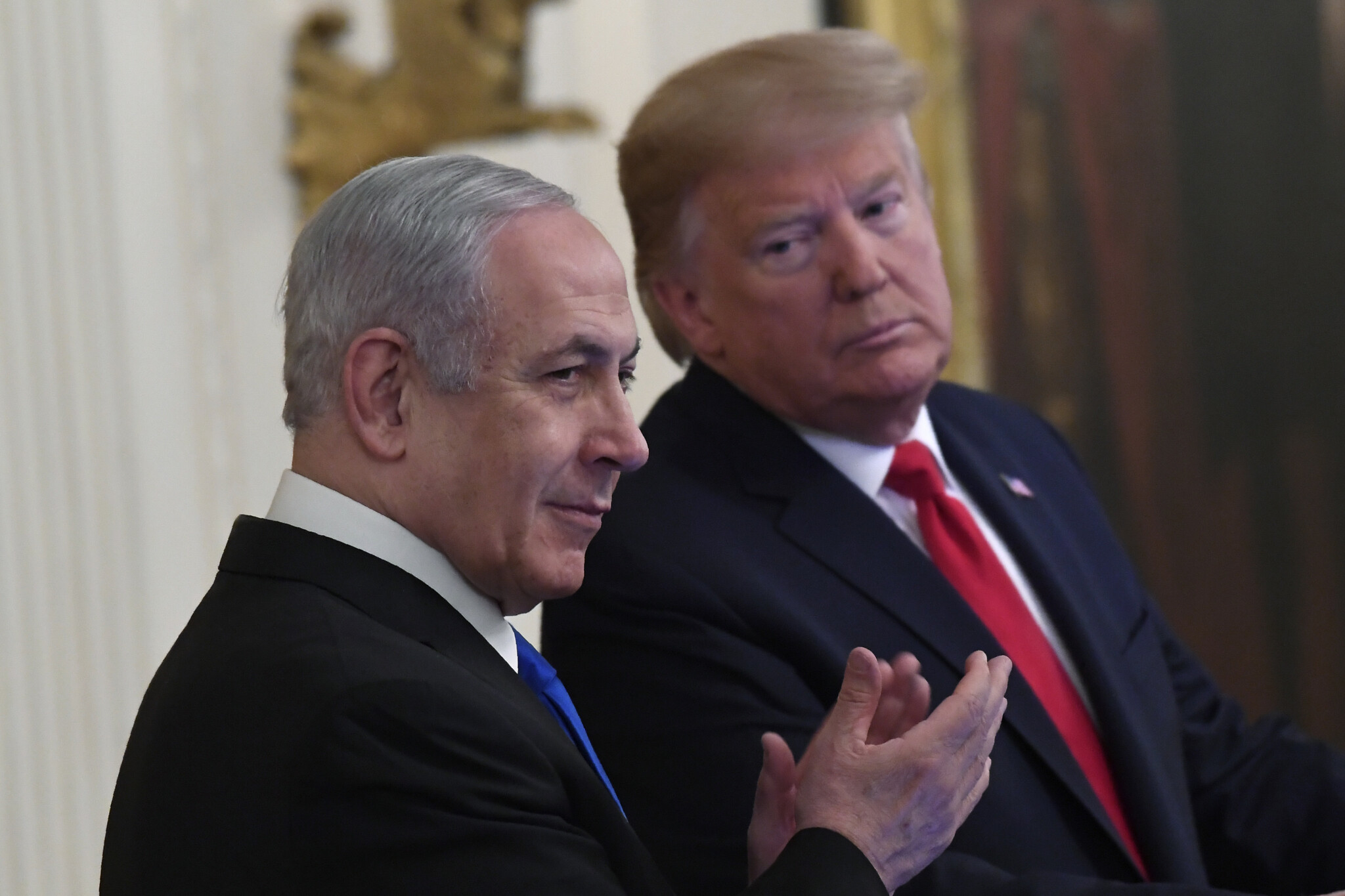
Central to Netanyahu’s argument was the assertion that Israel’s recent military actions—specifically Operation Rising Lion and Operation Roaring Lion—constitute the tangible realization of the post-Holocaust pledge of “Never Again.” These operations, conducted in close coordination with the United States under President Donald Trump, targeted Iran’s nuclear infrastructure, ballistic missile systems, and broader military apparatus.
According to Netanyahu, the scale and precision of these strikes inflicted unprecedented damage on Iran’s capabilities. “We dealt the regime of terror in Iran the hardest blow in its history,” he stated, emphasizing that the regime is now “weaker than ever” and that “most of its military assets are gone.”
Such assertions, as noted by VIN News, underscore the Israeli government’s view that the campaign has fundamentally altered the strategic landscape, neutralizing what it perceives as an imminent existential threat.
At the heart of Netanyahu’s argument lies the specter of Iran’s nuclear ambitions. For years, Israeli leaders have warned that a nuclear-armed Iran would pose an unparalleled danger—not only to Israel but to global stability. In this context, the prime minister framed the recent operations as a decisive intervention to prevent such an outcome.
“At previous Holocaust remembrance ceremonies, we pledged that Iran would never be allowed to develop nuclear weapons,” Netanyahu reminded his audience. “This year, we turned that promise into reality.”
This statement reflects a broader strategic doctrine that prioritizes preemption over deterrence when confronting existential threats. It is a doctrine shaped by historical experience—an enduring belief that the lessons of the Holocaust demand not only remembrance but action.
Netanyahu further deepened his argument by invoking a series of counterfactual questions about the Holocaust. What if a Jewish state had existed in the 1930s and 1940s? What if the Allies had acted more decisively to halt the machinery of genocide?
These hypothetical scenarios, while inherently speculative, serve a powerful rhetorical function. They underscore the perceived consequences of inaction and reinforce the moral imperative of proactive defense.
“Israel is now ensuring that future generations will not face similar regrets,” Netanyahu asserted, framing the state’s military actions as both a strategic necessity and a historical obligation.
The prime minister situated the recent operations within a wider campaign against what he termed the “Iranian Axis of Evil,” encompassing not only Iran itself but also its network of regional proxies. Over the past two and a half years, Israel has conducted a series of operations across multiple theaters, including Gaza, Lebanon, Syria, and Yemen.
This multifront strategy, as described by VIN News, reflects an effort to systematically degrade the capabilities of groups aligned with Tehran, thereby reducing the overall threat environment. By targeting both state and nonstate actors, Israel seeks to disrupt the infrastructure of hostility that has long defined its security challenges.
In one of the most poignant moments of his address, Netanyahu recounted a recent meeting with Jake Waksal, a 101-year-old Holocaust survivor, during a visit to a synagogue in Miami. Waksal, who had endured the horrors of Nazi concentration camps, stood before the prime minister wearing a yellow star—a symbol once imposed upon Jews as a mark of persecution.
This encounter served as a powerful reminder of the continuity between past and present. “After the Holocaust we promised Never Again,” Netanyahu told Waksal and the assembled community. “We promised—and we are now fulfilling that.”
The anecdote underscores the deeply personal dimension of the Israeli narrative, in which individual stories of survival are interwoven with collective national identity.
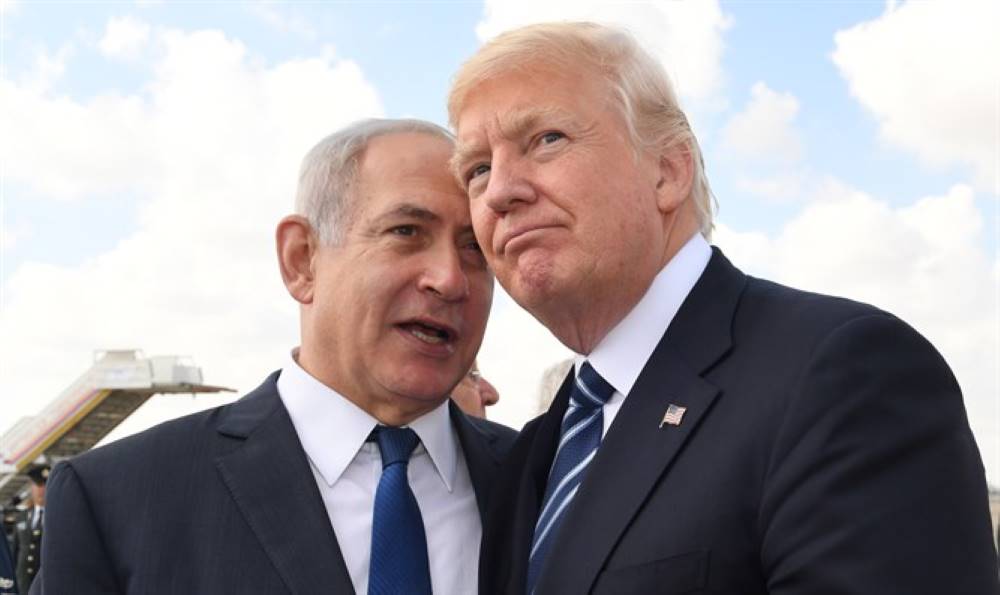
Netanyahu also emphasized the critical importance of Israel’s alliance with the United States, describing the partnership as one of unprecedented depth and coordination. Israeli and American forces, he noted, are now operating “wing to wing” in defense of shared interests.
This cooperation extends beyond the immediate theater of operations, encompassing broader efforts to counter threats to regional and global stability. In this context, Netanyahu suggested that the campaign against Iran serves not only Israel’s security but also the interests of Europe and the wider international community.
Yet he did not shy away from criticizing what he characterized as “moral weakness” in parts of Europe, accusing some leaders of failing to internalize the lessons of the Holocaust.
As his address drew to a close, Netanyahu adopted a tone of resolute optimism, invoking both national strength and spiritual faith. “As a nation of lions, we shall continue, with G-d’s help, to roar the roar of eternity,” he declared, concluding with the enduring affirmation, “Am Yisrael Chai.”
This closing sentiment encapsulates the dual themes of his speech: remembrance and resilience. It reflects a belief that the Jewish people, having endured unparalleled suffering, now possess both the means and the determination to ensure their survival.
The ceremony at Yad Vashem marked the beginning of a 24-hour period of national commemoration. As is customary, sirens will sound across Israel, bringing daily life to a standstill as citizens honor the memory of the six million Jews murdered during the Holocaust.
This collective act of remembrance serves as a reminder of the stakes involved in the decisions facing the Israeli state. It is a moment of reflection that reinforces the connection between history and policy, between memory and action.
Netanyahu’s address, as chronicled by VIN News, represents a compelling articulation of Israel’s strategic and moral worldview. It is a perspective shaped by the trauma of the past and the uncertainties of the present, one that places a premium on self-reliance and preemptive action.
The speech underscores the enduring influence of history on contemporary decision-making. It highlights the ways in which the memory of the Holocaust continues to inform Israel’s understanding of its security environment and its responsibilities.
In declaring that Israel has prevented a “second Holocaust,” Netanyahu has framed the recent conflict not merely as a military campaign, but as a defining moment in the ongoing struggle for survival and sovereignty. It is a claim that will undoubtedly be debated, scrutinized, and contested.
Yet it is also a claim that reflects a deeply held conviction—one rooted in the belief that the lessons of history demand vigilance, resolve, and, when necessary, decisive action.