

























|
Getting your Trinity Audio player ready...
|
By: Fern Sidman
As dusk descended upon Jerusalem on the eve of Holocaust Remembrance Day, the ancient city—long a nexus of faith, history, and national identity—became a canvas for solemn reflection and enduring resolve. In a gesture both visually arresting and symbolically profound, the Jerusalem Municipality cast luminous projections upon some of the city’s most iconic landmarks, transforming stone and steel into vessels of memory. According to a report on Monday at Israel National News, images of the yellow star—once imposed as a badge of humiliation and persecution—were projected alongside flickering memorial candles and stark declarations of remembrance.
The words “Remember” and “We will never forget,” emblazoned across the Old City walls and the sweeping arches of the Chords Bridge, reverberated far beyond their physical setting. They served not merely as commemorative phrases but as affirmations of identity, continuity, and moral obligation—particularly poignant in a year marked by renewed existential anxieties and geopolitical tension.
Jerusalem’s tribute was not an abstract exercise in historical reflection. It was a deeply personal acknowledgment of the thousands of Holocaust survivors who continue to reside within the city’s boundaries. Municipal authorities noted that approximately 6,900 survivors live in Jerusalem, their presence a living testament to both the horrors of the past and the resilience of the human spirit.
Mayor Moshe Lion articulated this duality with measured eloquence. “Jerusalem bows its head and unites in remembrance of the six million victims of the Holocaust,” he declared, emphasizing the city’s commitment to embracing its survivors “with love.” His remarks, as reported by Israel National News, underscored a philosophy of mutual responsibility that extends beyond ceremonial observance to encompass tangible care for the physical and emotional well-being of those who endured unimaginable suffering.
“This is both our duty and our privilege,” Lion added, encapsulating a sentiment that resonates deeply within Israeli society. The act of remembrance is not merely retrospective; it is an ongoing commitment to dignity, support, and acknowledgment.
Simultaneously, at Yad Vashem—the world’s foremost institution dedicated to Holocaust remembrance—the official state ceremony commenced with a gravity befitting its significance. Among the most poignant moments of the evening was the recitation of the “El Maleh Rachamim” prayer by Holocaust survivor Menachem Neeman, whose life story embodies both the devastation of the Shoah and the enduring capacity for renewal.
Born in 1938 in Campulung Moldovenesc, in the Bukovina region of Romania, Neeman’s earliest memories were shaped by displacement and terror. At the age of three, he was deported to the concentration camps of Transnistria—a region that became synonymous with suffering for tens of thousands of Jews. Of the approximately 145,000 to 150,000 individuals deported there, an estimated 90,000 perished due to starvation, disease, exposure, and execution.
Neeman’s survival, as chronicled by Israel National News, is itself remarkable. His subsequent journey—from a displaced child to a respected jurist serving as Deputy President of the Haifa District Court—reflects a trajectory of extraordinary perseverance. After immigrating to the nascent State of Israel in 1949, he immersed himself in religious and intellectual pursuits, laying the foundation for a life dedicated to justice and remembrance.
https://youtu.be/Z8SynxZaitE?si=YjFULhDugf5-V4pt
Even in retirement, Neeman has remained actively engaged in preserving the legacy of Holocaust victims, notably through his leadership role in efforts to locate and restitute assets belonging to those who perished. His presence at the ceremony, reciting a prayer for the souls of the departed, served as a powerful bridge between past and present.
Holocaust Remembrance Day in Israel is marked by a unique and deeply moving national ritual. As sirens sound across the country, daily life comes to a complete halt. Vehicles stop in the middle of highways, pedestrians stand in silent reflection, and an entire nation pauses to honor the memory of six million Jews murdered by Nazi Germany and its collaborators.
This collective act of remembrance is both a tribute and a warning—a reaffirmation that the lessons of history must never be forgotten, particularly in a world where antisemitism and extremism continue to manifest in new and troubling forms.
Yet even as Jerusalem illuminated its landmarks in remembrance, a diplomatic confrontation erupted that underscored the enduring complexities of history and its intersection with contemporary politics. German Chancellor Friedrich Merz issued a public statement expressing concern over what he described as the “de facto annexation” of Judea and Samaria, urging restraint in Israeli policy.
According to Israel National News, Merz revealed that he had conveyed these concerns directly to Prime Minister Benjamin Netanyahu, emphasizing the need to avoid actions that could alter the status quo in the contested territories.
The timing of the remarks—coinciding with the onset of Holocaust Remembrance Day—was met with immediate and vehement criticism within Israel’s political establishment.
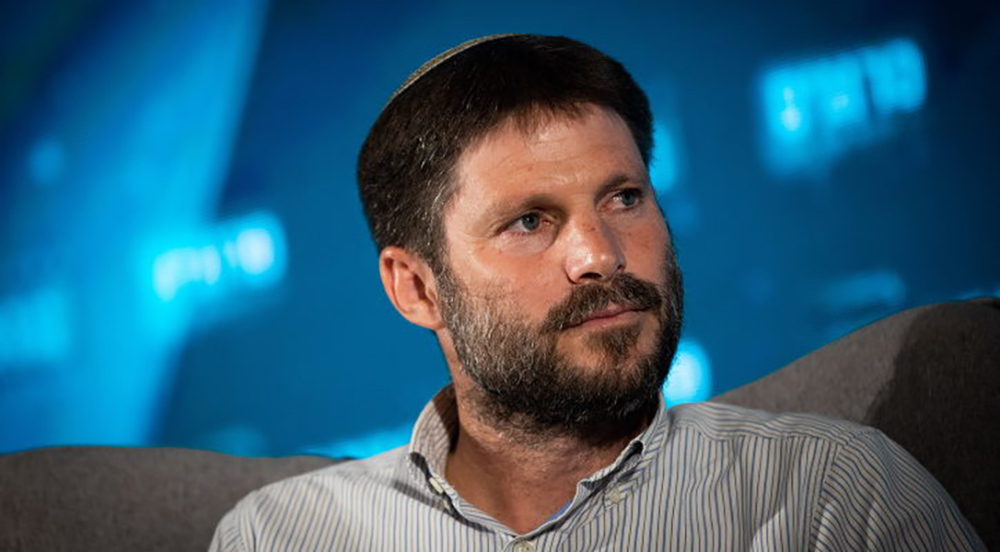
Finance Minister Bezalel Smotrich responded with a forceful and unambiguous rebuke. In a statement that resonated with historical and emotional intensity, Smotrich asserted that the German Chancellor should, on such a solemn occasion, “bow his head and apologize a thousand times on behalf of Germany” rather than offering admonitions to the Jewish state.
The minister’s remarks, as reported by Israel National News, extended beyond Merz to encompass a broader critique of European leadership. He accused European governments of having “lost their moral compass” and of failing to distinguish between right and wrong in their approach to Israel’s security challenges.
“We will not accept instructions from hypocritical European leaders,” Smotrich declared, invoking the historical trauma of the Holocaust to underscore his argument. His rhetoric reflected a deeply ingrained sensitivity within Israeli society to external criticism, particularly when it emanates from countries with a fraught historical relationship with the Jewish people.
At the heart of the dispute lies the contentious issue of Israeli policy in Judea and Samaria—a region whose status remains one of the most complex and polarizing topics in international diplomacy. For Israel, the question is inextricably linked to security, historical claims, and national identity. For many European leaders, it is framed within the context of international law and the pursuit of a negotiated peace.
Smotrich’s response, however, elevated the discussion to a more existential plane. “The days when Germans dictated to Jews where they are allowed to live and where they are not—are over and will never return,” he asserted. This statement, laden with historical resonance, reflects a broader narrative within Israel that emphasizes sovereignty and self-determination as non-negotiable principles.
The juxtaposition of remembrance and political confrontation is not coincidental. In Israel, the memory of the Holocaust is not confined to the past; it is a living force that shapes national consciousness and informs policy decisions. The phrase “Never Again” is not merely a slogan but a guiding principle that influences the country’s approach to security and diplomacy.
This dynamic was evident in the responses to Merz’s comments. For many Israelis, the suggestion that their actions could be constrained by external pressures evokes historical memories of vulnerability and abandonment. It reinforces a determination to ensure that the Jewish state retains the autonomy necessary to protect its citizens.
As the day of remembrance unfolded, the city of Jerusalem stood as a powerful symbol of endurance and renewal. Its illuminated walls, bearing the images of the yellow star and the glow of memorial candles, conveyed a message that transcended time: that memory is both a burden and a source of strength.
The stories of survivors such as Menachem Neeman, the words of leaders such as Moshe Lion, and even the intensity of political debates all contribute to a complex tapestry of remembrance. Together, they underscore the enduring relevance of the Holocaust—not only as a historical event but as a lens through which contemporary challenges are understood.
The events of Holocaust Remembrance Day in Jerusalem, as detailed by Israel National News, encapsulate the multifaceted nature of memory in a modern state. They reveal a society that honors its past while confronting the realities of the present, a nation that draws strength from its history even as it navigates an uncertain future.
In illuminating its landmarks and pausing in collective silence, Jerusalem reaffirmed a promise that has defined the Jewish experience since the ashes of the Holocaust: that remembrance will endure, that vigilance will persist, and that the lessons of history will continue to guide the path forward.
In a world often marked by division and discord, that promise remains as vital as ever.



