























|
Getting your Trinity Audio player ready...
|
By: Fern Sidman
In the early hours of Friday morning, Israel entered a new and emotionally charged chapter in its long and harrowing conflict with Hamas. After weeks of intensive negotiations mediated by Washington, the Israeli government voted to approve a far-reaching agreement for the release of all hostages—both living and deceased—held by the terrorist organization in Gaza.
As Israel National News reported, the decision came after an hours-long Cabinet session that stretched late into the night and drew sharp ideological fault lines within the coalition. Five ministers — Bezalel Smotrich, Orit Strock, Itamar Ben Gvir, Yitzhak Wasserlauf, and Amichai Eliyahu — opposed the measure, citing grave national security concerns and moral objections to releasing convicted terrorists. Minister Ofir Sofer, also of the Religious Zionist Party, broke ranks with his colleagues and voted in favor, joining the majority that backed Prime Minister Benjamin Netanyahu’s proposal.
Immediately following the vote, the Prime Minister’s Office confirmed that a ceasefire in Gaza had gone into effect as part of the first phase of the U.S.-brokered plan—one that Israel National News described as “historic in both scope and consequence.”
In an unprecedented move underscoring the central role of Washington in shaping the agreement, American envoys Steve Witkoff and Jared Kushner joined the Cabinet deliberations for roughly thirty minutes. Their presence, as was noted in the Israel National News report, reflected not only their status as trusted intermediaries of President Trump but also the depth of American involvement in ensuring the deal’s success.
Prime Minister Netanyahu, visibly moved during his remarks, hailed the moment as a “momentous development in the last two years,” referencing both the military struggle and the diplomatic efforts that had converged to make the deal possible.
“We fought during these two years to achieve our war aims,” Netanyahu said, as quoted in the Israel National News report. “The central one of these war aims is to return the hostages, all of the hostages—both the living and the dead. And we’re about to achieve that goal.”
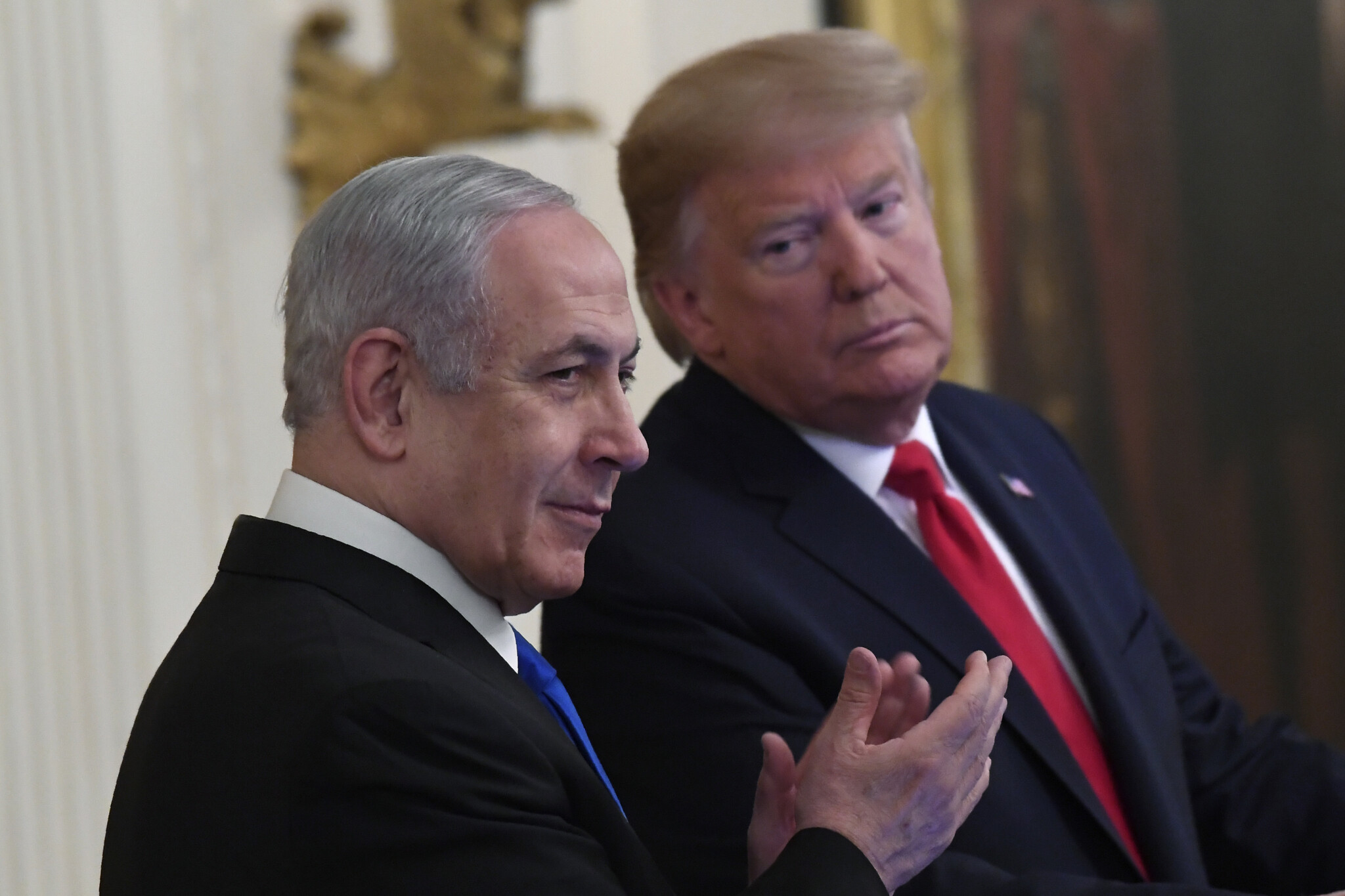
The prime minister extended special gratitude to Trump, calling the American leader’s role “extraordinary.”
“We couldn’t have achieved it without the extraordinary help of President Trump and his team, Steve Witkoff and Jared Kushner,” Netanyahu said. “They worked tirelessly with Ron and our team. The courage of our soldiers, the military and diplomatic pressure that isolated Hamas—together, these brought us to this point.”
Netanyahu continued, his tone somber but resolute: “I want to personally thank both of you, Steve and Jared. You have worked long hours, but not only with your minds—with your hearts. This is for the benefit of Israel, for the United States, for decent people everywhere, and for the families who will finally see their loved ones again.”
Jared Kushner, who alongside Witkoff has emerged as a key architect of the Trump administration’s renewed Middle East diplomacy, took the floor to emphasize the broader regional context.
“Bringing the hostages home has been a priority for President Trump for a very, very long time,” Kushner said, as reported by Israel National News. “But this all would not have been possible without the bravery of the IDF and what they’ve accomplished—not just in Gaza, but in the north against Hezbollah and even in degrading Iran’s capacity. That set the tone.”
Kushner praised Israel’s citizen-soldier army for its “sacrifices on the line to fight for their country,” adding that it was their perseverance that “made a very, very big difference.”
He then turned directly to Netanyahu, delivering what observers described as one of the evening’s most personal tributes: “I want to give a very special thanks to Prime Minister Netanyahu,” Kushner said. “You did an incredible job. You held your lines firm, and between you and President Trump, there was complete alignment on what the end state should be.”
Steve Witkoff, the real estate magnate-turned-envoy and longtime Trump confidant, echoed those sentiments but added a candid reflection on the difficulty of the path.
“The hard job was the prime minister’s,” Witkoff said, according to the Israel National News report. “He had the job of protecting this country and of making tough choices—when to be flexible, when to be firm. I’ve lost sleep over it, wondering what I would have done. There were moments I thought Israel should bend more. But looking back, we wouldn’t be here if he had.”
Witkoff emphasized that his assessment reflected Trump’s view as well: “My president believes this. He believes that Prime Minister Netanyahu made some very, very difficult calls that lesser people could not have made. And here we are because Hamas was cornered. They had to do this deal. They were backed up, the IDF was advancing, and that pressure broke them.”
Prior to the vote, Netanyahu announced that the operation to free the hostages would be named Shavim L’Gvulam — “Returning to Their Border” — a phrase drawn from Jeremiah 31:16, which prophesies the return of the Jewish people from exile. As the Israel National News report highlighted, the symbolic title speaks volumes about the emotional gravity of the mission and the government’s framing of the moment as both a humanitarian and national redemption.
Under the approved plan, the Israel Defense Forces will begin withdrawing to a designated line within Gaza agreed upon in coordination with Hamas. According to Israeli officials cited in the Israel National News report, the line closely resembles the so-called “yellow line” unveiled by President Trump the previous weekend, though with several adjustments negotiated by the Israeli side.
Israel has pledged to complete its withdrawal within 24 hours. Following that, a 72-hour countdown will commence, during which Hamas is obligated to release all hostages — without public ceremony or media spectacle.
Current intelligence assessments indicate that living hostages will be released on Sunday, followed by the transfer of deceased hostages on Monday, Israel National News reported.
The agreement’s implementation will coincide with a highly symbolic visit: President Trump is expected to land in Israel on Sunday afternoon, where he will participate in ceremonies at Ben Gurion Airport, address the Knesset, and meet with freed hostages’ families in Hostages Square.
The deal’s terms, while historic in humanitarian scope, are fraught with moral and security controversy. As detailed in the Israel National News report, the agreement provides for the release of 250 security prisoners convicted of terrorism-related offenses, 1,700 Gaza residents detained after the October 7 attacks but not directly involved in the assault, 22 minors under 18 from the Gaza Strip and the return of 360 bodies of terrorists for burial.
Critically, security prisoners convicted of murder, weapon manufacturing for lethal use, or of direct involvement in orchestrating deadly attacks will be released either to Gaza or abroad — and will be barred permanently from entering Israel or Judea and Samaria.
Officials close to the negotiations told Israel National News that the decision was designed to balance moral imperatives and national security needs — a calculus that drew fierce opposition from the government’s far-right flank.
National Security Minister Itamar Ben Gvir and Finance Minister Bezalel Smotrich were the loudest dissenting voices in the Cabinet meeting. Their warnings, as Israel National News reported earlier this week, centered on the “unbearable price” of releasing hardened terrorists.
“Our hearts are filled with joy that the hostages are expected to return home — the living to their families, the dead for burial,” Ben Gvir said. “But it is absolutely forbidden to ignore the price: the release of thousands of terrorists, including 250 murderers. Past experience shows these killers will return to their craft — murdering Jews.”
Ben Gvir’s party, Otzma Yehudit, announced that its ministers “will not be able to raise our hands in favor of a deal that releases murderous terrorists.”
Smotrich’s statement was more restrained but equally severe. “We cannot celebrate a humanitarian success while empowering the organization that slaughtered our people,” he said.
Both men vowed to hold Netanyahu accountable for ensuring that the agreement’s implementation would not permit Hamas to reconstitute governance or operational capacity in Gaza.
For Israel, the emotional duality of the moment is unmistakable: uncontainable joy over the imminent return of hostages, and deep unease about the precedent being set. The war that began on October 7, 2023 — when Hamas massacred more than 1,200 Israelis and abducted 251 — has dragged on for two years, leaving both Israel and Gaza devastated. The prospect of the hostages’ release offers a rare glimpse of light.
Yet, as Israel National News has chronicled, the scars of past prisoner swaps loom large — from the 2011 exchange that freed Gilad Shalit at the cost of over 1,000 Palestinian prisoners, many of whom returned to violence.
This time, Netanyahu and his American partners insist the context is different. Hamas, they argue, is militarily shattered, politically isolated, and financially strangled. “They had to do this deal,” Witkoff repeated during the session. “They had no choice.”
By dawn on Friday, as the first hours of the ceasefire took hold, Israeli forces began repositioning under the terms of what officials described to Israel National News as “a meticulously coordinated withdrawal.” The army will retain control over approximately 53% of the Gaza Strip, maintaining buffer zones and strategic oversight of border crossings.
Still, no one in Jerusalem doubts the risks ahead. Intelligence officials warn that Hamas could exploit the lull to regroup, smuggle weapons, or reinforce tunnels. Opposition leaders have also cautioned against presenting the deal as “peace,” noting that the fundamental conflict with Hamas remains unresolved.
Yet, as the nation awakens to the possibility that dozens of hostages — men, women, and children — may finally return home, the weight of two years of anguish briefly lifts.
Israel National News quoted one senior official close to the negotiations: “There is a sense that history is bending, if only for a moment — that the blood, the grief, and the unbearable waiting may finally yield something sacred: return.”
For Netanyahu, the challenge now is to hold the line between moral triumph and strategic vigilance — to ensure that Shavim L’Gvulam, “Returning to Their Border,” becomes not just a name for an operation, but a testament to the enduring faith of a nation that refuses to surrender its people, even at the edge of its own endurance.
As one headline from Israel National News captured succinctly: “In Israel, joy and fear now walk hand in hand — but at last, they walk home.”



