



















|
Getting your Trinity Audio player ready...
|
By: Fern Sidman
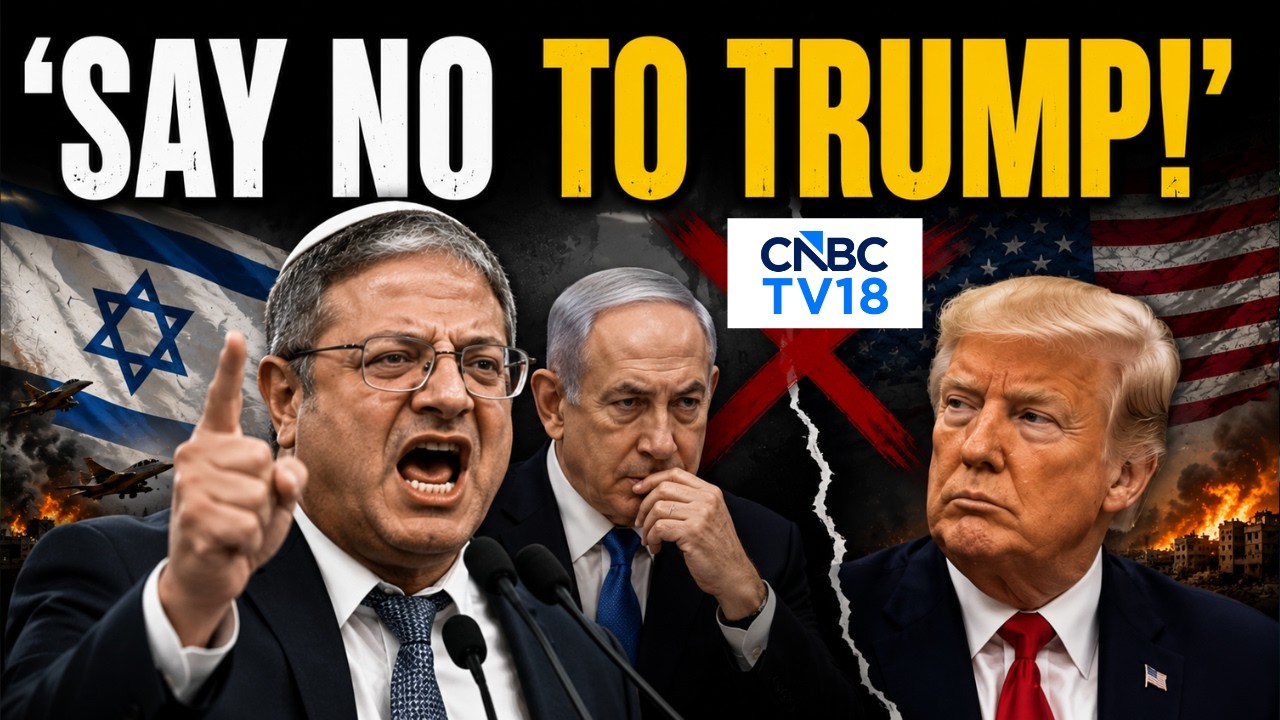
In a fraught and extraordinary session on Thursday night, Israel’s war-weary Cabinet convened to green-light a landmark agreement with Hamas aimed at securing the release of the remaining hostages taken during the October 7 massacre. The meeting was notable not only for the magnitude of the decision under consideration but for the presence — for roughly thirty minutes — of two American envoys: Steve Witkoff and Jared Kushner, both of whom have been deeply involved in the marathon diplomacy that produced the deal.
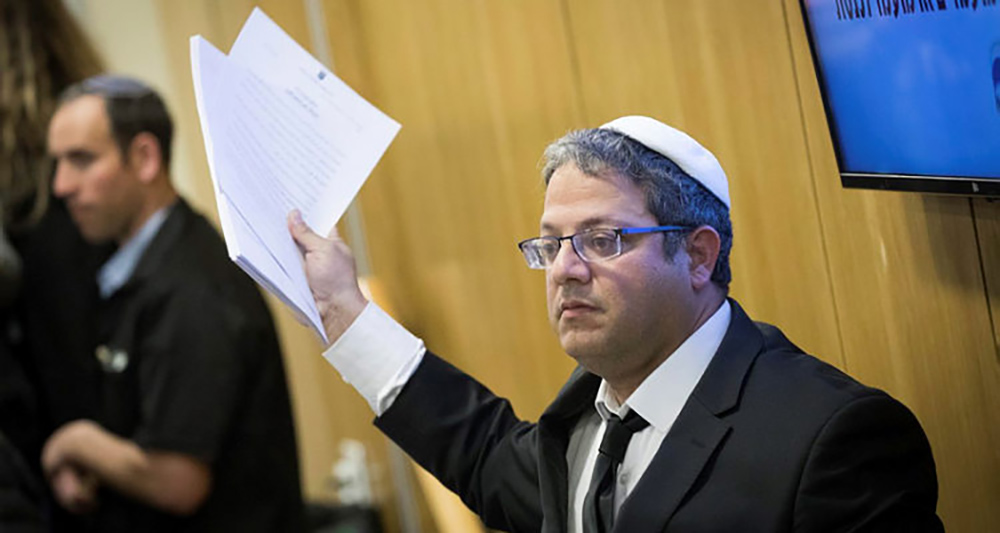
That unusual U.S. participation underscored the international heft of the moments-long deliberation. It also sharpened the debate inside the room, where passions ran high and ideological fault-lines in Prime Minister Benjamin Netanyahu’s coalition were laid bare. Israel National News, which has followed the unfolding negotiations closely, reported the session in detail, including pointed exchanges between National Security Minister Itamar Ben Gvir — the hard-line Otzma Yehudit leader — and the U.S. envoys.
Ben Gvir’s intervention was unmistakably severe. As Israel National News reported on Thursday evening, he opened his remarks by cataloguing the type of prisoners slated for release: “murderers of babies, rapists of women,” he said. “With all due respect, the United States would never release people like this. I appreciate your efforts and your support for Israel, but let’s be honest — you would not back a deal of this nature. You speak of economic agreements and peace, but you cannot make peace with Hamas. They want to kill us.”
The exchange that followed, as captured in the Israel National News report, was as plaintive as it was raw. Envoy Steve Witkoff reportedly sought to humanize his perspective with a painful personal anecdote: the death of his son by overdose and the moral turmoil he felt before forgiving those he saw as responsible. “I wanted to kill the person responsible,” Witkoff said, according to Israel National News. “But when I got to court, I saw his parents — ashamed and pleading for forgiveness. And I forgave them.”
Ben Gvir replied with an anger that carried the weight of recent national trauma. “Mr. Witkoff, that’s precisely the difference: the people who murdered us on October 7 are not asking for forgiveness. Their families are proud. They glorify murder. They want to kill Jews.” Ben Gvir’s comments, as Israel National News reported, were followed by Kushner’s attempt to reassure: “But Hamas is globally isolated and deterred.” Ben Gvir’s retort invoked the starkest of historical analogies. “Would you make peace with Hitler? Hamas is Hitler. They want to kill us.”
The confrontation crystallized a profound dilemma at the center of Israel’s war policy: the primal imperative to bring hostages home clashes directly with counterterrorism doctrine that frames the mass freeing of convicted terrorists as a strategic and moral hazard. The Israel National News report emphasized that Ben Gvir’s criticisms were not rhetorical alone; he has made clear he and his party will resist any governmental vote that sanctions the release of those he described as “murderous terrorists.” He told the Cabinet he would not be part of a government that allowed Hamas to persist in governance or in an operational capacity in Gaza — a “bright red line” he warned the prime minister he would not cross.
For Netanyahu, the calculus is brutally complex. The prime minister has publicly framed the war’s long-term objective as dismantling Hamas’s rule in Gaza — an objective he insists remains nonnegotiable. But in private deliberations, and in political reality, he must balance competing imperatives: domestic cohesion inside an ideologically broad coalition; the desperate appeals of hostage families; the assessments of security officials; and intense pressure from international partners, especially the United States, to conclude a humanitarian opening that could stabilize the enclave and ameliorate Gaza’s civilian suffering.
The Israel National News report of the Cabinet meeting highlighted how those tensions played out in real time. Ministers supportive of the deal underscored the human calculus: the return of living hostages to families, the transfer of bodies for dignified burial, and the political and diplomatic leverage an agreement can provide to re-open humanitarian corridors and pursue longer-term security arrangements. They argued — as some officials reportedly told the press — that verification mechanisms and staged, conditional releases could be structured to minimize risk.
Ben Gvir’s counterargument leaned on memory and a catalogue of past prisoner-exchange consequences. He invoked prior incidents where released detainees returned to terror activity, warning the Cabinet that the release of “thousands” of prisoners — including the 250 convicted of murder whom he cited — would replenish the ranks of violent actors determined to strike again. Israel National News reported Ben Gvir’s explicit pledge: Otzma Yehudit ministers “will not be able to raise our hands in favor of a deal that releases those murderous terrorists, and we will oppose it in the government.”
The depth of his opposition should not be underestimated. In Israel’s parliamentary system, small coalition partners possess outsized leverage; a single faction’s withdrawal can collapse governing majorities, force early elections, or at least compel dramatic policy shifts. Ben Gvir’s public vow to bring down the government if Hamas’s rule remained in any form — even under purportedly neutralized auspices — is political dynamite and places Netanyahu in a crucible: accept a compromise that satisfies the painful imperative of hostage return yet risks fracturing his coalition, or insist on a harder line that could prolong the hostages’ captivity and sustain an international backlash.
Outside the Cabinet room, the report on Israel National News captured a nation divided. For families awaiting word about their loved ones, the agreement represents hope that is palpably tangible: rehabilitation for survivors, reunions and ritual burials that offer closure. For many Israelis scarred by October 7’s atrocities, however, the emotional impulse to exact a punitive cost sits uneasily alongside longer-term security calculations. Civil society, veterans’ groups, and bereaved relatives have voiced competing testimonies — some imploring the government to seize any chance to bring the hostages home, others warning that unvetted releases would court further bloodshed.
Security professionals reportedly are crafting a roster of verification and mitigation measures: phased releases tied to tangible steps on the ground; the presence of international monitors; strict prisoner lists that exclude active field commanders; and an agreed timeline for Israeli redeployment and demilitarization in specific areas. The Israel National News report detailed that officials hope such mechanisms could assuage political concerns and provide Netanyahu with the cover to argue that the state’s security interest is being served even as hostages are returned.
Yet Ben Gvir’s visceral response — his insistence that some of those slated for release “glorify murder” — illustrates the limits of technical fixes when political and moral outrage runs so deep. His denunciation also signals the real risk of post-agreement political turbulence. If legislators from Otzma Yehudit abstain or vote against the deal, the government could be forced into last-minute concessions that unravel negotiated terms or compel new security assurances from international parties.
On the diplomatic front, the U.S. envoys’ presence at the Cabinet session — a rarity — calls attention to Washington’s determination to shepherd the deal through to implementation. Israel National News’ accounts of the envoys’ intervention suggest that the Americans are prepared to offer a diplomatic and economic package to buttress any truce arrangement. That support could include security guarantees, reconstruction funds, and international monitoring capacities. But as the exchange in the room made painfully clear, diplomatic instruments have limited power to neutralize the raw emotions that animate Israeli politics in the aftermath of October 7.
As Israel presses forward with the formal vote and the logistics of implementation, the scene is set for a turbulent — and consequential — week. The Cabinet’s approval, if achieved, will mark a historic moment of hostage return and diplomatic engagement. But the domestic struggle over price, principle and prevention will not end with a signature. It will migrate into Knesset debates, coalition maneuvering, and the court of public opinion. Israel National News’ coverage reflects that reality: the agreement is both a possible humanitarian breakthrough and a catalyst for political crisis.
In the end, the decision confronting Netanyahu and his ministers is more than transactional. It is existential in character: whether to prioritize the immediate moral duty to bring people home, or to prioritize an uncompromising security posture aimed at neutralizing a terrorist organization that many inside Israel continue to identify as intent on annihilation. The Cabinet’s choice will reverberate long after hostages return or prisoners walk free — shaping Israeli politics, coalition cohesion, and Israel’s posture toward Gaza for years to come.