
































|
Getting your Trinity Audio player ready...
|
Analysts say new air defense systems, including Russia’s S-500, could challenge stealth aircraft and force a major rethink of modern military doctrine.
By: David Avrushmi
In the rarefied world of military strategy, where technological dominance has long been treated as the indispensable foundation of battlefield superiority, a consequential reassessment may now be underway. Defense planners, policymakers, and military analysts are confronting a disruptive possibility: the economic balance between offense and defense may be shifting in ways that could transform the future of modern warfare.
As LinkedIn commentator and 5X Founder Oran Dror has repeatedly argued, “defense economics just flipped.”
That phrase captures a growing concern inside strategic circles. For decades, stealth aircraft represented the apex of military innovation. The underlying assumption was clear: if an aircraft could evade detection, it could penetrate enemy airspace, strike high-value targets, and return before adversaries could respond. Stealth was expensive, but it was thought to be nearly irreplaceable.
The United States built an enormous portion of its modern airpower doctrine around that premise. Programs such as the F-35, whose lifetime cost has been estimated in the trillions, and the B-21 Raider, projected at roughly $2 billion per aircraft, reflect Washington’s enduring belief that invisibility remains the ultimate guarantor of air superiority.
But that assumption is now being challenged.
According to claims highlighted by Oran Dror, Russia’s S-500 air defense system may represent a major threat to the strategic logic behind stealth. “For 30 years, stealth was expensive to build, impossible to counter,” Dror wrote. “Now Russia claims their S-500 can track anything.”
The claim remains subject to scrutiny. Military systems often arrive wrapped in exaggeration, propaganda, and strategic messaging. Yet even the possibility that advanced air defenses could reliably detect stealth aircraft has enormous implications. As Dror observed, “Russia does not need to prove the S-500 works perfectly. They need to prove it works well enough to make America’s stealth advantage questionable.”
That distinction is critical. In modern warfare, perception can be almost as consequential as performance. A weapon does not need to be flawless to alter doctrine. It merely needs to introduce enough uncertainty to change the way commanders calculate risk.
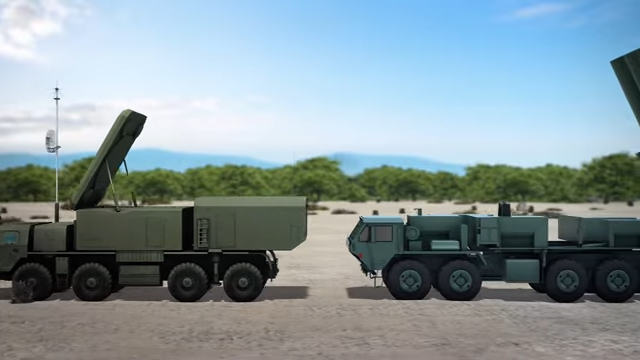
The S-500 is reported to rely on advanced radar architecture, including multi-frequency detection capabilities. Traditional stealth designs are engineered to reduce visibility against particular radar bands. Multi-frequency systems, however, attempt to widen the detection envelope and reduce the effectiveness of those design advantages.
“Stealth coatings deflect specific frequencies,” Dror noted. “Multi-frequency systems do not care about deflection.”
If such systems perform as advertised, they could dramatically complicate the use of stealth aircraft in contested airspace. That would represent more than a technological challenge. It would constitute an economic shock.
The arithmetic is stark. A single B-21 bomber may cost approximately $2 billion. An interceptor missile tied to a system such as the S-500 may cost a fraction of that, with figures often discussed around $10 million. Even if multiple interceptors are required, the defender may still be spending far less than the attacker.
“When defense gets cheaper than offense, air superiority dies,” Dror warned.
This is the central issue. Modern militaries do not merely compete over technology; they compete over cost curves. The side that can impose greater expense on its adversary while spending less of its own capital gains a profound strategic advantage.
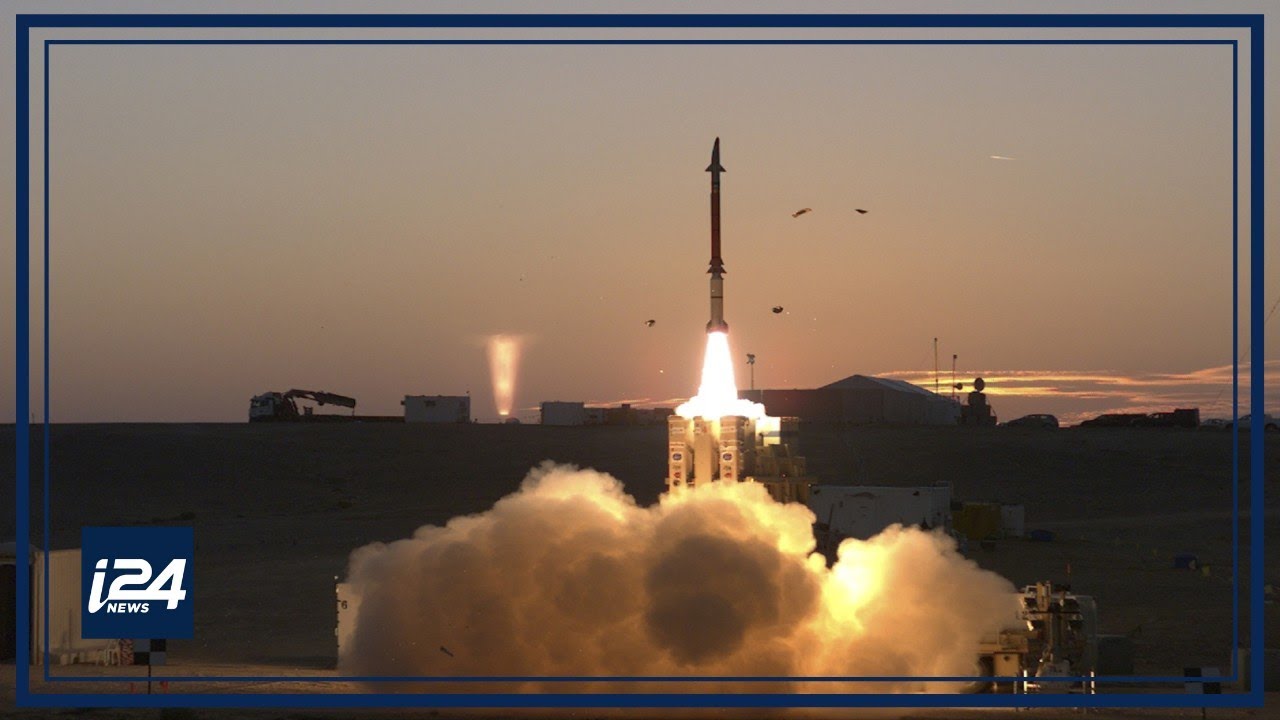
Israel’s Iron Dome offers one of the clearest examples of this principle. Faced with waves of inexpensive rockets, Israel developed a system capable of intercepting many incoming threats and reducing their strategic effect. While the rockets themselves may be relatively cheap, the defensive system altered the operational equation by reducing the value of those attacks.
“Iron Dome did not just stop rockets,” Dror wrote. “It changed the strategic equation. Deterrence through economics.”
That lesson now appears to be migrating into the arena of great-power competition. If advanced air defense networks can make ultra-expensive aircraft more vulnerable, then the attacker’s advantage begins to erode. The battlefield shifts from a contest of who owns the most advanced aircraft to who can sustain the most favorable exchange ratio.
For NATO, the implications are immense. Western military doctrine has long depended on air superiority as the gateway to broader operational success. Control of the skies enables intelligence collection, close air support, rapid strike capability, and freedom of maneuver. If that control becomes more difficult or more expensive to secure, then entire doctrines may require revision.
“If the S-500 works, every NATO air doctrine needs rewriting,” Dror asserted.
The war in Ukraine has amplified the urgency of these questions. That battlefield has become a grim testing ground for drones, missiles, artillery systems, air defenses, electronic warfare, and intelligence platforms. As Dror put it, “Ukraine became the world’s most expensive weapons trade show.”
Countries around the world are watching carefully. Procurement decisions are shaped not only by brochures and defense exhibitions, but by battlefield performance. Nations such as India, Turkey, and Saudi Arabia have already shown interest in sophisticated air defense systems, including Russian platforms, because their leaders are making strategic calculations about survivability.
“These are not random purchases,” Dror explained. “They are strategic calculations about which systems work when survival matters.”
This matters because military superiority is not purely mechanical. It is psychological. A country’s weapons systems project confidence, deter enemies, reassure allies, and shape diplomatic leverage. Once confidence in a flagship capability begins to weaken, its strategic value declines.
“Military superiority is not just having better weapons,” Dror wrote. “It is everyone believing you have better weapons.”
That belief is now being tested.
None of this means stealth is obsolete. The demise of stealth has been predicted many times before, often prematurely. Stealth technology continues to evolve, and American military engineers are hardly standing still. Future aircraft will likely combine reduced radar signatures with electronic warfare, cyber capabilities, unmanned systems, decoys, and networked strike packages.
But the era of assuming that stealth alone guarantees access may be fading.
“The Pentagon built stealth to maintain uncontested access anywhere, anytime,” Dror observed. “But if stealth becomes detectable, those guarantees become questionable.”
That is the heart of the strategic dilemma. The United States has invested heavily in aircraft designed for wars in which access to enemy airspace can be achieved through superior technology. If future battlefields are saturated with advanced radars, mobile missile systems, drones, sensors, and layered defenses, then even the most sophisticated aircraft may face far greater risk than previously assumed.
The result could be a new era of defense economics, one in which cheaper defensive systems constrain more expensive offensive platforms. This would not be unprecedented. Military history is a continuous cycle of innovation and counter-innovation. Armor produces anti-armor weapons. Aircraft produce air defenses. Missiles produce missile shields. Stealth produces counter-stealth detection.
“Every stealth breakthrough triggers a detection breakthrough,” Dror noted. “Today’s invisibility becomes tomorrow’s vulnerability.”
The deeper lesson is that no military advantage is permanent. Every dominant system eventually invites a response. The question is whether defense institutions recognize the shift quickly enough to adapt.
For Washington, the challenge is not simply to defend past investments. It is to prepare for a battlefield in which cost, speed, redundancy, and resilience may matter as much as exquisite technological sophistication. A $2 billion aircraft can still be strategically valuable, but only if it operates within a broader ecosystem that protects it, supports it, and prevents adversaries from neutralizing it at a fraction of the cost.
The rise of advanced air defense systems should therefore be seen not as the end of stealth, but as a warning against complacency. The future will belong to militaries capable of blending stealth, electronic warfare, drones, cyber operations, long-range fires, artificial intelligence, and layered defense into a coherent doctrine.
“Asymmetric warfare always finds a way,” Dror concluded.
That may be the most important lesson of all. In modern war, the weaker side searches relentlessly for cheaper ways to blunt the stronger side’s most expensive advantages. If the economics of defense continue to improve, the strategic assumptions of the last 30 years may no longer be sufficient.
The question now is not whether stealth will disappear. It will not. The question is whether stealth will remain decisive in an age when detection is improving, air defenses are proliferating, and cost asymmetry is reshaping the battlefield.
For military planners, the message is unmistakable: invisibility may still matter, but it can no longer be treated as invincibility.



