
























|
Getting your Trinity Audio player ready...
|
By: Fern Sidman
For nearly a century, the political alignment between American Jews and the Democratic Party stood as one of the most enduring electoral partnerships in modern American history. Forged during the economic cataclysm of the Great Depression, fortified by Franklin Delano Roosevelt’s New Deal coalition, sanctified by President Harry Truman’s recognition of the State of Israel in 1948, and sustained through successive generations of liberal internationalism, civil-rights activism, and urban political culture, the alliance appeared almost immovable.
Now, according to a growing chorus of commentators, political strategists, and disillusioned Jewish public figures, that alliance is undergoing its most profound rupture since its inception in 1932.
Among the most forceful voices advancing that argument is X.com user Michael A. Rothman, whose extensive analysis of the emerging divide has ignited intense debate across political and media circles. Rothman has described the current moment as “the largest American Jewish political realignment since 1932,” arguing that a convergence of anti-Israel activism, escalating antisemitic incidents, and ideological radicalization within progressive politics has accelerated a dramatic reassessment among many Jewish voters.
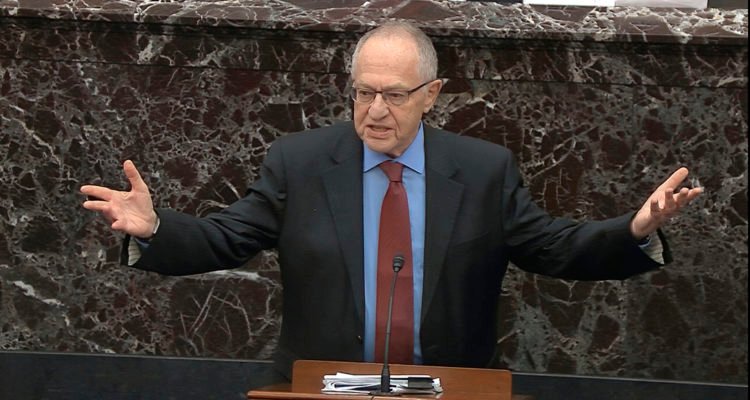
The most explosive development came when famed Harvard Law professor emeritus Alan Dershowitz publicly announced his departure from the Democratic Party during an appearance on Newsmax. Dershowitz, long regarded as one of the Democratic Party’s most prominent Jewish intellectual defenders, declared that he would actively campaign for Republicans because, in his words, “they’re better for America.”
𝐓𝐇𝐄 𝐉𝐄𝐖𝐈𝐒𝐇-𝐃𝐄𝐌𝐎𝐂𝐑𝐀𝐓 𝐒𝐂𝐇𝐈𝐒𝐌 𝐈𝐒 𝐍𝐎𝐖 𝐏𝐔𝐁𝐋𝐈𝐂. 𝐀𝐋𝐀𝐍 𝐃𝐄𝐑𝐒𝐇𝐎𝐖𝐈𝐓𝐙 𝐖𝐀𝐋𝐊𝐄𝐃 𝐎𝐔𝐓 𝐓𝐇𝐄 𝐃𝐎𝐎𝐑. 𝐉𝐎𝐇𝐍 𝐅𝐄𝐓𝐓𝐄𝐑𝐌𝐀𝐍 𝐈𝐒 𝐁𝐄𝐈𝐍𝐆 𝐃𝐑𝐈𝐕𝐄𝐍 𝐎𝐔𝐓. 𝐁𝐈𝐋𝐋 𝐌𝐀𝐇𝐄𝐑 𝐏𝐔𝐁𝐋𝐈𝐂𝐋𝐘 𝐂𝐎𝐍𝐃𝐄𝐌𝐍𝐄𝐃 𝐓𝐇𝐄… pic.twitter.com/UHNBkKV20f
— M.A. Rothman (@MichaelARothman) May 6, 2026
According to Rothman on X.com, the significance of Dershowitz’s announcement cannot be overstated. Rothman characterized the moment as “the punctuation mark” ending an era of Jewish political loyalty to the Democratic Party that had lasted for generations.
Dershowitz’s denunciation was especially striking because of his political pedigree. For decades, he defended major Democratic legal causes, represented President Bill Clinton during impeachment proceedings, supported Hillary Clinton in 2016, and voted for Joe Biden in 2020.
Yet during his Newsmax appearance, Dershowitz sharply condemned leading progressive Democrats including Bernie Sanders, Elizabeth Warren, and Ilhan Omar, describing them as “neo-Nazis, fascists, anti-Semites.”
Rothman repeatedly emphasized on X.com that Dershowitz’s exit was not an isolated act of political frustration, but rather the culmination of decades of ideological tension that had steadily eroded Jewish confidence in the Democratic Party’s commitment to Israel and Jewish communal security.
The origins of the alliance date back to the electoral revolution of 1932, when Franklin D. Roosevelt assembled the New Deal coalition during the depths of the Great Depression.
American Jews overwhelmingly supported Roosevelt, often at levels exceeding 90% of the vote. The Democratic Party became synonymous with immigrant advancement, labor protections, secular governance, and anti-discrimination politics. In many urban Jewish communities, Republican affiliation nearly vanished for decades.
Rothman described this period on X.com as the creation of a “structural political identity,” arguing that Democratic affiliation became deeply embedded in American Jewish civic culture.
That alliance was further cemented on May 14, 1948, when President Harry S. Truman formally recognized the newly declared State of Israel only minutes after David Ben-Gurion announced its independence.
Rothman highlighted the historic significance of Truman’s decision, noting that the president acted despite intense opposition from his own foreign-policy establishment, including Secretary of State George Marshall. According to Rothman, “that single decision sealed Jewish-Democratic loyalty for two generations.”
Truman’s recognition of Israel became foundational to the political memory of countless Jewish voters, intertwining Democratic identity with support for the Jewish state.
For decades afterward, Democratic candidates maintained commanding levels of Jewish support.
The presidencies and campaigns of Lyndon B. Johnson, Jimmy Carter, and later Bill Clinton reinforced that bond.
The Six-Day War in 1967 and the Yom Kippur War in 1973 intensified emotional and political solidarity between American Jews and pro-Israel Democratic leadership.
Even during the overwhelming national victories of Ronald Reagan, Democrats retained the large majority of Jewish voters. Rothman pointed out on X.com that Reagan’s approximately 35% share of the Jewish vote in 1984 was considered historically remarkable for a Republican candidate, yet still insufficient to fundamentally alter the broader alignment.
“To be Jewish in America was to be a Democrat,” Rothman wrote.
According to Rothman’s analysis, the first major fracture emerged during the presidency of Barack Obama.
Rothman argues that Obama’s 2009 Cairo speech, combined with the administration’s increasingly contentious relationship with Israeli Prime Minister Benjamin Netanyahu, triggered growing unease among many pro-Israel Jewish voters.
Particular outrage centered on the 2015 Joint Comprehensive Plan of Action, commonly known as the Iran nuclear deal. Rothman described the agreement as “the single most pro-Iranian American foreign-policy decision since the 1979 hostage crisis.”
The tensions escalated further in December 2016 when the Obama administration abstained during a United Nations vote condemning Israeli settlement activity.
Rothman wrote that the abstention “severed the trust the Jewish vote had extended to the Democratic Party for 80 years.”
While many Jewish Democrats continued supporting the party, Rothman and others contend that the Obama years marked the beginning of a profound ideological divergence over Israel.
The presidency of Donald Trump accelerated that transformation.
Trump’s administration adopted a series of aggressively pro-Israel policies that were celebrated by many conservative Jewish organizations and pro-Israel activists. These included relocating the American embassy to Jerusalem in 2018, recognizing Israeli sovereignty over the Golan Heights, withdrawing from the Iran nuclear agreement, brokering the Abraham Accords, and ordering the strike that killed Iranian commander Qassem Soleimani.
Rothman argued repeatedly on X.com that Trump represented “the exact inverse of Obama’s Middle East doctrine.”
Rothman noted that Trump’s share of the Jewish vote increased from roughly 24% in 2016 to approximately 30% in 2020 and again in 2024, levels not seen for Republicans since the era of Dwight D. Eisenhower.
The Hamas attacks against Israel on October 7, 2023, transformed the political landscape even more dramatically.
As campuses, activist organizations, and progressive coalitions erupted into anti-Israel demonstrations, many Jewish Americans expressed alarm over slogans and rhetoric emerging from portions of the activist left.
Rothman argued that the aftermath of October 7 constituted “the collapse” of the old political order.
Rothman sharply criticized progressive lawmakers and activist groups that defended slogans such as “from the river to the sea” or “globalize the intifada,” portraying them as evidence of a deep ideological radicalization inside parts of the Democratic coalition.
At the center of the controversy stood lawmakers associated with the progressive “Squad,” including Alexandria Ocasio-Cortez and Ilhan Omar.
Meanwhile, Sanders emerged as a focal point of anger among pro-Israel Democrats after publicly advocating conditions on military aid to Israel during the ongoing Gaza war.
According to Rothman, Sanders had effectively become “the new face” of the Democratic Party.
One of the clearest symbols of the internal Democratic conflict has become John Fetterman.
Fetterman’s outspoken support for Israel and hardline border-security positions placed him increasingly at odds with elements of the progressive left.
Rothman argued that the backlash against Fetterman demonstrated how dramatically the ideological center of gravity inside the Democratic Party had shifted.
Even CNN commentator Van Jones acknowledged the tension, remarking: “It just shows you how nutty things have gotten that someone who wants to stick up for Israel and doesn’t want an open border now has to be a Republican. That’s completely insane.”
Rothman repeatedly cited Jones’s comments on X.com as evidence that even longtime Democratic observers recognized the depth of the party’s internal fracture.
The election of Zohran Mamdani as mayor of New York became another flashpoint in the debate.
Rothman portrayed Mamdani’s victory as symbolic of the Democratic Party’s ideological transformation, particularly given his alliances with activist organizations including the Democratic Socialists of America and anti-Israel advocacy groups.
Rothman connected Mamdani’s ascent to a broader climate of rising antisemitic incidents in New York City, citing vandalism, anti-Israel demonstrations, and confrontations outside synagogues.
NYPD statistics showing that Jews remain the largest target of hate crimes in New York City have intensified those anxieties.
According to Rothman, “the Democratic Party of 2026 is no longer the home of Truman’s 1948 recognition. It is the home of Mamdani’s 2026 inauguration.”
Compounding the political symbolism was President Trump’s proclamation establishing a “National Shabbat” observance as part of America’s 250th anniversary celebrations.
The proclamation referenced Haym Salomon, the Jewish financier who supported the American Revolution, and quoted George Washington’s famous 1790 letter to the Hebrew Congregation in Newport declaring that the United States gives “to bigotry no sanction, to persecution no assistance.”
Rothman described the proclamation as unprecedented in American presidential history, emphasizing repeatedly that “no previous American president has done this.”
To supporters, the gesture represented a powerful recognition of Jewish contributions to American history. To critics, it reflected the increasingly overt courtship of Jewish voters by the Republican Party.
Whether the current turbulence represents a permanent political realignment remains fiercely debated.
Jewish voters still overwhelmingly lean Democratic overall, and many continue to view progressive politics, civil-rights advocacy, and church-state separation as core communal priorities.
Nevertheless, Rothman insists that the old political order has fundamentally broken down.
“The voters who delivered every modern Democratic presidency are now homeless,” Rothman wrote on X.com.
He argues that growing numbers of Jewish Americans are becoming independents, abstaining from political participation, or shifting toward Republican candidates based primarily on concerns surrounding Israel, antisemitism, and public safety.
The central question now confronting both major parties is whether this rupture proves temporary or enduring.
For Democrats, the challenge lies in balancing increasingly vocal progressive factions with longstanding pro-Israel constituencies that historically formed a vital pillar of the party’s coalition.
For Republicans, the opportunity involves consolidating gains among Jewish voters without alienating other demographic blocs.
What remains undeniable is that the political conversation surrounding Jewish America has entered an extraordinarily volatile new phase.
As Rothman repeatedly emphasized throughout his commentary on X.com, the argument is no longer merely about policy disagreements over Israel or foreign affairs. In his view, it concerns identity, belonging, security, and the unraveling of one of the most durable political alliances in modern American history.
Whether history ultimately validates that sweeping conclusion remains uncertain. But the intensity of the debate itself demonstrates that the Jewish-Democratic relationship — once regarded as virtually unshakable — is now under scrutiny unlike at any point in generations.



