























|
Getting your Trinity Audio player ready...
|
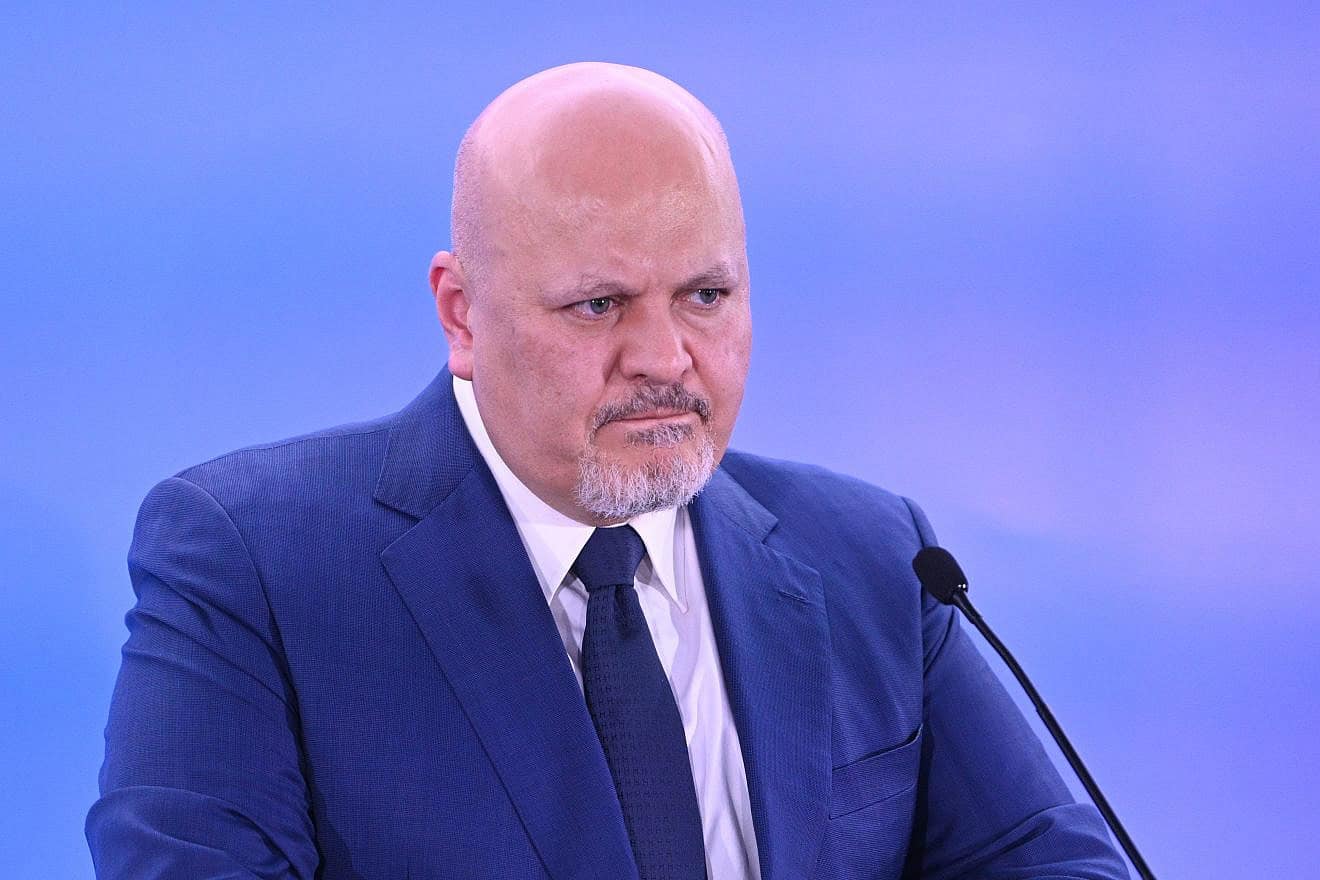
ICC Prosecutor Karim Khan Urges Caution on ‘Genocide’ Claims Against Israel as Legal Scrutiny Intensifies
By: Fern Sidman
In a development that has injected renewed legal sobriety into one of the most charged and contentious debates surrounding the Gaza war, Karim Khan, the chief prosecutor of the International Criminal Court, has publicly cast doubt on the widespread and politically amplified allegations that Israel has committed genocide. His remarks, delivered in a high-profile interview and reported on Friday by The Algemeiner, underscore a fundamental principle of international law: that the gravest accusations must be grounded in demonstrable evidence, not rhetoric.
Khan’s statements come at a time when accusations of genocide have become a central pillar of international criticism directed at Israel’s military campaign against Hamas in Gaza. Yet, as The Algemeiner report highlighted, the ICC prosecutor declined to validate such claims, instead emphasizing the stringent evidentiary standards required to substantiate them.
During the interview, anti-Israel journalist Mehdi Hasan pressed Khan repeatedly to affirm whether Israel’s actions constituted genocide. Khan’s response was unequivocal in its adherence to legal discipline.
“So, you’re not ruling out that there could be a warrant in the future?” Hasan asked.
“Everything is a function of evidence,” Khan replied, warning that advancing genocide accusations without proof would be “reckless.”
This exchange, as reported by The Algemeiner, illustrates a critical divergence between legal analysis and political advocacy. While public discourse has increasingly adopted the language of genocide, Khan’s remarks reaffirm that such a determination cannot be made absent clear and compelling evidence of intent—a cornerstone requirement under international law.
When Hasan sought to press the issue further—“You’re saying in the past three years there hasn’t been evidence of genocide in Gaza?”—Khan maintained his cautious posture, declining to endorse conclusions that have not been legally established.
As The Algemeiner report emphasized, genocide is among the most difficult crimes to prove in any legal forum. Prosecutors must demonstrate not only that widespread harm has occurred but that it was carried out with the specific intent to destroy a protected group “in whole or in part.”
Khan acknowledged the humanitarian toll of the conflict, noting the “suffering” in Gaza, but insisted that such suffering, however grave, does not automatically satisfy the legal criteria for genocide.
“So, genocide is not off limits?” Hasan asked.
“No crime is off limits if the evidence is there,” Khan responded.
This formulation reflects a disciplined legal approach that resists the conflation of tragic outcomes with specific criminal intent—a distinction that is frequently blurred in public debate.
Israel has consistently rejected accusations of genocide, arguing that its military operations are conducted in self-defense following the October 7, 2023 attacks by Hamas, which resulted in the barbaric massacre of 1,200 individuals and the abduction of 250 hostages.
According to the information provided in The Algemeiner report, Israeli officials have underscored the extensive measures taken to minimize civilian casualties. These include advance warnings to residents through leaflets, text messages, and other communications, as well as coordinated evacuation efforts in targeted areas.
Israel has also highlighted the operational challenges posed by Hamas’s tactics, which include embedding fighters within densely populated civilian areas and utilizing infrastructure such as hospitals, schools, and mosques for military purposes.
These factors, Israeli officials argue, complicate the application of conventional legal frameworks and underscore the asymmetrical nature of the conflict.
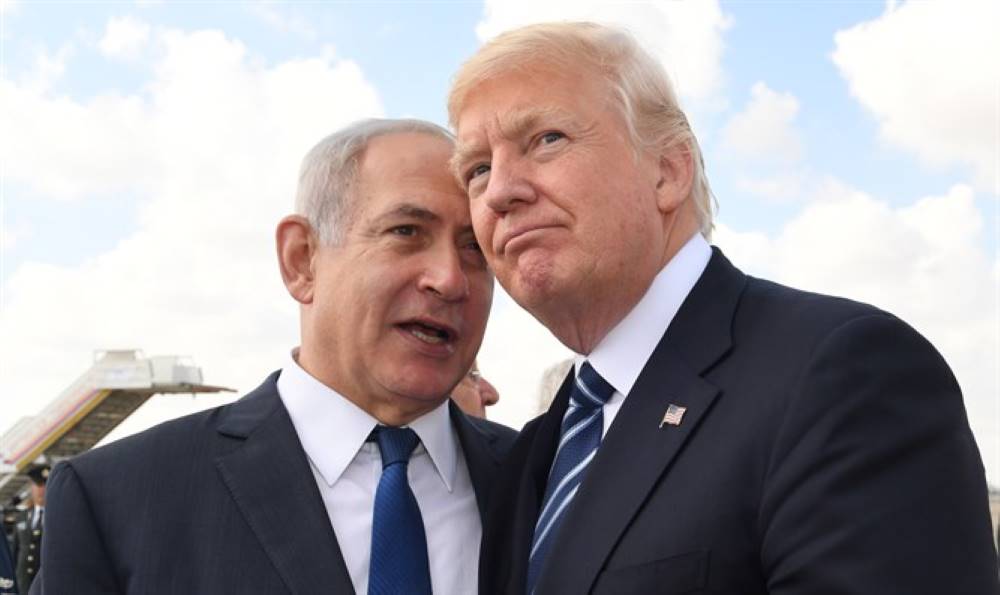
The broader legal landscape has been further complicated by the ICC’s decision to issue arrest warrants in November for Israeli Prime Minister Benjamin Netanyahu and former defense minister Yoav Gallant, alongside Hamas commander Ibrahim al-Masri, also known as Mohammed Deif.
The Algemeiner reported that the ICC cited “reasonable grounds” to believe Netanyahu and Gallant were responsible for alleged war crimes, including the use of starvation as a method of warfare—charges that Israel has categorically denied.
The decision drew sharp criticism from both Israeli and United States officials, who argued that equating Israel’s democratically elected leadership with a terrorist organization represented a profound moral and legal distortion.
Critics contended that such equivalence fails to account for the context of Hamas’s initiation of hostilities and its continued use of civilian populations as operational shields.
Khan himself has faced scrutiny over the timing and manner of his initial actions in the case. As The Algemeiner report noted, he announced his pursuit of arrest warrants in May 2024 while simultaneously canceling a planned visit to Israel and Gaza that would have allowed for direct evidence collection.
The cancellation reportedly frustrated American and British officials, who viewed the visit as an opportunity for Israeli leaders to present their perspective and outline their compliance with international law.
This episode has contributed to broader concerns about the procedural integrity of the ICC’s investigation, particularly in light of the high stakes involved.
The question of jurisdiction remains another critical point of contention. Israel is not a signatory to the Rome Statute, the treaty that established the ICC, and therefore does not recognize the court’s authority.
However, as The Algemeiner reported, the ICC has asserted jurisdiction based on its acceptance of “Palestine” as a member entity in 2015—a move that remains legally and politically disputed.
The United States, which also has not ratified the Rome Statute, has expressed similar reservations about the court’s authority in this context.
In the interview, Khan also raised concerns about external attempts to influence the ICC’s work. He alleged that senior Western officials had issued warnings regarding the geopolitical consequences of targeting Israeli leaders.
While he did not provide detailed evidence, these claims, as reported by The Algemeiner, highlight the intense political pressures surrounding the court’s investigation.
Khan further rejected suggestions that his actions were influenced by unrelated allegations of misconduct against him, describing such claims as politicized and unsupported by evidence.
The ICC’s involvement in the Gaza conflict has placed it at the center of a deeply polarized international debate. On one side are activists and organizations that have embraced the genocide narrative; on the other are governments and legal experts who argue that such claims are premature and unsupported.
Khan’s remarks appear to signal a recalibration toward a more cautious and evidence-based approach, one that resists the pressures of advocacy-driven narratives.
As The Algemeiner report observed, this stance may not resolve the broader debate, but it introduces a degree of legal clarity into a discourse often dominated by emotive language and political positioning.
The statements by Karim Khan, as reported by The Algemeiner, represent a reaffirmation of the foundational principles of international criminal law. In emphasizing that “everything is a function of evidence,” the ICC prosecutor has underscored the necessity of separating legal judgment from political rhetoric.
For Israel, these remarks provide a measure of validation for its longstanding argument that accusations of genocide are not supported by the requisite legal standard.
As the ICC’s investigation continues, the ultimate outcome will depend not on prevailing narratives but on the evidence that can be substantiated within the framework of international law. Until such determinations are made, Khan’s message is clear: the threshold for genocide remains high, and it has not yet been met.