


























|
Getting your Trinity Audio player ready...
|
By: Fern Sidman
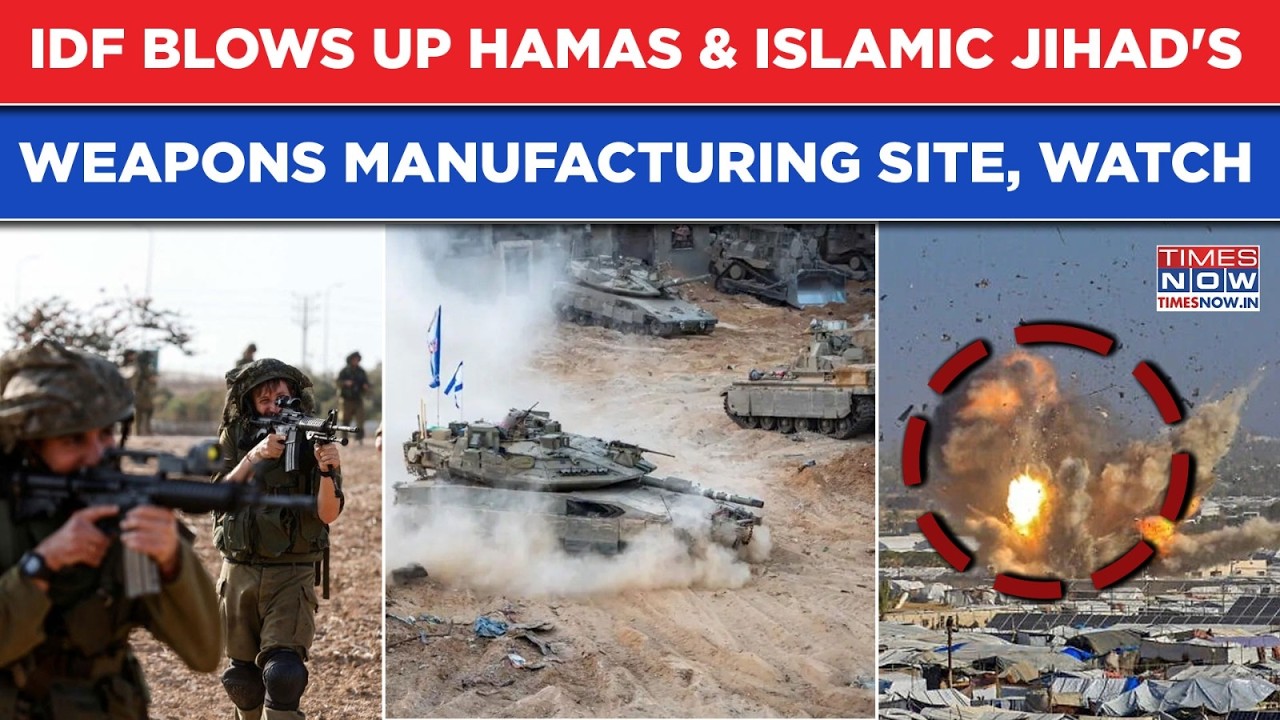
In a development that underscores the persistent volatility along the Gaza front despite a formal ceasefire, the Israel Defense Forces, acting in coordination with the Israel Security Agency, carried out a targeted strike on a weapons production site in the northern Gaza Strip on Friday. The operation, detailed in a joint statement by the two security bodies and reported on Saturday by The Jewish News Syndicate (JNS) reflects Israel’s ongoing efforts to neutralize imminent threats emanating from terrorist infrastructure within the enclave.
According to the official statement, the site targeted in the strike had been actively utilized by Palestinian Islamic Jihad, with additional involvement attributed to Hamas. The facility was reportedly engaged in the manufacture of explosive devices and the storage of weaponry intended for use against Israeli civilians and military personnel.
“The site had recently been used by the organization’s production array, as well as by the Hamas terrorist organization, for the production of explosive devices and the storage of additional weapons intended to harm Israeli civilians and IDF troops operating near the Yellow Line,” the statement read.
The location of the strike carries particular significance due to its proximity to what is known as the Yellow Line—a demarcation running through the Gaza Strip that delineates areas of operational control. As reported by JNS, Israeli forces currently maintain control over approximately 54% of the territory east of this line.
This zone has become a focal point of military activity, with Israeli officials emphasizing the need to prevent terrorist groups from reconstituting capabilities that could threaten forces stationed nearby. The strike on Friday is thus framed not as an isolated incident, but as part of a broader strategy aimed at maintaining security within areas under Israeli control while adhering to the terms of the ceasefire.
In their statement, the IDF and the Shin Bet stressed that extensive precautions were taken to minimize the risk to civilians. These measures included the evacuation of the surrounding area prior to the strike, as well as the use of aerial surveillance to confirm the absence of non-combatants.
“Measures were taken to mitigate harm to civilians, including the evacuation of the area and the use of aerial surveillance, before striking the site with precise munitions,” the statement emphasized, as cited in the JNS report.
The emphasis on precision and preemptive evacuation reflects an ongoing effort by Israeli authorities to balance operational objectives with humanitarian considerations, a dynamic that has defined IDF operations in Gaza since the inception of the war.
Despite the strike, Israeli officials reiterated that their forces remain deployed in accordance with the ceasefire agreement that took effect on Oct. 10, 2025. The agreement, brokered by the United States, brought an end to a two-year war that began with the Oct. 7, 2023 massacre.
“IDF troops in the Southern Command remain deployed in accordance with the ceasefire agreement and will continue to operate to remove any immediate threat,” the statement added.
The JNS report noted that this language reflects a dual commitment: adherence to the ceasefire framework, coupled with a willingness to take action against immediate and actionable threats.
The strike on the weapons facility occurred against the backdrop of another significant development within Hamas leadership circles. On Thursday, Hamas confirmed that Azzam al-Hayya, the son of senior Gaza-based leader Khalil al-Hayya, had died from injuries sustained in an earlier Israeli airstrike.
According to a source at Gaza City’s Shifa Hospital, cited by JNS through regional reporting, al-Hayya succumbed to wounds inflicted during a strike in the Daraj Tuffah area late Wednesday.
In a statement reported by JNS, Hamas characterized the killing as an attempt by Israel to exert pressure on its leadership. “The killing of al-Hayya was an attempt by the Jewish state to influence the will of the resistance and its political stances,” the organization stated.
This assertion reflects a broader narrative advanced by Hamas, which has consistently framed Israeli military actions as efforts to undermine its political and military resolve.
The events of the past 48 hours highlight the fragility of the ceasefire that has held since October 2025. While large-scale hostilities have subsided, intermittent strikes and targeted operations continue to punctuate the landscape, raising questions about the durability of the current arrangement.
JNS has reported that key elements of the U.S.-brokered peace framework remain contested, particularly the issue of disarmament. Senior Hamas figures, including Khaled Mashaal and Musa Abu Marzouk, have publicly rejected aspects of the plan in recent months.
This rejection comes despite earlier indications of acceptance in October, creating a complex and evolving diplomatic environment.
At the heart of the ongoing impasse is the question of whether Hamas and other Iranian-backed terror proxies will relinquish their weapons. For Israel and its allies, disarmament is viewed as a prerequisite for lasting stability. For Hamas, it remains a non-negotiable element of its strategic posture.
The JNS report highlighted that the absence of progress on this issue poses a significant obstacle to advancing the next phase of the peace plan. The continued existence of weapons production facilities, such as the one targeted on Friday, underscores the persistence of this challenge.
The interplay between military operations and diplomatic negotiations has broader implications for the region. The ceasefire, while reducing the intensity of conflict, has not resolved the underlying tensions that have defined the Israeli-Palestinian dynamic for decades.
The targeted strike reported by JNS serves as a reminder that the situation remains highly fluid, with both sides navigating a delicate balance between restraint and assertiveness.
For Israel, the imperative is to prevent the reemergence of terrorist capabilities that could threaten its population and forces. For Hamas, the challenge lies in maintaining its operational capacity while engaging—selectively—in diplomatic processes.
The latest developments in Gaza illustrate the precarious equilibrium that currently governs the region. The IDF’s strike on a weapons production site, carried out under the auspices of intelligence provided by the Shin Bet, reflects a continued commitment to preemptive action against verified threats.
At the same time, the confirmation of Azzam al-Hayya’s death and the ongoing resistance to disarmament by Hamas leaders highlight the enduring complexities of the conflict.
As JNS reported, the path forward will depend on the ability of all parties to reconcile competing objectives within a framework that remains inherently fragile. The ceasefire, while holding, exists under constant pressure, with each incident carrying the potential to either reinforce or undermine the tenuous stability that has been achieved.
In this context, the events of Friday are not merely isolated occurrences but part of a broader narrative—one in which military action and diplomatic negotiation continue to intersect in a landscape defined by uncertainty and risk.