






















|
Getting your Trinity Audio player ready...
|
By: Meyer Wolfsheim
President-elect Donald Trump is expected to issue an executive order restricting or banning new offshore wind farms—a move that could undermine clean energy initiatives in states like New York, New Jersey, and Massachusetts, reports the New York Post.
The forthcoming order marks a decisive shift in federal energy policy as Trump takes office, signaling his administration’s opposition to what critics call unrealistic clean energy goals set by the previous administration.
New Jersey Congressman Jefferson Van Drew, a Republican representing coastal communities, confirmed he is working closely with Trump on the executive order.
“These offshore wind projects should have never been approved in the first place,” Van Drew told the New York Post. “The Biden administration’s reckless green agenda put politics over people, and that ends now. President Trump is committed to stopping these harmful projects and is taking decisive action.”
Van Drew emphasized that the executive order is “just the beginning” of efforts to halt offshore wind projects, which he claims pose risks to coastal ecosystems and communities. He vowed to fight aggressively to prevent what he described as the “havoc” caused by such developments.
Trump’s election has already had a chilling effect on the offshore wind industry. Following his victory in November, French energy company TotalEnergies SE announced it had paused plans for a wind farm off the New York-New Jersey coast.
The New York Post highlights how federal spending on wind energy soared during the Biden administration, with $18.7 billion allocated between 2016 and 2022 for tax credits and subsidies. Critics, including the Competitive Enterprise Institute, argue this spending is excessive given wind power’s intermittent reliability.
“This is a massive amount of money,” the group noted. “Wind’s intermittency heavily limits its benefit to reliability.”
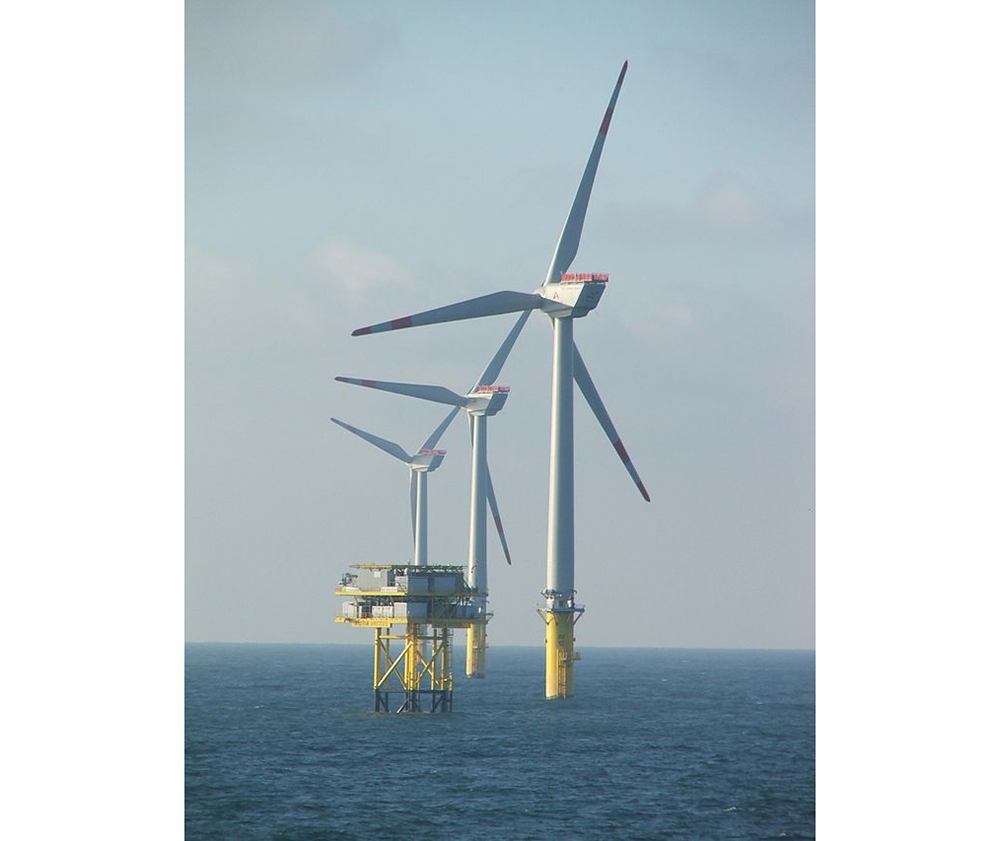
New York and New Jersey are at the forefront of offshore wind development, with projects like South Fork Wind, Sunrise Wind, and Empire Wind 1 either operational or under construction. However, critics argue these initiatives come with steep financial burdens.
Ken Girardin, research director for the Empire Center for Public Policy, told the New York Post that New York’s ambitious climate goals could cost the state tens of billions of dollars. He warned that these costs would ultimately fall on ratepayers through higher electricity bills—not just for wind and solar power but also for the battery storage needed to balance their intermittency.
State estimates suggest that residential electricity bills could increase by about 2%, or $2.09 per month, due to projects like Empire Wind and Sunrise Wind.
Supporters of wind energy argue that the criticism is overblown and point out that fossil fuel companies also benefit from significant government subsidies. A New York Post analysis last year revealed that New York state agencies awarded more than $1.1 billion in tax breaks to fossil fuel projects between 2010 and 2022, averaging nearly $85 million annually.
The executive order is likely to intensify debates over the future of U.S. energy policy. Coastal states have leaned heavily on wind energy to meet climate goals, and any federal restrictions could derail those efforts.
As the New York Post reports, Trump’s opposition to offshore wind represents a broader rejection of the Biden administration’s green energy agenda. For critics like Van Drew, it’s a necessary course correction. For supporters of renewable energy, it’s a significant setback in the fight against climate change.