

























|
Getting your Trinity Audio player ready...
|
By: Ariella Haviv
New York residents are entering 2026 under mounting financial strain as a newly implemented multi year utility rate increase begins to take hold, intensifying what many are now describing as a full scale affordability crisis. The changes, approved by the state Public Service Commission, introduce incremental increases to electricity and natural gas delivery charges that will compound over the next several years, placing additional pressure on households already grappling with elevated costs of living.
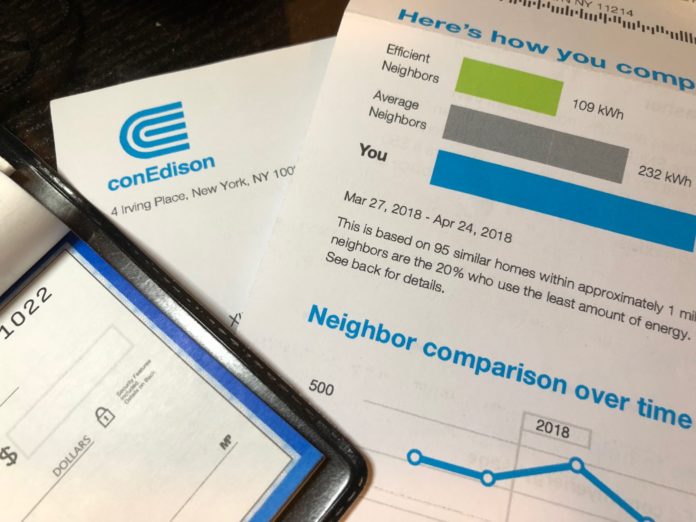
Beginning on January 1, 2026, customers served by Con Edison—the primary energy provider for New York City and much of Westchester County—have seen their electric bills rise by approximately 3.5 percent, while natural gas charges have increased by roughly 4.4 percent. Though these percentages may appear modest in isolation, their cumulative impact has proven far more consequential, particularly when paired with successive increases scheduled for 2027 and 2028. By the end of the current rate cycle, the total rise is expected to reach approximately 10.4 percent, translating into hundreds of additional dollars annually for many households.
The burden is not theoretical. Residents across the five boroughs are already reporting higher monthly statements, with some describing the increases as both abrupt and unsustainable. “It feels like every year the bills go up, but nothing else changes for us,” one New York resident remarked. “We are being squeezed from every direction, and this just adds more pressure.”
The rate adjustments affect a vast population. Approximately 3.7 million electricity customers and 1.1 million gas customers fall under the Con Edison service umbrella in New York City and surrounding areas. For a typical household, the immediate increase in 2026 translates into an additional four to nearly seven dollars per month for electricity, and over ten dollars monthly for gas. Over time, however, the cumulative effect is expected to exceed six hundred dollars annually for many consumers.
Officials argue that the increases are both necessary and unavoidable, citing a convergence of economic pressures that extend well beyond the energy sector itself. Public Service Commission Chair Rory Christian framed the decision as a pragmatic response to broader financial realities.
“What the order represents today is a reaction to the world in which we live in,” Christian explained. “One that is characterized by increasing costs that are far beyond the cost of energy alone, food, housing and inflation are increasing at a rate far faster than wages.”
He added that the outcome reflects an effort at “managing these pressures,” suggesting that regulators sought to balance the needs of infrastructure investment with the financial limitations of consumers.
At the core of the rate hike lies a complex web of cost drivers. One of the most significant contributors is the rising burden of property taxes, which utilities must incorporate into their operational expenses. Additionally, substantial investment is required to maintain and modernize the aging energy grid that underpins the city’s daily functioning.
New York’s electrical infrastructure—comprising miles of wiring, substations, and transmission lines—demands continuous upkeep. In many cases, components date back decades and must now be upgraded to meet contemporary standards of reliability and resilience. Climate change has further intensified these demands, necessitating systems capable of withstanding extreme weather events, including heat waves, flooding, and severe storms.
The rate increases are also intended to fund a range of forward looking initiatives. These include programs aimed at improving energy efficiency, expanding access to affordability measures, upgrading information technology systems, and accelerating the adoption of electric heat pumps as part of a broader transition toward cleaner energy sources. Additionally, efforts to detect and repair gas leaks—an essential safety measure—require sustained financial investment.
Importantly, the rate hike does not encompass the cost of electricity itself, which Con Edison passes through to consumers at cost. Instead, the increases apply to the delivery infrastructure, the network that transports power from generators to homes and businesses. The regulatory framework permits the utility to earn a return on these investments, set at approximately 9.4 percent under the current order.
Despite these justifications, public reaction has been overwhelmingly negative. Residents, advocacy groups, and elected officials have voiced deep frustration, arguing that the burden is falling disproportionately on ordinary consumers.
“This is becoming a monopoly on our lives and our homes,” one local lawmaker declared during a recent community meeting. “People cannot continue to absorb these increases year after year. At some point, it becomes untenable.”
Across neighborhoods, similar sentiments are being echoed. “We are talking about basic necessities,” another resident said. “Electricity and heat are not luxuries. When those costs rise like this, it affects everything else—rent, groceries, transportation.”
Online forums and community discussions reveal a pattern of mounting anxiety. Many users report receiving unexpectedly high bills, prompting questions about the fairness and transparency of the rate structure. Others are calling for audits of the utility provider, demanding greater accountability and oversight.
The term “affordability crisis” has become increasingly prevalent in discussions surrounding the rate hikes, reflecting the broader economic context in which they are occurring. New York City remains one of the most expensive urban centers in the world, with housing, food, and transportation costs continuing to climb.
For many households, wages have not kept pace with inflation, creating a widening gap between income and expenses. The addition of higher utility costs exacerbates this imbalance, forcing difficult choices for families already operating on tight budgets.
A single parent in Brooklyn described the dilemma succinctly: “You start cutting back wherever you can, but there is only so much you can do. You cannot turn off the heat in winter or stop using electricity. These are essential services.”
In response to these concerns, state and federal programs offer some measure of relief, though their reach remains limited. The Energy Affordability Program, for example, provides eligible households with monthly bill reductions of up to fifty dollars. Similarly, the Home Energy Assistance Program offers grants to low income families to help offset heating costs.
Officials emphasize that these initiatives are critical components of the broader policy framework. “We encourage all eligible residents to take advantage of these programs,” a spokesperson noted. “They are designed to provide meaningful support during times of increased financial pressure.”
However, critics argue that such measures, while helpful, do not address the underlying issue. “These programs are a band aid,” one advocate asserted. “They do not solve the fundamental problem of rising costs.”
Looking ahead, the trajectory of utility costs in New York appears poised to remain upward. The planned increases for 2027 and 2028 will further compound the financial burden, raising questions about sustainability and long term affordability.
At the same time, the need for infrastructure investment is unlikely to diminish. As the city transitions toward cleaner energy sources and seeks to reduce its carbon footprint, additional expenditures will be required to support this transformation. The challenge lies in balancing these imperatives with the economic realities faced by consumers.
The current situation represents a critical juncture for policymakers, utilities, and residents alike. The decisions made today will shape the future of energy affordability and accessibility in one of the nation’s most dynamic metropolitan areas.
For many New Yorkers, the issue is deeply personal. It is reflected in monthly bills, household budgets, and the everyday decisions that define daily life. As one resident put it, “This is not just about numbers on a page. It is about whether people can afford to live here.”
The coming months will likely see continued debate, advocacy, and scrutiny as stakeholders grapple with the implications of the rate hikes. Whether meaningful solutions can be achieved remains uncertain, but one thing is clear: the conversation about energy costs in New York has entered a new and urgent phase.
The depth of public anger becomes unmistakable when examining the unfiltered voices of consumers themselves—residents who increasingly feel that the system is failing them.
“I love how a company that generated one point eight billion dollars in net profit on fifteen billion in sales last year says they need to raise prices to afford capital improvements. Where in your bureaucracy is all that money going? You take forty five minutes to pick up the phone while municipal water services respond almost instantly if I have a problem.”
“I mean that is what the structure is designed for. The company largely does not generate electricity itself; it maintains the delivery infrastructure. The supply side is relatively inexpensive and heavily regulated.”
“Maybe it is because this is one of the largest and most complex electric distribution networks in the country, mostly underground, in a state and city that are among the most difficult places to do business. Not to mention that delivery charges now include importing power from Canada after local generation facilities were shut down.”
“I do not know the full details, but what they are arguing is that delivery rates must increase. It is built into the system, and corporate leadership is seeking higher returns for shareholders.”
“Since the government grants them a monopoly, does that not also come with limits on how much profit they can generate? It is astonishing if these increases are driven more by corporate pressure than strict regulatory oversight.”
“I have seen countless people panicking about their winter bills, even though they have not changed their usage. The outlook for the next few years looks bleak.”
“It is not just inflation. Utilities nationwide have received approval for significant base rate increases. The costs of upgrading the grid and repairing storm damage are being passed directly to consumers. We are essentially subsidizing infrastructure while companies maintain guaranteed profit margins.”
One Brooklyn resident offered a particularly stark account: “This year I have seen enormous increases in both my electricity and gas bills. It feels like there is no oversight. They claim they have permission to increase prices for both supply and delivery.”
She added, “When I applied for assistance, I only received a very small amount, and it lasted for just two months. That does not come close to covering the actual cost.”
Another consumer highlighted the structural imbalance within billing practices: “The price per unit has only gone up slightly over the past few years. What has skyrocketed are the delivery charges and all the additional fees. Sometimes the actual energy cost is less than the delivery charge itself. It is completely unreasonable.”
A separate account underscored the disproportionate burden: “Last month my electric bill was two hundred dollars, and one hundred thirty of that was delivery charges and other fees. It is beyond excessive.”
Others pointed to broader systemic shifts driving the increases. “I have heard that utilities are increasing capital spending to support rising demand from data centers, and those costs are being passed on to consumers through delivery fees.”
“Many of these charges are effectively funding new infrastructure for data centers. Consumers are footing the bill for expansion that primarily benefits large scale operations.”
Finally, one homeowner offered a sobering reflection on how dramatically costs have changed: “For the first eight years in my house, my bill was around $100 dollars a month. Last month it reached three hundred. I live alone, use minimal electricity, and still saw this increase. Even after cutting back significantly, the bill only dropped to $168.”
These voices, raw and unvarnished, capture the human dimension of a policy decision that might otherwise be reduced to percentages and projections. They reveal a public increasingly skeptical, increasingly burdened, and increasingly demanding answers as New York confronts a future defined by rising energy costs and growing economic uncertainty.



