

















|
Getting your Trinity Audio player ready...
|
By: Fern Sidman
A widening and increasingly fraught divide between New York City’s political leadership and segments of its Jewish community has come sharply into focus following a high-profile call for a boycott of an upcoming Jewish heritage celebration at Gracie Mansion. The controversy, reported on by The New York Post on Tuesday, underscores a volatile intersection of politics, identity, and public perception at a time when concerns over antisemitism remain deeply pronounced across the city.
At the center of the unfolding dispute is Mayor Zohran Mamdani, whose planned “Shavuot Celebration in Honor of Jewish Heritage Month” has drawn both invitations and intense criticism. The event, scheduled for May 18 at the mayoral residence, was described in official correspondence as a festive gathering featuring a kosher dairy menu in recognition of the Jewish holiday of Shavuot, which begins Thursday evening. Yet what might otherwise have been a symbolic gesture of outreach has instead become a flashpoint for broader tensions.
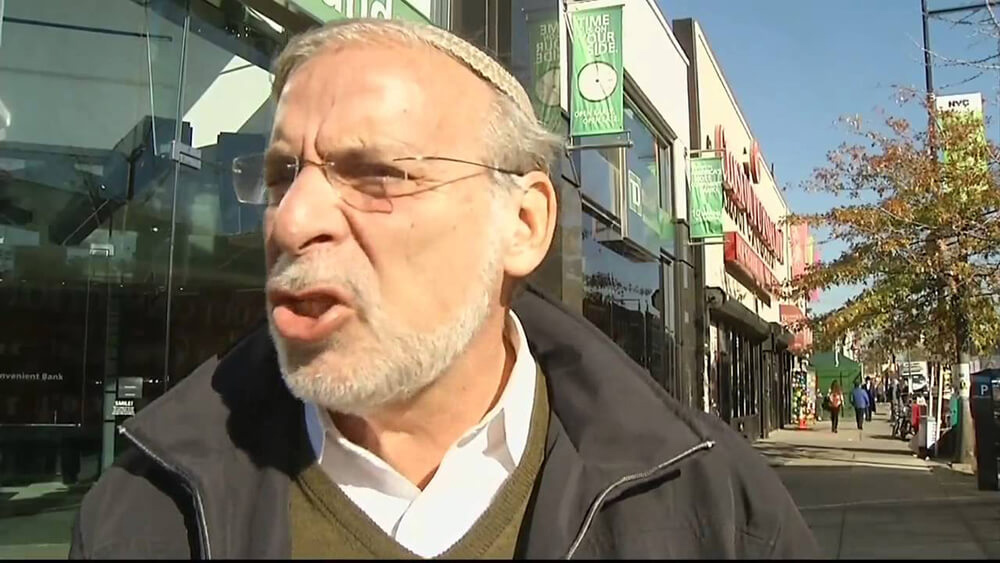
The most forceful opposition has come from Dov Hikind, a veteran political figure, longtime Jewish activist and founder of Americans Against Antisemitism. Hikind, who served for 35 years in the New York State Assembly representing predominantly Orthodox Jewish communities in southern Brooklyn, issued a public appeal urging Jewish leaders to boycott the event entirely.
“Things are out of control in this city. Attacks upon Jews. Fear in the Jewish community,” Hikind declared in a video statement shared with The New York Post. His remarks, delivered with a tone of urgency, reflect a broader sentiment among some community members who believe that current political leadership has failed to adequately address rising antisemitic incidents.
Hikind’s appeal went further, framing attendance at the Gracie Mansion event as a matter of communal dignity and leadership. “I am calling on Jewish leaders not to attend this event. I plead with you to take a stand. Show pride. Have self-respect,” he said. The language, as highlighted in The New York Post report, speaks volumes about the symbolic weight he attaches to the decision, portraying participation as potentially undermining collective solidarity.
Central to Hikind’s critique are longstanding concerns about Mamdani’s political positions and public statements, particularly regarding Israel. According to The New York Post report, the mayor has faced sustained criticism since his election campaign for his outspoken support of the boycott, divestment, and sanctions movement, as well as for statements accusing Israel of committing genocide during its conflict with Hamas following the October 7, 2023 attacks.
Hikind also directed criticism toward the mayor’s wife, Rama Duwaji, citing social media activity that is sympathetic to Palestinian terrorist narratives and critical of Israel. “The mayor and his wife and family are radical Islamists endangering the welfare of America and the Jewish community,” Hikind asserted.
While Hikind’s rhetoric has resonated with certain segments of the community, it has also been met with more measured responses from other Jewish leaders, reflecting a diversity of perspectives. Rabbi Chaim Steinmetz, a prominent voice within Manhattan’s Jewish establishment, offered a nuanced critique of the situation.
Speaking to The New York Post, Steinmetz revealed that he had not received an invitation to the event—marking what he described as the first such exclusion in a decade of mayoral Jewish heritage celebrations. “He’s pre-emptively knocking off all the people who might confront him,” Steinmetz said, suggesting that the guest list had been curated to favor supportive voices. “He’s inviting a narrow slice of Jews who support him.”
Despite these concerns, Steinmetz stopped short of endorsing a boycott. Instead, he encouraged those invited to attend and engage directly with the mayor. His position reflects a belief in dialogue as a means of addressing grievances. “Still,” he indicated, Jewish leaders should use the opportunity to have “frank discussions with the mayor about antisemitism.”
Steinmetz also drew a connection between political rhetoric and recent unrest, asserting that Mamdani’s stance toward Israel is “directly responsible” for a series of contentious protests outside synagogues in the city. These demonstrations, which have included confrontations between activists and congregants, have heightened anxiety within the Jewish community and contributed to a broader climate of unease.
The tensions surrounding the Gracie Mansion event are further contextualized by Mamdani’s absence from a recent gathering of the Jewish Community Relations Council of New York, held at The Plaza Hotel. As reported by The New York Post, the gala was attended by Governor Kathy Hochul, State Attorney General Letitia James, and senior financial officials Tom DiNapoli and Mark Levine.
Also in attendance was Police Commissioner Jessica Tisch, who is Jewish and delivered remarks at the event. Her presence highlighted the ongoing role of law enforcement leadership in addressing community concerns. “I understand that for many of you, having a Jewish police commissioner is deeply comforting,” Tisch said, acknowledging the symbolic and practical importance of representation within city institutions.
In response to the growing criticism, the mayor’s office has sought to defend its record and intentions. Spokesman Sam Raskin emphasized ongoing efforts to engage with Jewish communities across the city. “Since taking office, Mayor Mamdani has made it a priority to consistently show up for and build relationships across New York City’s Jewish communities,” Raskin told The New York Post.
He added that the administration has been actively involved in celebrating Jewish holidays and fostering connections across diverse neighborhoods and traditions. “The upcoming Shavuot celebration at Gracie Mansion is one of many ways the mayor is engaging with Jewish New Yorkers,” Raskin said. “He looks forward to welcoming the full breadth of the Jewish community, across the political and religious spectrum, on Monday.”
The administration has also pointed to policy initiatives aimed at combating antisemitism. According to The New York Post, the Mayor’s Office to Combat Antisemitism is currently developing the city’s first comprehensive municipal plan to address anti-Jewish hate. In addition, the mayor’s executive budget proposal includes an allocation of $26 million for the Office for the Prevention of Hate Crimes—an increase of more than 800% compared to previous funding levels.
These measures, while significant in scale, have not fully assuaged critics who argue that rhetoric and political positioning play an equally important role in shaping public sentiment. The debate, therefore, extends beyond policy into the realm of perception, trust, and communal identity.
The controversy surrounding the Gracie Mansion event illustrates the challenges facing city leadership in navigating a complex and often polarized landscape. For some, the event represents an opportunity for dialogue and reconciliation; for others, it is a symbol of unresolved tensions and perceived insensitivity.
Hikind’s closing remarks, as reported by The New York Post, encapsulate the starkness of his position. “You don’t have to go to Gracie Mansion to hug and kiss and take pictures while undermining the entire Jewish community,” he said. “You have an opportunity to be a leader and make a powerful statement. You don’t have to go to Gracie Mansion for cheese Danishes.”
Such language reflects a broader debate about the role of symbolic gestures versus substantive engagement. As the date of the event approaches, the question of attendance has taken on outsized significance, serving as a proxy for deeper disagreements about leadership, representation, and the appropriate response to rising antisemitism.
In the final analysis, the unfolding dispute is emblematic of a broader moment of reckoning within New York City. It highlights the delicate balance between outreach and accountability, between political expression and communal sensitivity. Whether the Gracie Mansion celebration will serve as a bridge or a dividing line remains to be seen, but its impact on the city’s civic discourse is already unmistakable.



