




























|
Getting your Trinity Audio player ready...
|
By: Andrew Carlson
In the ever-contentious arena of New York City politics, where symbolism often collides with substance, a recent episode has ignited a firestorm of debate that extends far beyond a single policy proposal. As reported on Friday by The New York Post, Mayor Zohran Mamdani’s highly publicized video outside one of Manhattan’s most opulent residences has become a flashpoint in an intensifying struggle over taxation, economic policy, and the delicate balance between populist rhetoric and fiscal pragmatism.
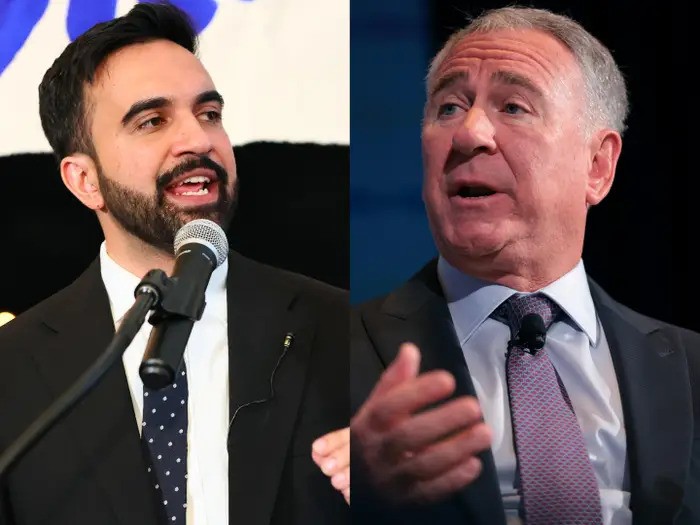
The scene itself was unmistakably theatrical. Standing before the towering façade of 220 Central Park South, Mamdani delivered a message that was as pointed as it was provocative. Gesturing toward the ultra-luxury penthouse owned by hedge fund magnate Ken Griffin—a residence whose staggering purchase price of $238 million once set a national record—the mayor reiterated a central tenet of his political platform: a commitment to impose higher taxes on the wealthiest strata of society.
“When I ran for mayor, I said I was going to tax the rich,” Mamdani declared, framing the property behind him as emblematic of the economic disparities he seeks to address. The video, disseminated through his official social media channels, quickly achieved viral status, amassing tens of millions of views and drawing both fervent support and sharp criticism.
At the core of the controversy lies the proposed pied-à-terre tax, a policy initiative introduced by Governor Kathy Hochul and embraced by Mamdani as a cornerstone of his fiscal agenda. The measure would impose an annual levy on luxury residential properties valued at more than $5 million when owned by individuals who do not reside in them full time. Proponents argue that such a tax would generate much-needed revenue while addressing the phenomenon of high-end properties remaining vacant for much of the year.
Critics, however, contend that the policy risks undermining the very economic vitality it seeks to enhance. Among the most prominent voices raising concerns is Sara Eisen, a veteran financial journalist and co-anchor of CNBC’s flagship programs. In remarks highlighted by The New York Post, Eisen cautioned that the approach embodied by Mamdani’s video could have unintended and potentially deleterious consequences.
After getting criticized for filming a video in front of hedge fund magnate and NYC employer Ken Griffin’s luxury pied-a-terre on Central Park South, Mamdani today only referenced a Saudi billionaire + Russian auto dealer when giving examples of who would be taxed under the plan.
— Elizabeth Kim (@lizkimtweets) April 16, 2026
Eisen’s critique was grounded not merely in abstract economic theory but in the tangible realities of New York’s business ecosystem. Griffin, she noted, is not simply a symbol of wealth but a significant economic actor whose activities generate employment, investment, and tax revenue on a substantial scale. His firm, Citadel, employs thousands of individuals and has committed billions of dollars to projects that promise to reshape the city’s skyline and economic landscape.
“Making him feel unwelcome and demonizing him seems risky,” Eisen observed, articulating a concern shared by many within the business community. Her remarks underscore a broader tension that has come to define the current debate: the challenge of reconciling efforts to address inequality with the need to maintain an environment conducive to investment and growth.
The stakes of this tension are particularly evident in Griffin’s own trajectory. Once headquartered in Chicago, Citadel relocated its base of operations to Miami, a move that Griffin attributed in part to what he characterized as unfavorable policy conditions in Northern cities. His critique extended beyond taxation to encompass issues such as crime, regulation, and the overall business climate.
In public statements, Griffin has drawn stark contrasts between cities like New York and Chicago, on the one hand, and Florida’s burgeoning economic hubs on the other. He has described Miami as a place imbued with optimism and opportunity, a locale where capital and talent can flourish without the constraints he associates with more heavily regulated environments. These observations, while contentious, have resonated with a growing cohort of business leaders who view the migration of companies and investment as a reflection of broader structural shifts.
The implications of such shifts are profound. As Eisen noted in her expanded comments to The New York Post, the cumulative effect of policies perceived as hostile to business could erode New York’s competitive edge over time. While the city’s unique cultural and economic attributes may insulate it from immediate decline, the longer-term trajectory is less certain.
“The general attitude I hear from business leaders is that they can probably endure a few years of adverse policy,” Eisen remarked. “The real concern lies in the longer-term trend.” This perspective highlights a critical dimension of the current debate: the distinction between short-term resilience and long-term sustainability.
Mamdani, for his part, has shown little inclination to temper his rhetoric. His decision to film the video outside Griffin’s residence was a deliberate act, designed to personalize what might otherwise be an abstract policy discussion. By anchoring his message in a specific, highly visible example of wealth, he sought to galvanize public support and underscore the perceived urgency of his agenda.
Yet this strategy has also exposed him to accusations of demagoguery. Critics argue that targeting individual figures risks oversimplifying complex economic dynamics and fostering a climate of antagonism that could prove counterproductive. The portrayal of wealthy individuals as adversaries, they contend, may resonate politically but carries the potential to alienate key stakeholders whose contributions are integral to the city’s prosperity.
The broader context of the pied-à-terre tax further complicates the picture. While the measure is framed as a targeted intervention aimed at a relatively small cohort of property owners, its ripple effects could extend across the real estate market. Opponents warn that increased taxation on luxury properties may depress property values, reduce investment, and ultimately diminish the tax base upon which public services depend.
At the same time, proponents argue that the policy addresses a genuine concern: the underutilization of high-value housing in a city grappling with affordability challenges. They contend that the tax represents a fair and pragmatic means of ensuring that those who benefit most from New York’s unique attributes contribute proportionately to its upkeep.
This dichotomy reflects a deeper philosophical divide over the role of government in shaping economic outcomes. On one side are those who emphasize the importance of redistribution and social equity; on the other are advocates of market-driven growth and minimal intervention. The current controversy, as illuminated by The New York Post, encapsulates this enduring tension in particularly vivid form.
Beyond the immediate policy debate, the episode raises broader questions about the nature of political discourse in an age of digital amplification. The viral spread of Mamdani’s video illustrates the power of social media to shape narratives and mobilize public opinion. At the same time, it highlights the risks inherent in a communication environment where nuance is often sacrificed for immediacy and impact.
For New York City, the outcome of this debate will carry significant implications. As a global financial center, the city’s ability to attract and retain capital is inextricably linked to perceptions of its business climate. Policies that are perceived as punitive or unpredictable may deter investment, while those that strike a balance between equity and growth could reinforce its position as a premier destination for enterprise.
Griffin’s ongoing involvement in major development projects underscores the stakes. His backing of the redevelopment of 350 Park Avenue—a massive undertaking that promises to create a new supertall office tower—represents a substantial commitment to the city’s future. The project, expected to cost billions of dollars, is emblematic of the kind of large-scale investment that has long driven New York’s economic dynamism.
Whether such commitments will continue in the face of evolving policy landscapes remains an open question. The interplay between political rhetoric and economic decision-making is inherently complex, shaped by a multitude of factors that extend beyond any single initiative.
As the debate unfolds, one thing is clear: the controversy surrounding Mamdani’s video and the proposed pied-à-terre tax has transcended the particulars of any one policy. It has become a lens through which to examine the broader challenges facing New York City at a pivotal moment in its history.
In the final analysis, the episode serves as a reminder of the delicate equilibrium that must be maintained between ambition and pragmatism, between the pursuit of justice and the preservation of prosperity. As The New York Post has chronicled, the choices made in this arena will shape not only the city’s fiscal landscape but also its identity as a place where opportunity and innovation can thrive.
For a city that has long prided itself on its resilience and adaptability, the path forward will require careful navigation. The challenge will be to harness the energy of reform without undermining the foundations of growth—a task as complex as it is consequential, and one that will define the contours of New York’s future for years to come.



