

























|
Getting your Trinity Audio player ready...
|
By: Fern Sidman
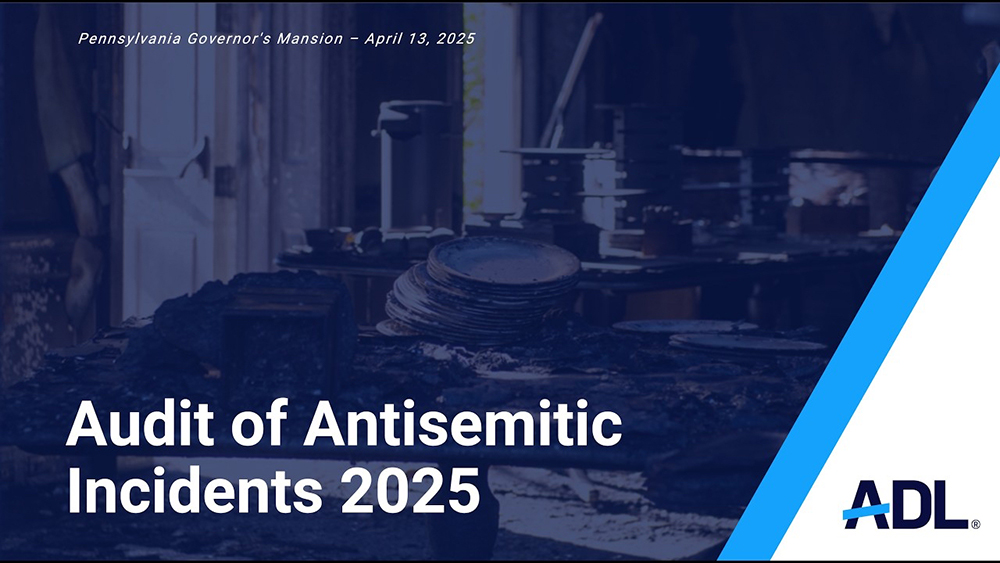
In a deeply troubling convergence of statistical warning signs and real-world flashpoints, Jewish communities across the United States—most acutely in New York City—are confronting what many leaders describe as an increasingly volatile and dangerous climate. According to a comprehensive new report issued by the Anti-Defamation League and cited in a report on Sunday by VIN News as a primary source of reference, the year 2025 has emerged as one of the most violent periods for American Jews since systematic tracking began in 1979.
The report, formally titled the Audit of Antisemitic Incidents, offers a sobering portrait of a nation grappling with persistent and, in some respects, intensifying manifestations of antisemitic hostility. While the overall number of recorded incidents declined from the unprecedented peak reached in 2024, the nature and severity of those incidents suggest a far more ominous trajectory.
According to figures highlighted in the VIN News report, a total of 6,274 antisemitic incidents were documented nationwide in 2025, encompassing harassment, vandalism, and physical assault. This represents a 33% decrease from the prior year’s historic high. Yet the apparent decline in aggregate numbers belies a far more alarming development: the escalation of violence.
“2025 marked one of the most violent periods for American Jews,” the Anti-Defamation League stated unequivocally, a conclusion that has been repeatedly underscored in coverage by VIN News. The report reveals that physical assaults surged to an unprecedented total of 203 incidents, marking a 4% increase and the highest number ever recorded. Particularly disturbing is the 39% rise in attacks involving deadly weapons, as well as the grim notation of antisemitic fatalities for the first time since 2019.
The implications of these findings are profound. As VIN News emphasized in its reporting, the data suggests not merely a persistence of antisemitic sentiment, but an evolution toward more aggressive and potentially lethal expressions of that hatred. On average, the report calculates, 17 antisemitic incidents occurred each day across the United States in 2025—a statistic that speaks volumes about the pervasive nature of the threat.
Nowhere is this phenomenon more acutely felt than in New York, which once again leads the nation in reported incidents. The state recorded 1,160 cases, with New York City alone accounting for 860. These incidents were heavily concentrated in Manhattan and Brooklyn, areas with significant Jewish populations and numerous religious, cultural, and educational institutions.
The release of the ADL audit coincided with a series of high-profile incidents that have heightened anxiety within the Jewish community. On Tuesday evening, a protest outside the historic Park East Synagogue escalated into a tense confrontation between demonstrators and law enforcement. The protest, organized in opposition to a real estate event promoting properties in Israel, drew a crowd that included individuals who, according to eyewitness accounts and video evidence, engaged in overtly antisemitic rhetoric.

Witnesses described a scene marked by hostility and intimidation. Protesters were heard shouting slurs and issuing threats, attempting to obstruct access to the synagogue and disrupt the event taking place within. Footage reviewed and referenced in the VIN News report captured chants and language that many observers characterized as explicitly targeting Jewish identity rather than merely expressing political opposition.
The incident at Park East Synagogue did not occur in isolation. Just one day earlier, acts of vandalism were reported in Queens, where two synagogues and several nearby Jewish homes were defaced with swastikas and graffiti invoking Adolf Hitler. These acts, now under investigation by the New York City Police Department, have been widely condemned by civic leaders and community organizations.
As VIN News reported, the graffiti included imagery and language historically associated with Nazi propaganda, amplifying concerns that such symbols are being revived in contemporary contexts. For many residents, the incidents evoke not only outrage but a profound sense of vulnerability.
Jewish community leaders have responded with a mixture of alarm and resolve. Numerous individuals interviewed by VIN News described a persistent atmosphere of unease, with synagogues, schools, and communal spaces perceived as potential targets. “There is a constant sense of looking over one’s shoulder,” one community advocate remarked, adding that “the normalization of this behavior is what makes it most dangerous.”
The ADL report provides additional context for this sentiment, noting that while certain categories of incidents—particularly those occurring on college campuses—have declined, others have intensified. Antisemitic incidents on campuses dropped by 66% in 2025 compared to the previous year, a shift attributed in part to a reduction in large-scale protest activity. However, this decline has not translated into broader safety improvements.
In New York State, for instance, physical assaults increased by 10%, reaching a total of 90 cases. This divergence between overall incident counts and the severity of those incidents has become a focal point of concern among analysts and policymakers alike. The data suggests that while fewer incidents may be occurring in certain contexts, those that do occur are increasingly violent.
Community advocates have responded by calling for a more robust and coordinated response from law enforcement and government agencies. Many have urged the expansion of federal protections for houses of worship, as well as increased funding for security measures such as surveillance systems and trained personnel.
“The numbers speak for themselves,” one advocate told VIN News. “We are not dealing with isolated acts of vandalism or harassment. We are dealing with a sustained pattern of violence that requires a comprehensive response.”
The broader national context further underscores the urgency of the situation. The ADL report explicitly links the current climate to the aftermath of the October 7, 2023, attacks by Hamas on Israel, which resulted in over 1,200 deaths. More than two years later, the reverberations of that event continue to shape attitudes and behaviors far beyond the Middle East.
According to the information provided in the VIN News report, antisemitic incidents have remained at elevated levels since that date, suggesting that the surge in hostility is not merely a transient reaction but part of a more enduring trend. The persistence of these elevated levels has led some experts to warn that the United States may be entering a “new normal” in which antisemitic activity is both more frequent and more severe.
Law enforcement agencies have emphasized the importance of public vigilance in addressing this challenge. Officials have urged individuals to report suspicious behavior and incidents promptly, noting that timely information can play a critical role in preventing escalation.
“Your information could help us save lives,” one official statement emphasized, a sentiment echoed in the VIN News report. The call for vigilance reflects a recognition that combating antisemitism requires not only institutional action but also community engagement.
At the same time, there is a growing acknowledgment that long-term solutions must address the underlying drivers of antisemitic sentiment. These include the spread of extremist ideologies, the amplification of hate speech through social media, and the polarization of political discourse.
As the VIN News report observed, the challenge is not merely to respond to individual incidents but to confront the broader ecosystem that enables such incidents to occur. This involves a combination of education, enforcement, and community-building efforts aimed at fostering a culture of tolerance and mutual respect.
In the immediate term, however, the focus remains on ensuring the safety of vulnerable communities. Synagogues and Jewish institutions across New York and the nation have increased security measures, often in coordination with local law enforcement. These steps, while necessary, also serve as a stark reminder of the realities faced by many American Jews today.
The events of 2025, as documented by the ADL and extensively covered by VIN News, represent a critical juncture. The combination of statistical evidence and lived experience paints a picture of a community under strain, confronting challenges that are both immediate and systemic.
As the situation continues to evolve, the interplay between data, policy, and community response will shape the trajectory of antisemitism in the United States. For now, the message conveyed by both the numbers and the narratives is unmistakable: vigilance, accountability, and sustained commitment will be essential in addressing what has become one of the most pressing social challenges of our time.



