
































|
Getting your Trinity Audio player ready...
|
A blood libel and massacre 187 years ago led to the forcible conversion of a small Persian-Jewish community to Islam. The Library holds treasures that are testament to their commitment to Judaism in the face of oppression and danger.
The National Library of Israel holds rare items that shed light on a dramatic chapter in the history of Iranian Jewry. The crypto-Jews of Mashhad were forced to live as Muslim for more than a century but continued to keep their faith in secret.
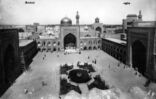
Considered one of the holiest sites for Shiite Muslims, Mashhad, like Mecca and Medina today, did not allow Jewish settlement. However, a small Jewish community was founded in the 18th century at the invitation of Emperor Nader Shah (1688 or 98-1747), who sought to turn Mashhad into a commercial hub and made it his capital. However, by the time the Jews arrived, he been assassinated, and they were permitted to settle only outside the city walls.
For nearly a century, the Jews of Mashhad lived in a state of constant friction with their Shiite neighbors. Tensions finally erupted into violence on March 26, 1839. On that day, a false accusation led to a blood libel and massacre in which dozens of Jews were murdered, young Jewish girls forcibly married to Muslims, and Jewish homes and businesses looted and burned. The community’s seven Torah scrolls were seized by Shiite clerics, and legend has it that they remain hidden within the walls of the city’s main mosque – the Imam Reza Shrine – to this day.
The next day, members of the community were faced with a cruel choice: convert to Islam or to die. Thus, for some 120 years, these Jadid al-Islam (“new Muslims”) led a double life of prayers held in secret, clandestine kosher meat slaughter, and mitzvot — including wearing tefillin — kept away from the ever-prying eyes of authorities and neighbors.
Outwardly, they were devout Muslims, fasting during Ramadan, attending prayers at the mosque, and dressing in traditional Muslim attire. Yet from birth, each child had two names: an official Muslim name and a secret Jewish name.
To avoid intermarriage with Muslims, the crypto-Jews of Mashhad often betrothed their young children to other children from within the community — sometimes before they were even four or five years old. In this way, if a Muslim man sought a Jewish girl for marriage, her family could claim she was already engaged.
The similarities between Judaism and Islam made it easier to maintain their hidden Jewish identity. Certain practices, like circumcision, raised little suspicion due to their presence in both religions. However, keeping kosher and observing Shabbat required elaborate deception. Non-kosher meat would be purchased in public but disposed of secretly. Proprietors would open their shops on Shabbat but avoid handling money – some even bandaging their hands and claiming they were injured.
Like the anusim of Spain, it was the women of the community who became the primary guardians of Jewish life in Mashhad. Observance of Jewish laws within the home rested largely in their hands — taharat mishpachah (family purity), Shabbat, kosher food, burial rites, and, most importantly, the religious education of children. Beneath their chadors, they were also the community’s covert smugglers, whether of kosher meat or religious artifacts.
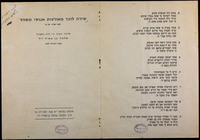
Some of the testimonies to life in secret held at the National Library of Israel:
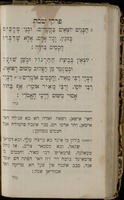
• A siddur, selichot prayers and Haggadah from 1909-1910 translated into Judeo-Persian by Rabbi Mordechai Akaler (1850-1935). Akaler feared that without translation, Jewish prayer and rituals would fade from memory. He also served a preacher, mohel, shochet, and cantor to strengthen Jewish observance in secrecy.
• An illuminated Quran belonging to the Hakimian family. Due to their high status, the family maintained an especially devout Muslim front while secretly keeping their Judaism. This copy was preserved by generations who recorded births, deaths, and important events in the margins. It was donated to the Library by Danny Hakimian in 2023.
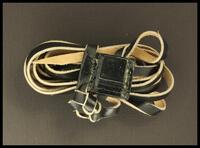
• A set of tefillin approximately 200-years-old. Dr. Joseph (Joe) Levine, a physician and Judaica collector, served for many years as the physician to the Mashhadi Jewish community in Great Neck, and received from them three pairs of tefillin as gifts. He donated one set to the Library as testimony to the period when the Jews of Mashhad were living as forced converts. Dr. Levine is a board member of NLI USA.
In the 1940s, the last members of the community left the city and migrated to Tehran, Israel, and other countries. Today, there are no Jews left in Mashhad, but their stories continue to resonate through the testimonies and artifacts left behind.

About the National Library of Israel
Founded in 1892, the National Library of Israel (NLI) is a leading global center that preserves and shares the history and culture of the Jewish people worldwide and Israelis of all backgrounds and faiths. NLI’s world-class collections include books, maps, photographs, music, manuscripts, archives, historic press, and ephemera that tell the story of the Jewish people, the State of Israel, and the Land of Israel throughout the ages. NLI is Israel’s preeminent research library serving academics and scholars; it is also dedicated to engaging students, educators, and members of the public throughout Israel and across the world with its treasures.
Programming, both in-person and online, is inspired by the vast collections of the Library, and includes exhibitions, teacher training, family activities, school group experiences, academic conferences, performances, festivals, concerts, adult education, and fellowships and residencies. Through mass digitization, NLI makes its collections accessible to all. Opened in 2023 and designed by renowned architects Herzog & de Meuron, the Library building in Jerusalem is Israel’s newest iconic destination. For more information: www.nli.org.il/en



