























|
Getting your Trinity Audio player ready...
|
By: Fern Sidman
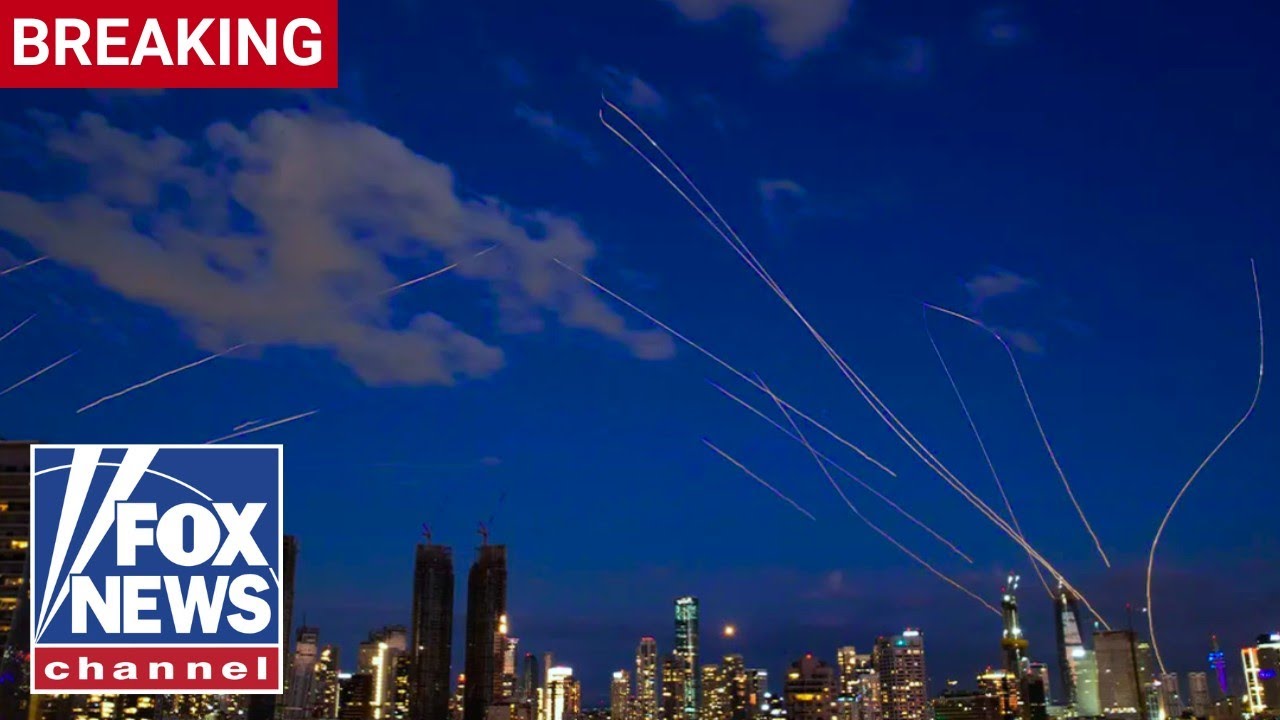
As dusk descends on April 13, 2026, a solemn stillness will envelop Jewish communities across the globe, marking the beginning of Yom HaShoah (Holocaust Remembrance Day) —an annual commemoration of unparalleled gravity. This year, however, the observance assumes an even more profound and urgent resonance. It unfolds against the backdrop of intensifying geopolitical tension, as Israel confronts existential threats from Iran and its nuclear ambitions, and amid a deeply troubling resurgence of antisemitism worldwide.
Holocaust Remembrance Day commemorates the systematic murder of six million Jews by Nazi Germany and its collaborators—a genocide unparalleled in its scale, industrialization, and ideological ferocity. Known formally as Holocaust and Heroism Remembrance Day, it honors not only the victims but also the acts of resistance, dignity, and courage displayed in the face of annihilation.
The central ceremonies will once again take place at Yad Vashem in Jerusalem, where survivors, dignitaries, and citizens will gather to bear witness. Candles will be lit, names will be recited, and testimonies will be shared—each act a deliberate defiance against oblivion.
Across continents, communities will echo these rituals. From synagogues and schools to public squares and memorial sites, individuals will pause to remember. The March of the Living, a poignant procession from Auschwitz to Birkenau, will stand as one of the most powerful symbols of remembrance—a reversal of the death marches that once traversed that same ground.
This year’s observance is marked by a poignant and sobering reality: the generation of Holocaust survivors is rapidly fading. Among the most compelling features of the 2026 commemoration will be the participation of fifty survivors, aged between 80 and 98, who will lead the International March of the Living.
Their presence is nothing short of extraordinary. These individuals, who endured the unspeakable horrors of the Nazi machinery of death, now walk as living testaments to resilience and survival. Their journey from Auschwitz to Birkenau transforms a landscape once synonymous with destruction into a pathway of remembrance and continuity.
Yet the poignancy of their participation is heightened by absence. Another fifty survivors from Israel, who had intended to join the march, will be unable to do so due to the ongoing conflict in the Middle East and the uncertainties surrounding international travel. Their absence serves as a stark reminder that even in remembrance, the shadow of contemporary conflict looms large.
The significance of Holocaust Remembrance Day in 2026 cannot be divorced from the current global climate. In recent years, antisemitism has reemerged with alarming intensity, manifesting in acts of violence, incendiary rhetoric, and insidious conspiracy theories.
This resurgence is not confined to any single region or ideology. It spans continents and political spectrums, finding expression in both overt hostility and more subtle forms of prejudice. The normalization of such sentiments, often amplified by digital platforms, has created an environment in which the lessons of history appear increasingly fragile.
In this context, the commemoration of the Holocaust assumes a dual function: it is both a remembrance of past atrocities and a warning about present dangers. The echoes of history are not distant; they reverberate in contemporary discourse and actions.
Perhaps nowhere is the intersection of memory and present danger more acute than in Israel. The Jewish state, established in the aftermath of the Holocaust as a refuge and a guarantor of Jewish survival, now faces threats that many perceive as existential.
Iran’s nuclear ambitions, coupled with its rhetoric and support for regional terrorist proxies such as Hezbollah and Hamas have intensified fears of a potential catastrophe. For many Israelis, the specter of a hostile power possessing nuclear capabilities evokes chilling historical parallels.
The timing of Holocaust Remembrance Day in this context is profoundly symbolic. It underscores the enduring relevance of the vow “never again”—a commitment not only to remember but to act in defense of Jewish life and sovereignty.
The juxtaposition of remembrance and contemporary peril serves as a stark reminder that the lessons of the Holocaust are not confined to the past. They are living imperatives that demand vigilance, resilience, and unity.
The International March of the Living stands as one of the most powerful expressions of Holocaust remembrance. Each year, thousands of participants walk the three-kilometer path from Auschwitz to Birkenau, retracing a route that once symbolized despair and death.
In 2026, the march takes on heightened significance. Led by survivors and joined by 7,000 participants from dozens of countries, it transforms a site of unimaginable suffering into a testament to endurance and continuity.
The symbolism is profound. Where once there was silence, there is now testimony. Where once there was destruction, there is now life. The march embodies the triumph of memory over oblivion, of humanity over barbarity.
Yet it also carries an implicit challenge: to ensure that the stories carried by the survivors do not fade with them. As their numbers dwindle, the responsibility to preserve and transmit their experiences becomes ever more urgent.
Central to the observance of Holocaust Remembrance Day is the commitment to education. Institutions such as Yad Vashem play a critical role in this endeavor, providing resources, curricula, and scholarly research aimed at deepening understanding of the Holocaust.
Educational initiatives extend beyond formal institutions. Community organizations, museums, and cultural centers around the world host events that engage individuals of all ages. These efforts are essential in fostering awareness, empathy, and critical reflection.
In an era marked by misinformation and historical distortion, the importance of accurate and comprehensive education cannot be overstated. The Holocaust is not merely a historical event; it is a moral touchstone that informs our understanding of human rights, justice, and the consequences of rampant Jew hatred that becomes normalized and accepted.
Holocaust Remembrance Day is not solely an act of looking backward. It is an affirmation of responsibility—a recognition that the preservation of memory carries with it an obligation to once again summon up the moral strength and courage to boldly confront the scourge of contemporary anti-Semitism in all its egregious manifestations.
This responsibility extends to individuals, communities, and nations alike. It demands vigilance against the forces of Jew hatred and a commitment to the principles of dignity and equality.
In 2026, this responsibility feels particularly acute. The convergence of historical remembrance and contemporary challenges underscores the necessity of translating memory into action.
In New York City on Tuesday, April 14th, the New York State Court System will hold their annual Holocaust Remembrance Day commemoration at 4:45 pm in the rotunda of the court building on 60 Centre Street in lower Manhattan. Among this year’s honorees is Mrs. Florence Edelstein, a Holocaust survivor now living in Manhattan. Her memoir of her Holocaust experiences entitled “Feigele,” is a song of defiance and dignity. A reader once called her “not just a survivor, but a hero.” And that she is. Another reader said, “This is a poignant and compelling account of the life of a woman who not only survived but thrived, overcoming harrowing events. This book is a very important contribution to the world so that we and those after us may never forget the Holocaust and the faces of the people who were betrayed by most of the world.”
Last year, Mrs. Edelstein’s husband, Mr. Michael Edelstein, also a Holocaust survivor and Manhattan resident now in his 90s was honored at the traditional candle lighting ceremony.
Mr. Edelstein’s presence brought a living connection to a world that is rapidly slipping beyond the reach of direct human memory. His story, both harrowing and inspiring, is recounted in his memoir, “Live Another Day: How I Survived the Holocaust and Realized the American Dream.”
Mr. Edelstein’s journey began in Skala-Podolsk, in western Ukraine, where at the age of 10, he escaped a Nazi roundup by rolling under barbed wire during Sukkot of 1942. This daring act was only the beginning of his odyssey for survival.
Six months later, he again narrowly evaded death by escaping the liquidation of the Borshchov ghetto. For more than a year, young Michael survived by hiding in forest bunkers and the ruins of buildings, until Nazi forces were finally expelled from the region in 1944.
Following liberation, Mr. Edelstein spent his adolescent years in displaced persons camps in postwar Germany, before arriving penniless in New York in 1951. Embodying the American dream he so cherishes, he built a life from nothing—serving in the U.S. Army, becoming a successful roofing contractor, and raising a family in Brooklyn. His memoir weaves together richly textured memories, often punctuated by a distinctly Yiddish humor that captures the indomitable spirit of survival and hope.
As the world observes Holocaust Remembrance Day this year, it does so at a moment of profound significance. The convergence of fading survivor testimony, rising antisemitism, and geopolitical uncertainty creates a context in which the act of remembrance is imbued with renewed urgency.
The candles that will be lit, the names that will be recited, and the steps that will be taken along the path from Auschwitz to Birkenau are not merely symbolic gestures. They are declarations of continuity, resilience, and defiance.
They affirm that despite the darkest chapters of history, the Jewish people endure. They assert that memory will not be extinguished, that truth will not be forgotten, and that the commitment to “never again” remains steadfast.
Holocaust Remembrance Day 2026 stands as a powerful testament to the enduring significance of memory in a world fraught with challenges. It is a day that compels reflection, demands vigilance, and inspires resolve.
In remembering the past, we confront the present. In honoring those who survived, we reaffirm our commitment to justice. And in listening to their voices, we inherit the responsibility to ensure that their stories—and their lessons—are never lost.
As the world pauses to commemorate, the message resonates with unmistakable clarity: memory is not passive. It is an act of resistance, a safeguard against repetition, and a beacon guiding humanity toward a more just and compassionate future.



