

























|
Getting your Trinity Audio player ready...
|
By: Max Schleifer
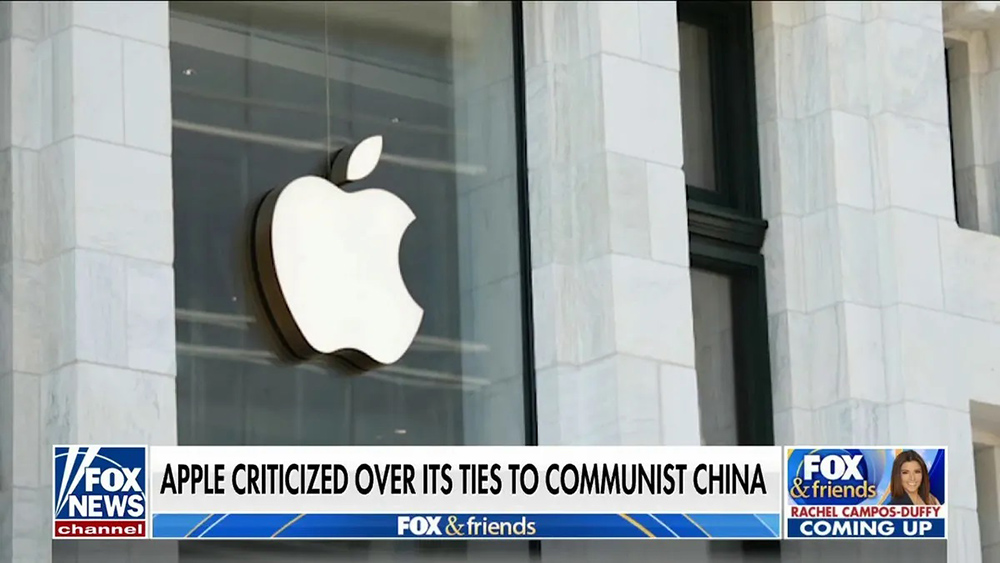
In an era defined by the instantaneous flow of information and the immense power of digital platforms to shape public discourse, few questions are more consequential than who controls the news Americans see—and how that control is exercised. A newly surfaced analysis has thrust one of the world’s most influential technology companies into the center of that debate, raising concerns about ideological imbalance, editorial discretion, and the potential for federal intervention.
According to a report on Thursday in The New York Post, Apple News—a platform pre-installed on millions of devices and widely regarded as one of the most dominant news aggregators in the United States—has come under renewed scrutiny after data revealed that less than two percent of its top stories in February originated from right-leaning outlets. While this figure represents a slight increase from the complete absence of such content in January, critics argue that it reflects not meaningful reform, but rather a superficial adjustment prompted by public pressure and looming regulatory attention.
The controversy stems from a detailed analysis conducted by the Media Research Center, a conservative watchdog organization that has been closely monitoring media representation across major platforms. As The New York Post reported, the organization tracked 560 top stories featured on Apple News throughout February. Of these, only eight—approximately 1.4 percent—were attributed to outlets classified as right-leaning.
By contrast, a staggering 400 articles, or 75 percent of the total, originated from outlets categorized as left-leaning. The remaining 152 stories were drawn from sources deemed centrist or not assigned a clear ideological classification, including smaller local publications.
This distribution has ignited a broader debate about whether Apple News, intentionally or otherwise, is presenting a skewed representation of the news landscape—one that may influence public perception in subtle but significant ways.
David Bozell, president of the Media Research Center, was unequivocal in his assessment. “Two percent is not progress. It is damage control,” he said in a statement cited by The New York Post. “If public exposure and a federal inquiry only yield a modest adjustment, that suggests the bias we documented was deeply embedded.”
The issue has not remained confined to academic or media circles. It has attracted the attention of federal regulators, raising the prospect of legal scrutiny under consumer protection laws.
As reported by The New York Post, Federal Trade Commission Chairman Andrew Ferguson issued a formal letter to Apple CEO Tim Cook on February 11, warning that the company’s practices could potentially violate federal statutes prohibiting “unfair or deceptive acts or practices.”
The timing of subsequent developments has not gone unnoticed. On February 12—just one day after the letter was sent—Apple News featured its first article from a right-leaning outlet in over 100 days, promoting a Fox News story about the death of actor James Van Der Beek.
For critics, this sequence of events reinforces the perception that Apple’s editorial decisions are reactive rather than principled, driven more by external pressure than by a commitment to balanced representation.
Central to the controversy is the unique role that Apple News plays in the modern media ecosystem. Unlike traditional news outlets, which produce content, Apple News functions as a curator, selecting and organizing stories from a wide array of sources.
This curatorial role confers significant influence. As The New York Post report noted, the app is pre-installed on millions of devices, including the iPhone, giving it unparalleled reach. Apple itself has described it as the leading news app in the country.
The platform’s “top stories” section—arguably its most visible feature—combines content selected by an in-house editorial team with articles surfaced through algorithmic processes. This hybrid model raises complex questions about accountability and transparency.
To what extent are the selections shaped by human judgment versus automated systems? And how are those judgments informed by considerations of balance, diversity, and fairness?
At the helm of Apple News’ editorial operations is editor-in-chief Lauren Kern, a seasoned media professional with prior roles at prominent publications. Since assuming her position in 2017, Kern has overseen the development of a platform that has become a central gateway for news consumption.
In 2018, she was described by a major publication as one of the most influential figures in English-language media—a characterization that underscores the significance of her role.
Yet with such influence comes heightened scrutiny. Critics argue that the composition of Apple News’ editorial leadership, combined with its content selection patterns, may contribute to the perceived imbalance.
A separate study by AllSides, referenced in a report by The New York Post, found that during a two-week period in October, Apple’s hand-curated “top news” section did not feature a single article from a right-leaning outlet.
The Media Research Center’s analysis relied on bias ratings compiled by AllSides, a nonpartisan organization that employs a rigorous methodology to assess media leanings. This process involves both expert panels and public surveys, ensuring a broad and balanced evaluation.
While AllSides itself was not directly involved in the February analysis, its classifications provided the framework for assessing the ideological distribution of Apple News content.
Julie Mastrine, director of AllSides’ media bias rating system, emphasized the need for more substantial changes. As quoted by The New York Post, she noted that Apple would need to take significant steps to reduce polarization and offer a more balanced view of the news.
The controversy surrounding Apple News is part of a larger national conversation about media bias and the role of technology platforms in shaping public discourse. In an age where many individuals rely on curated feeds rather than direct engagement with multiple sources, the selection of content takes on heightened importance.
Critics argue that a lack of viewpoint diversity can contribute to echo chambers, reinforcing existing beliefs and limiting exposure to alternative perspectives. Supporters of Apple’s approach, by contrast, may contend that editorial judgment is necessary to ensure quality and relevance.
The tension between these perspectives reflects a broader challenge: how to balance the principles of editorial discretion with the imperative of fairness in a digital environment.
The issue has also drawn political attention at the highest levels. As The New York Post reported, President Donald Trump amplified concerns about Apple News by sharing the initial findings on his Truth Social platform.
Such involvement underscores the extent to which the debate has transcended the realm of media analysis, becoming a matter of public policy and political discourse.
Notably, Apple has declined to comment on the latest findings. The absence of a formal response has left critics and observers to speculate about the company’s position and its plans, if any, to address the concerns raised.
This silence contrasts with the growing volume of criticism and the increasing attention from regulators, creating a vacuum that may further fuel speculation and debate.
The stakes in this controversy are considerable. Should federal authorities determine that Apple’s practices violate consumer protection laws, the consequences could extend beyond financial penalties to include changes in how the platform operates.
Such outcomes could have ripple effects across the technology sector, prompting other companies to reevaluate their own content curation practices.
Moreover, the case raises fundamental questions about the responsibilities of platforms that occupy a central position in the information ecosystem. As gatekeepers of content, they wield immense influence—an influence that carries both opportunities and obligations.
The scrutiny of Apple News represents a defining moment in the evolution of digital media. It is a moment that forces a reconsideration of how news is selected, presented, and consumed in an increasingly interconnected world.
As The New York Post report observed, one thing is clear: the debate over media bias is far from settled. It is a conversation that will likely intensify in the months ahead, shaped by legal proceedings, regulatory actions, and the responses of the platforms themselves.
In the end, the outcome of this controversy will have implications not only for Apple but for the broader principles that govern the flow of information in a democratic society. It will determine, in part, whether the digital age fulfills its promise of expanded access to diverse perspectives—or whether it risks narrowing the range of voices that shape public understanding.
In this sense, the question is not merely about percentages or classifications. It is about the very nature of the modern public square—and who gets to define it.



