










|
Getting your Trinity Audio player ready...
|
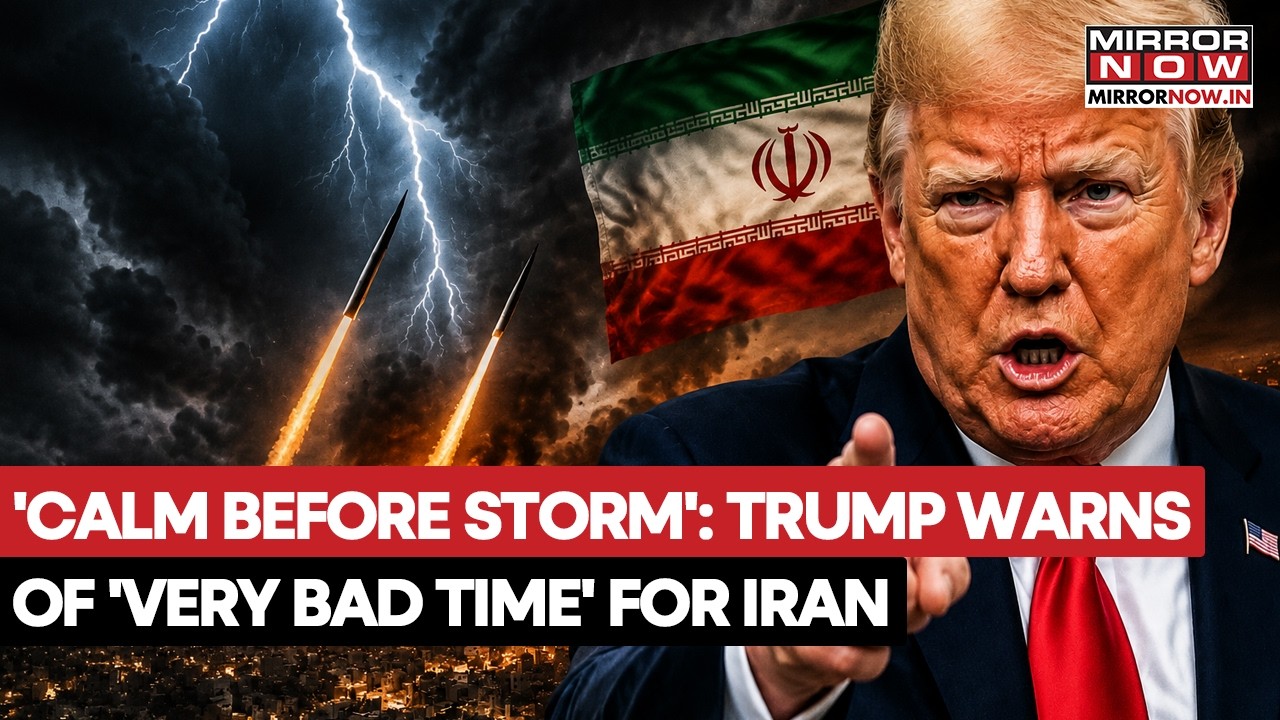
President Trump’s “calm before the storm” message sparks speculation of renewed U.S. and Israel strikes on Iran as tensions rise and nuclear talks stall.
By: Fern Rosenblatt
In a moment marked by calculated ambiguity and unmistakable strategic gravity, President Donald Trump has triggered a surge of global concern following a cryptic yet deeply evocative warning regarding Iran—one that many analysts now interpret as a harbinger of renewed military confrontation.
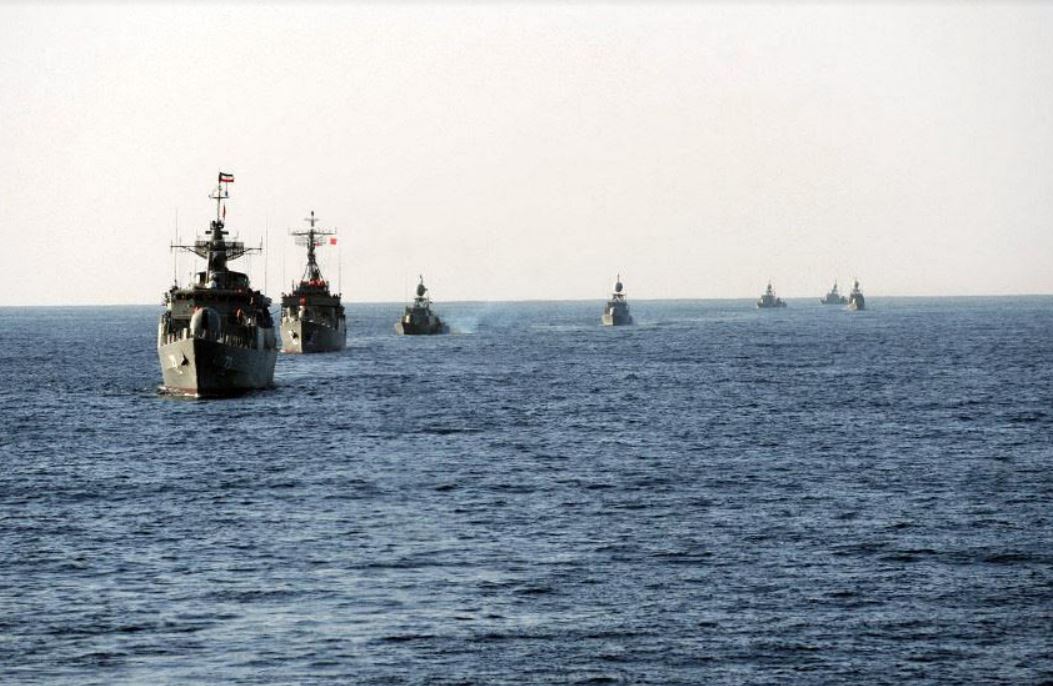
As reported on Sunday by Israel National News, the President posted a striking image on his Truth Social platform on Saturday, depicting himself alongside a United States Navy admiral against a turbulent maritime backdrop filled with military vessels, including one flying the flag of the Islamic Republic of Iran. Above the image appeared a terse and foreboding declaration: “It was calm before the storm.”
Though devoid of explicit policy language, the message carried unmistakable implications. In diplomatic circles and defense communities alike, the phrase has long been associated with imminent escalation. Within hours, speculation intensified that the fragile ceasefire between the United States, Israel, and Iran may be nearing collapse.
The Israel National News report emphasized that the timing of the post is particularly significant, coinciding with mounting reports of a substantial military buildup by both Washington and Jerusalem. According to a report in The New York Times, the United States and Israel are engaged in “intensive preparations” for the possibility of renewed strikes against Iranian targets, potentially as early as next week. The scale of this mobilization, sources indicate, is the largest since the ceasefire temporarily halted hostilities.
Such developments underscore the tenuous nature of the current pause. While the ceasefire has provided a brief interlude, it has not addressed the fundamental issues driving the conflict—chief among them Iran’s nuclear ambitions and its regional military posture. Increasingly, the lull appears less like a resolution and more like a strategic pause, allowing all parties to regroup ahead of a possible next phase.
President Trump’s own statements in recent days reinforce that interpretation. Speaking to reporters aboard Air Force One following his diplomatic visit to China, he offered a candid and revealing assessment of negotiations with Tehran. When asked about Iran’s latest proposal, Trump dismissed it with characteristic bluntness.
“Well, I looked at it, and if I don’t like the first sentence, I just throw it away,” he said, according to the Israel National News report. He elaborated further, stating that the opening line of Iran’s proposal was “an unacceptable sentence,” adding, “they fully agree, no nuclear, and if they have any nuclear of any form, I don’t read the rest of their letter.”
The President’s remarks reveal a negotiating posture rooted in deep skepticism. While he signaled openness to a 20-year moratorium on Iran’s nuclear program, he made clear that such an agreement would only be acceptable under strict and verifiable guarantees.
“No, 20 years is enough,” Trump stated. “But the level of guarantee from them is not enough. In other words, it’s got to be a real 20 years, not a fake 20.”
This insistence on enforceable commitments reflects longstanding concerns shared by both the United States and Israel. Previous agreements with Iran, critics argue, have been undermined by insufficient oversight and enforcement, allowing Tehran to continue advancing its nuclear capabilities despite formal restrictions.
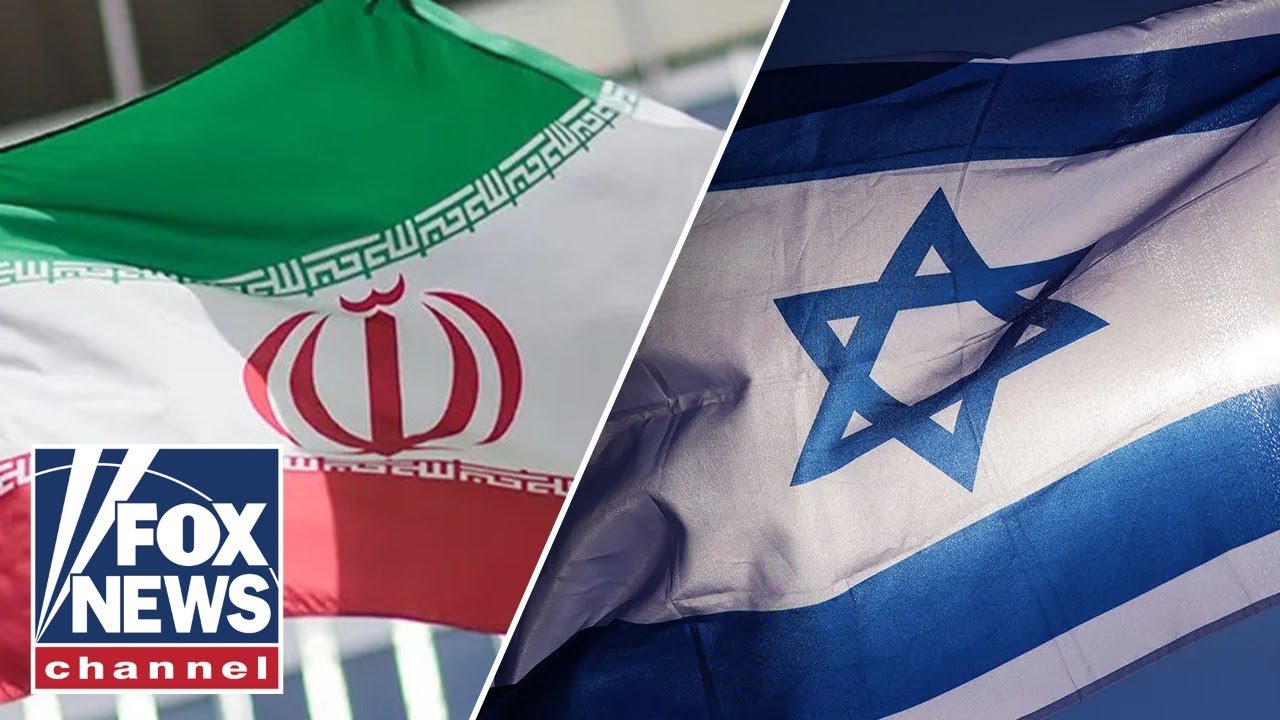
Trump’s impatience with the diplomatic process was further evident in his interview with Sean Hannity on Fox News, where he issued a stark warning about the limits of his tolerance.
“I’m not going to be much more patient. No, I’m not,” he said, as quoted by Israel National News. “They should make a deal. Any sane person would make a deal, but they might be crazy.”
Such language, combined with the symbolic imagery of the “storm,” has led many observers to conclude that the administration is actively preparing for a return to military action. The phrase itself—“calm before the storm”—has historically signaled an impending escalation, a moment of deceptive quiet before decisive movement.
From a strategic perspective, the convergence of stalled diplomacy and visible military readiness suggests that the window for a negotiated resolution may be rapidly closing. Iran’s reported rejection of key American conditions, coupled with its continued insistence on retaining aspects of its nuclear infrastructure, has created a deadlock that appears increasingly difficult to resolve through dialogue alone.
The broader regional context further complicates the situation. Iran’s network of proxy forces across the Middle East, along with its strategic position near critical maritime chokepoints such as the Strait of Hormuz, ensures that any escalation would carry significant global consequences. Energy markets, international shipping routes, and regional security frameworks all hang in the balance.
The Israel National News report consistently underscored the centrality of Iran’s nuclear ambitions to the current crisis. For Israel, the prospect of a nuclear-armed Iran is viewed not merely as a strategic challenge but as an existential threat. This perspective has driven close coordination between Jerusalem and Washington, as evidenced by the reported joint military preparations.
The President’s recent visit to China adds another dimension to the unfolding situation. While details of his discussions remain limited, it is widely assumed that Iran featured prominently in talks with Chinese leadership. Beijing’s economic ties to Tehran and its influence in global energy markets position it as a potentially pivotal actor in any effort to de-escalate tensions.
Yet, despite these diplomatic channels, the overall trajectory appears increasingly confrontational. The accumulation of military assets, the sharpening of rhetoric, and the apparent breakdown of negotiations all point toward a scenario in which force may once again become the primary instrument of policy.
Trump’s communication strategy—blending symbolic imagery with direct language—has played a critical role in shaping perceptions of the current moment. The use of an AI-generated image to convey a message rooted in classical strategic symbolism reflects an understanding of modern information dynamics, where visual narratives can carry as much weight as formal statements.
The imagery itself—stormy seas, naval power, and a poised commander—evokes a sense of vigilance and readiness. It is a deliberate projection of strength, intended to signal that the United States is prepared to act decisively should its conditions not be met.
Supporters of the administration argue that such clarity is essential for effective deterrence. In dealing with a regime perceived as both ideologically rigid and strategically opportunistic, they contend, ambiguity can be dangerous, while clear signals of intent may prevent miscalculation.
As the situation continues to evolve, the central question remains whether the “storm” referenced by the President will materialize—and if so, in what form. Will it take the shape of limited, targeted strikes aimed at degrading Iran’s capabilities? Or could it escalate into a broader conflict with far-reaching and unpredictable consequences?
For now, the international community remains on edge. The current calm—fragile and uncertain—may indeed be temporary, a fleeting pause before a decisive and potentially transformative moment in the ongoing confrontation over Iran’s nuclear future.
In the words of President Trump, as cited by Israel National News, “It was calm before the storm.” Whether that storm can still be avoided—or whether it is already gathering force—remains one of the most urgent and consequential questions facing the world today.



