


























By: Fern Sidman
For decades, critics of the United States–Israel alliance have portrayed American assistance to Israel as a one-sided arrangement in which Washington provides billions of dollars while receiving little in return. Yet a closer examination of the strategic, military, intelligence, technological, and economic dimensions of the relationship reveals a dramatically different reality. Far from being a charitable transfer of resources, the partnership between the United States and Israel has evolved into one of the most mutually beneficial alliances in modern geopolitical history.
At the center of the debate is the annual American military assistance package provided to Israel. Under the current framework, the United States allocates approximately $3.8 billion per year to Israel, including $3.3 billion through Foreign Military Financing and an additional $500 million dedicated to joint missile defense initiatives.
Critics frequently cite that figure as evidence of an excessive American commitment. What is often omitted from the discussion, however, is that the overwhelming majority of those funds are spent on American-made products, technologies, equipment, and services. By 2028, virtually the entire package will be spent inside the United States, effectively channeling the money back into American factories, research centers, defense contractors, and workers.
Viewed solely through the lens of economic activity, the assistance package already functions less as foreign aid and more as a strategic investment in America’s own defense industrial base. Yet supporters of the alliance argue that the benefits extend far beyond economics.

A Technological Partnership That Shaped the F-35 Program
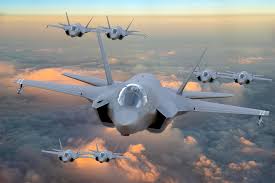
One of the most frequently cited examples of Israel’s contribution to American defense capabilities involves the development and operational refinement of the F-35 Joint Strike Fighter, widely regarded as the most advanced combat aircraft ever built.
According to military analysts, Israel’s extensive operational testing and real-world deployment of the aircraft helped identify and resolve numerous technical challenges during the program’s formative years. Because Israeli pilots and engineers employed the aircraft in actual combat conditions rather than controlled testing environments, they generated invaluable data regarding performance, survivability, electronic warfare, software integration, and mission effectiveness.
Israel’s role significantly accelerated the aircraft’s maturation process and reduced costly developmental delays. These contributions effectively saved the United States billions of dollars in additional research and development expenditures while helping bring the aircraft to operational readiness more quickly.
Israel served as a real-world laboratory for America’s most sophisticated military platform, providing insights that would otherwise have required years of additional testing and substantial expenditures by the Pentagon.
An Intelligence Relationship Without Parallel
Perhaps even more significant than technological cooperation is the intelligence partnership between Washington and Jerusalem.

For generations, senior American military and intelligence officials have described Israel as one of the United States’ most valuable intelligence allies. Israel’s unique geographic position, extensive regional expertise, human intelligence networks, counterterrorism capabilities, cyber expertise, and deep understanding of Middle Eastern political and military dynamics have made it a critical source of information for American policymakers.
Former Air Force Intelligence Chief General George Keegan famously characterized Israel’s intelligence contribution as being equivalent to multiple major intelligence organizations combined. While precise measurements are impossible, supporters of the alliance frequently point to decades of intelligence sharing involving terrorist organizations, regional military developments, weapons proliferation, cyber threats, and hostile state actors.
The intelligence relationship has repeatedly helped American decision-makers understand rapidly evolving developments throughout the Middle East, including threats originating from Iran, Hezbollah, Hamas, and other extremist organizations.
In an era increasingly defined by asymmetric warfare, cyber conflict, and transnational terrorism, Israel’s intelligence capabilities have become a force multiplier for American national security interests.
America’s Unsinkable Strategic Asset
Military strategists have long emphasized another dimension of the relationship: Israel’s geographic and strategic value.
Former Admiral Elmo Zumwalt and former Secretary of State and NATO Supreme Allied Commander General Alexander Haig were among those who described Israel as the equivalent of an American aircraft carrier permanently positioned in one of the world’s most volatile regions.
Unlike traditional aircraft carriers, however, Israel requires no American crew, no American maintenance budget, no naval escort fleet, and no deployment schedule. It cannot be sunk, repositioned, or disabled by adverse weather conditions.
The Middle East remains one of the most strategically significant regions on earth, serving as a crossroads for global energy supplies, international shipping routes, military competition, and counterterrorism operations.
Israel’s existence as a stable, technologically advanced democratic ally provides the United States with a strategic anchor that would otherwise require vastly more expensive military infrastructure to replicate.
In practical terms, Israel offers Washington a dependable regional partner capable of projecting stability, gathering intelligence, and contributing to shared security objectives without requiring the permanent deployment of large numbers of American troops.
The F-35 Export Success Story
Israel’s operational use of American military technology has generated another important benefit: global confidence in U.S.-manufactured defense systems.
Military buyers around the world closely monitor how advanced weapons perform under actual battlefield conditions. Israel’s extensive use of the F-35 has effectively transformed the aircraft into a proven combat platform rather than merely an impressive technological concept.
The aircraft’s performance has helped bolster international demand, contributing to billions of dollars in export sales and a massive backlog of future orders for American defense manufacturers.
For U.S. industry, these exports translate into production contracts, manufacturing jobs, technological innovation, and economic growth. Every successful foreign military sale strengthens the American defense industrial base while spreading development costs across a broader customer base.
In this sense, Israel functions as both a strategic partner and a highly visible demonstration platform for American military innovation.

Economic Benefits Across the United States
The economic dimension of the U.S.-Israel relationship is often overlooked in political debates.
Defense cooperation between the two countries supports extensive supply chains involving thousands of American businesses. These companies manufacture everything from advanced electronics and aerospace components to software systems, communications equipment, and specialized materials.
The resulting economic activity reaches virtually every region of the country.
Israeli defense procurement supports hundreds of thousands of American jobs while generating tens of billions of dollars in economic output annually. Contracts linked to defense cooperation extend across dozens of states and involve a vast network of suppliers, subcontractors, engineers, technicians, and skilled workers.
Rather than representing a drain on American resources, proponents argue that the relationship functions as a powerful engine for domestic economic activity.
Shared Democratic Values
Beyond military and economic considerations, supporters of the alliance emphasize the shared values underpinning the relationship.
Israel remains the Middle East’s only long-established democratic society, featuring competitive elections, an independent judiciary, a free press, vibrant civil society institutions, and robust political debate.
The alliance between Washington and Jerusalem is therefore not solely a matter of strategic convenience. It is also rooted in a broader commitment to democratic governance, individual liberty, religious freedom, innovation, and the rule of law.

In a region frequently characterized by authoritarianism, instability, and extremism, Israel has consistently aligned itself with the broader Western democratic tradition.
This alignment has reinforced bipartisan American support across multiple generations, even as political debates surrounding specific policies have evolved.
A Partnership Built on Mutual Benefit
The enduring strength of the U.S.-Israel alliance stems from its ability to generate tangible benefits for both nations.
American military assistance helps ensure Israel’s security in a challenging regional environment. At the same time, Israel contributes intelligence, technological innovation, strategic depth, battlefield experience, and economic opportunities that strengthen American interests around the globe.
The relationship has produced breakthroughs in missile defense, cybersecurity, artificial intelligence, medical research, agriculture, water management, and numerous other fields.
It has also demonstrated remarkable resilience across changing administrations, shifting geopolitical circumstances, and evolving global threats.
As debates over foreign policy continue, one reality remains difficult to ignore: the U.S.-Israel alliance has become far more than a traditional aid relationship. It is a multifaceted strategic partnership that delivers military, economic, technological, and intelligence dividends that extend well beyond the borders of either nation.
For supporters of the alliance, that reality explains why the relationship continues to endure. They argue that the question is not why the United States maintains such close ties with Israel, but rather how any serious assessment of American national interests could overlook the extraordinary returns generated by one of Washington’s most important international partnerships.



