















Radical Student Banned by Cornell U After Surrounding President’s Car in Post-Debate Israel Protest
By: Max Schleifer
A disciplinary decision by Cornell University has reignited a contentious debate over the boundaries of protest, free expression, administrative authority, and student conduct at one of America’s most prestigious academic institutions.
According to a report that appeared on Friday in The New York Post and regional media outlets, Cornell University has barred recent graduate and anti-Israel activist Aiden Vallecillo from attending events on campus for a period of one year following a controversial confrontation involving university president Michael Kotlikoff in the aftermath of a high-profile debate concerning Israel and the Palestinian issue.
The disciplinary action represents the latest chapter in a broader national struggle playing out across American universities, where administrators, students, faculty members, and activists continue to wrestle with competing interpretations of free speech, civil discourse, institutional authority, and the acceptable limits of political protest.
The incident at the center of the dispute occurred on April 30 following a campus debate organized by the Cornell Political Union and co-sponsored by several student organizations representing differing viewpoints on Middle East affairs, as was reported by The New York Post. According to accounts later reviewed by university officials, the debate itself proceeded in a manner that Cornell leadership characterized as vigorous yet respectful, embodying the type of open intellectual exchange that universities often seek to encourage.
What occurred afterward, however, became the subject of a university investigation and ultimately led to disciplinary sanctions.
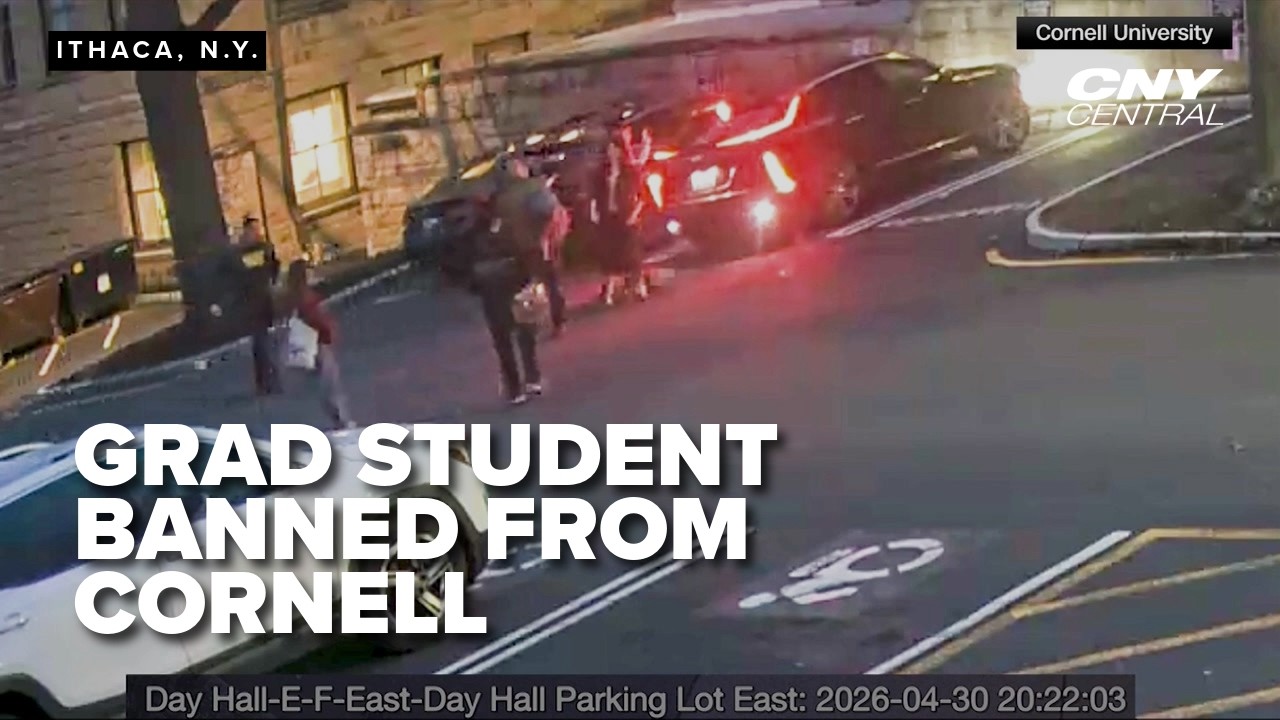
According to reports referenced by The New York Post, Vallecillo was among a group of students who approached President Kotlikoff as he left the event and proceeded toward his vehicle in a campus parking area. Video footage recorded by participants captured portions of the encounter as students attempted to question the university president regarding campus speech policies and other matters related to university governance.
University officials subsequently characterized the interaction in far different terms. Following an investigation, Cornell’s governing bodies concluded that the conduct of several participants exceeded the bounds of protected expression and entered the realm of intimidation and harassment.
“The Committee has found that the actions taken by these individuals on April 30th, which included following President Kotlikoff from an evening event into a parking lot and impeding his ability to leave, are inconsistent with university policies governing expressive activity and our standards for respectful conduct, safety, and the prohibition of intimidation,” the university concluded, as was noted in The New York Post report.
That finding became the basis for disciplinary measures imposed against participants in the incident.
On May 28, only days after graduating from Cornell, Vallecillo was reportedly notified by university police that he had been designated persona non grata and prohibited from attending events at the institution for one year.
The timing of the sanction quickly became a point of contention. Vallecillo publicly criticized the university’s decision and questioned why notification occurred after graduation and during a period when many students had already left campus.
“I think that they deliberately timed this to be at a point where students are off campus, where people are thinking about recent graduation, about post-grad plans and not about kind of how to support their fellow students,” he told reporters, according to The New York Post report. “They’ve done it at a time when national media attention has also died off.”
The disciplinary action has drawn attention not only because of the individuals involved but also because it reflects larger tensions that have engulfed universities nationwide since the outbreak of war in the Middle East and the corresponding surge in campus activism.
Cornell, like numerous elite universities, has experienced heated demonstrations, intense political organizing, and recurring disputes regarding freedom of expression. The New York Post reported that the April debate itself was viewed by many observers as an attempt to channel those disagreements into a structured forum for discussion.
President Kotlikoff later praised the event as an example of productive academic engagement. He described the debate as “vigorous and civil” and pointed to it as evidence of the type of discourse universities should foster.
Yet Kotlikoff simultaneously emphasized that freedom of expression carries obligations as well as rights. “Speech only carries meaning when one can speak, and another can listen,” he wrote in a public reflection issued on May 15, as was noted in The New York Post report. “In a community and in a democracy, any exercise of that freedom carries the responsibility to respect the same rights for others.”
Kotlikoff continued by defending Cornell’s policies governing demonstrations and expressive conduct. “That is why we have policies and guidelines around free expression at Cornell: to ensure that everyone’s rights are protected and that no one can shout down or silence other views,” he said. “I will continue to defend those policies with every means at my disposal.”
The confrontation gained additional attention because of competing claims regarding what occurred as Kotlikoff attempted to leave the parking area.
Several students alleged that the university president struck them with his vehicle while departing. Video footage subsequently circulated on social media and became the subject of intense scrutiny.
According to reports cited by The New York Post, security camera recordings and cellphone footage captured students moving behind Kotlikoff’s vehicle as he attempted to back out of the parking lot. One video showed Vallecillo shouting, “Ah, you just ran over my f––king foot,” while pointing his camera toward the ground.
Those allegations generated immediate controversy and prompted police involvement. However, the matter did not result in criminal charges against either Kotlikoff or the students involved. Authorities reportedly noted that individuals claiming injury declined medical treatment and repeatedly declined opportunities to provide sworn statements to investigators, The New York Post reported.
Kotlikoff has maintained that he was unaware students had positioned themselves behind his vehicle. While defending his intentions, he later acknowledged that he could have handled the situation differently.
“Only the following afternoon did I understand that my experience would look very different in the selected video clips posted on social media and be framed in ways that I found genuinely shocking,” he said. “In the moment, my goal was extricating myself from the situation safely without escalating it.”
The New York Post report indicated that Kotlikoff further reflected on what he viewed as a missed opportunity to de-escalate the encounter. “In retrospect, I certainly should have remained in my car, locked it, and called the police.”
That statement underscored the increasingly complex role university leaders occupy in a social media era in which short video clips can rapidly shape public narratives before formal investigations are completed. The controversy has also highlighted broader concerns regarding the relationship between activism and intimidation.
University officials indicated that the parking lot incident did not occur in isolation but followed a pattern of confrontational conduct involving certain activists. According to reports cited by The New York Post, members of the group involved had previously generated complaints from faculty and staff regarding online attacks and in-person confrontations.
While critics of the disciplinary action argue that students were merely attempting to hold university leadership accountable, supporters of Cornell’s decision contend that there is a significant distinction between questioning administrators and physically surrounding them while impeding their movement.
That distinction lies at the heart of the university’s findings. Cornell’s investigation ultimately concluded that the conduct violated institutional standards governing safety and respectful engagement. The decision arrives at a moment when universities nationwide are attempting to define the limits of acceptable protest.
Many institutions have struggled to balance robust protection of speech with concerns about harassment, disruption, and personal safety.
Administrators increasingly face criticism from opposing directions—accused by some of suppressing activism while simultaneously being accused by others of tolerating intimidation.
The Cornell controversy encapsulates that dilemma. Supporters of the disciplinary measures argue that universities cannot permit behavior that effectively traps or obstructs individuals attempting to leave an event. Critics counter that institutions risk chilling legitimate dissent if disciplinary authority is applied too broadly. The dispute therefore extends beyond the actions of any single student or administrator.
Instead, it reflects a broader national conversation regarding the future of campus activism, the responsibilities attached to free expression, and the mechanisms universities employ to maintain order while preserving intellectual freedom.
As Cornell prepares for a new academic year, the incident remains a potent reminder of how quickly political disagreements can escalate into institutional crises. For university leaders, students, and faculty alike, the challenge moving forward will be preserving the vigorous exchange of ideas that defines higher education while ensuring that disagreement never devolves into intimidation.
That balance—between freedom and responsibility, activism and civility, protest and disruption—continues to shape the modern university experience. The Cornell episode now stands as one of the most closely watched examples of that struggle, illustrating both the promise and the peril of political engagement on America’s campuses.



