





























“They Saved the World”: America Honors the Heroes of D-Day as Veterans Return to Normandy 82 Years Later
From the Blood-Soaked Beaches of Normandy to the Liberation of Europe, the Legacy of D-Day Continues to Inspire Generations
By: Fern Sidman
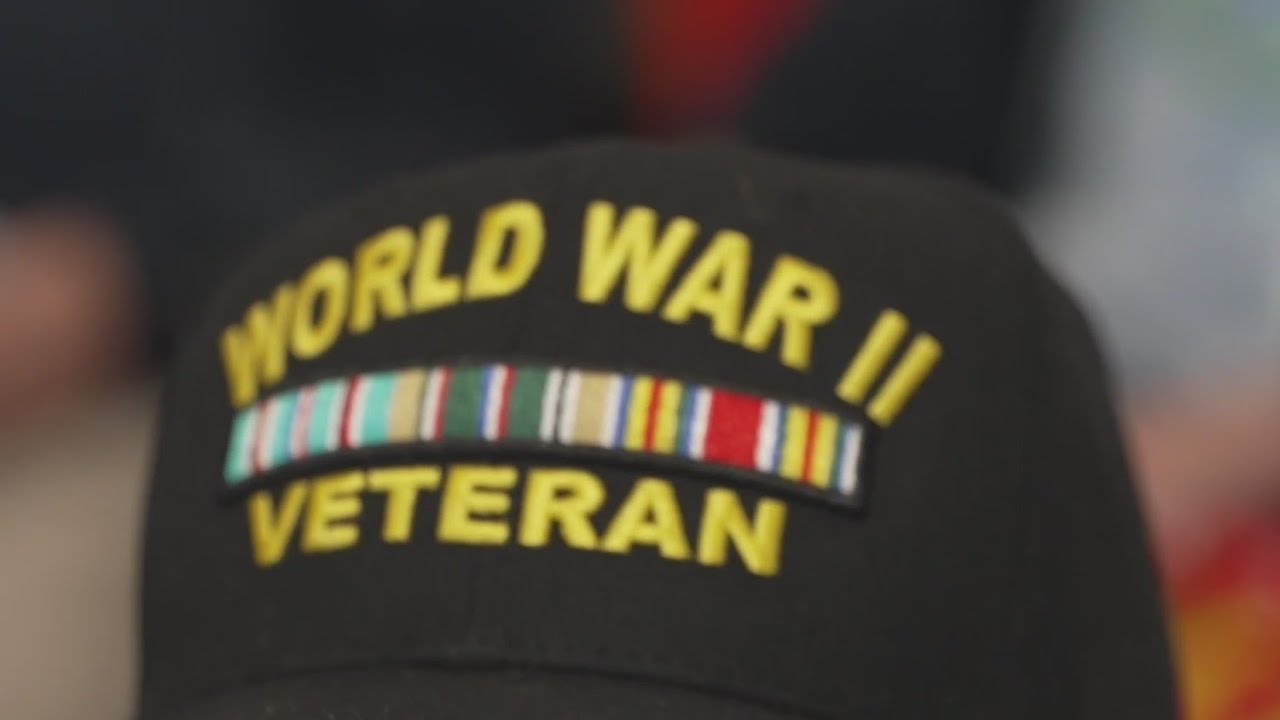
More than eight decades after they stormed the beaches of Nazi-occupied France and helped alter the course of human history, a dwindling number of American World War II veterans have returned to Normandy to commemorate one of the most consequential military operations ever undertaken.
As the world marks the 82nd anniversary of D-Day on June 6, 2026, these aging heroes are once again standing on the shores where they risked everything in defense of liberty, democracy, and civilization itself.
Their return serves as both a solemn remembrance and a powerful reminder of the extraordinary courage displayed by the young American soldiers who landed under withering enemy fire on the beaches of Normandy on June 6, 1944—a day that forever changed the trajectory of World War II and helped pave the way for the defeat of Adolf Hitler’s Nazi regime.
This year’s commemorations feature a robust American presence. Approximately 30 soldiers from the famed 29th Infantry Division have traveled to Normandy to participate in ceremonies and educational programs throughout the region. Their presence symbolizes an unbroken chain connecting today’s U.S. military to the young men who fought and died on these shores more than 8 decades ago.
The commemorative events culminate around June 6 and include a series of ceremonies, memorial parades, cemetery visits, and historical tributes honoring what has become known as the “Greatest Generation.”
The Day That Changed History
To understand the significance of the annual D-Day commemorations, one must first understand the monumental historical importance of the invasion itself.
By the spring of 1944, World War II had entered its fifth year. Nazi Germany controlled vast swaths of Europe. Although Allied forces had made gains in North Africa and Italy, Adolf Hitler’s armies still occupied France, Belgium, the Netherlands, and much of Central Europe.
The Soviet Union was carrying the bulk of the fighting against Germany on the Eastern Front, suffering staggering casualties while pressing the Allies to open a second major front in Western Europe.
The result was Operation Overlord, the largest amphibious military invasion in human history.
Under the command of General Dwight D. Eisenhower, Supreme Commander of the Allied Expeditionary Force, Allied planners assembled an unprecedented armada.
More than 156,000 Allied troops crossed the English Channel during the initial assault. Thousands of ships, landing craft, and aircraft participated in a meticulously coordinated operation designed to break Hitler’s Atlantic Wall defenses and establish a foothold in France.
Before the invasion commenced, Eisenhower delivered a now-famous message to the troops. “The eyes of the world are upon you,” he declared. “The hopes and prayers of liberty-loving people everywhere march with you.”
Those words would soon be tested amid unimaginable violence.
Into the Jaws of Fire
In the early hours of June 6, 1944, American, British, Canadian, and Allied forces began landing on 5 designated beaches along the Normandy coast: Utah, Omaha, Gold, Juno, and Sword.
Among them, Omaha Beach became synonymous with sacrifice.
American soldiers approaching the shoreline encountered devastating German machine-gun fire, artillery bombardment, and heavily fortified defensive positions. Many landing craft were struck before reaching shore. Some troops drowned beneath the weight of their equipment. Others were cut down almost immediately after the ramps dropped.
Veterans would later describe the beaches as scenes of chaos, terror, and extraordinary heroism. Historian Stephen Ambrose famously wrote that the first waves landing at Omaha Beach faced “the closest thing to hell on earth.” Within hours, thousands had been killed, wounded, or reported missing. Yet despite horrific casualties, American forces pressed forward. Small groups of soldiers fought their way through minefields, barbed wire, and entrenched German positions.
Individual acts of bravery became commonplace. Junior officers assumed command when their superiors were killed. Medics risked their lives to rescue wounded comrades. Engineers cleared obstacles under relentless fire. Ordinary citizens became extraordinary warriors. By day’s end, Allied forces had secured a tenuous foothold on the European continent.
The invasion had succeeded. The liberation of Europe had begun.
A Turning Point in World War II
Military historians widely regard D-Day as one of the decisive turning points of World War II. Had the invasion failed, the war could have dragged on for years. A failed landing would have strengthened Hitler’s position and potentially altered the political future of Europe.
Instead, the success of Operation Overlord created the opening that Allied leaders had sought for years. Within weeks, hundreds of thousands of additional troops and vast quantities of equipment poured into France.
The breakout from Normandy followed. Paris was liberated in August 1944. The Allied armies advanced steadily toward Germany. Less than 11 months after D-Day, Nazi Germany surrendered unconditionally. The invasion did not single-handedly win the war, but it accelerated the collapse of Hitler’s empire and brought liberation to millions living under Nazi occupation.
For that reason, D-Day remains one of the most studied and revered military operations in modern history.
Veterans Return to Sacred Ground
This year, many of the men who participated in that historic campaign have returned to Normandy. Their numbers are rapidly diminishing. Most surviving D-Day veterans are now in their late 90s or older. Each anniversary carries increasing emotional significance.
Among the most notable commemorative efforts is the Best Defense Foundation’s return to Normandy with a delegation of 25 World War II veterans. Partnering with Delta Air Lines, the organization has arranged a 10-day journey that allows veterans to revisit battlefields, attend ceremonies, participate in educational events, and reconnect with places that shaped their lives.
The itinerary includes memorial parades, cemetery visits, commemorative flights, and public appearances designed to preserve their stories for future generations. For many participants, the journey represents both remembrance and closure.
Standing once again on the beaches where they fought as young men, they are reminded not only of those who survived but also of the countless comrades who never returned home.
Honoring the Fallen
Several major commemorative ceremonies are taking place throughout Normandy. The International Salute to Liberation and D-Day Committee is organizing memorial events at key historic locations. Among them are wreath-laying ceremonies at both the Normandy American Cemetery and the Brittany American Cemetery.
These solemn observances pay tribute to the thousands of American service members who sacrificed their lives during the liberation of Europe.
The Normandy American Cemetery, overlooking Omaha Beach, remains one of the most moving sites associated with World War II. More than 9,000 American military personnel are buried there. Rows upon rows of white marble crosses and Stars of David stretch across the meticulously maintained grounds. Visitors often describe the experience as overwhelming. Each marker represents an individual story of courage, sacrifice, and devotion to country. The cemetery stands as a permanent reminder of the cost of freedom.
Sainte-Mère-Église and the Legacy of Liberation
Another centerpiece of the commemorations is the D-Day Memorial Parade in Sainte-Mère-Église. The town occupies a unique place in military history. It was among the first French communities liberated during the invasion.
American paratroopers from the 82nd and 101st Airborne Divisions descended into the area during the night before the beach landings. One of the most iconic images of D-Day involves paratrooper John Steele, whose parachute became entangled on the church steeple in Sainte-Mère-Église.
The dramatic story has become part of military legend. Today, the town remains a focal point of remembrance activities and attracts thousands of visitors each year.
The Official Ceremony
The American Battle Monuments Commission is hosting the official U.S. commemoration at the Normandy American Cemetery. The ceremony brings together veterans, military personnel, government officials, and international dignitaries.
The event emphasizes not only remembrance but also the enduring alliance between the United States and France. For many attendees, the gathering serves as a reaffirmation of the democratic values that motivated the Allied cause during World War II.
Preserving the Legacy
As the number of surviving veterans continues to decline, preserving their stories has become increasingly urgent. Organizations, historians, educators, and military institutions are working to ensure that future generations understand the magnitude of what occurred on June 6, 1944.
The men who stormed the beaches of Normandy were largely ordinary citizens. Many had never traveled far from home before being thrust into history. Yet their actions helped save Europe from tyranny and altered the course of the modern world. Their courage demonstrated what free people can accomplish when confronted with extraordinary challenges.
Eighty-two years later, their legacy endures. The beaches of Normandy remain hallowed ground. The cemeteries remain places of pilgrimage. The stories remain essential.
And as surviving veterans once again gaze across the waters where history unfolded, they remind the world that freedom is neither inevitable nor free. It was purchased through sacrifice, defended through courage, and secured by a generation whose achievements continue to inspire humanity more than eight decades later.
On this 82nd anniversary of D-Day, the world pauses not merely to remember a battle, but to honor the men who helped save civilization itself.