






























Booking.com Suspends Bavarian Property as Authorities Probe Alleged Discrimination; Owners Insist Message Was Intended for Suspected Fraudsters, Not Jewish Travelers
By: Tzirel Rosenblatt
A small hotel in southern Germany has found itself at the center of a rapidly escalating controversy after prospective Israeli guests reportedly received a message stating that Jews were not permitted at the establishment, an incident that has triggered widespread condemnation, prompted a formal discrimination investigation, and reignited painful historical sensitivities across Germany and beyond.
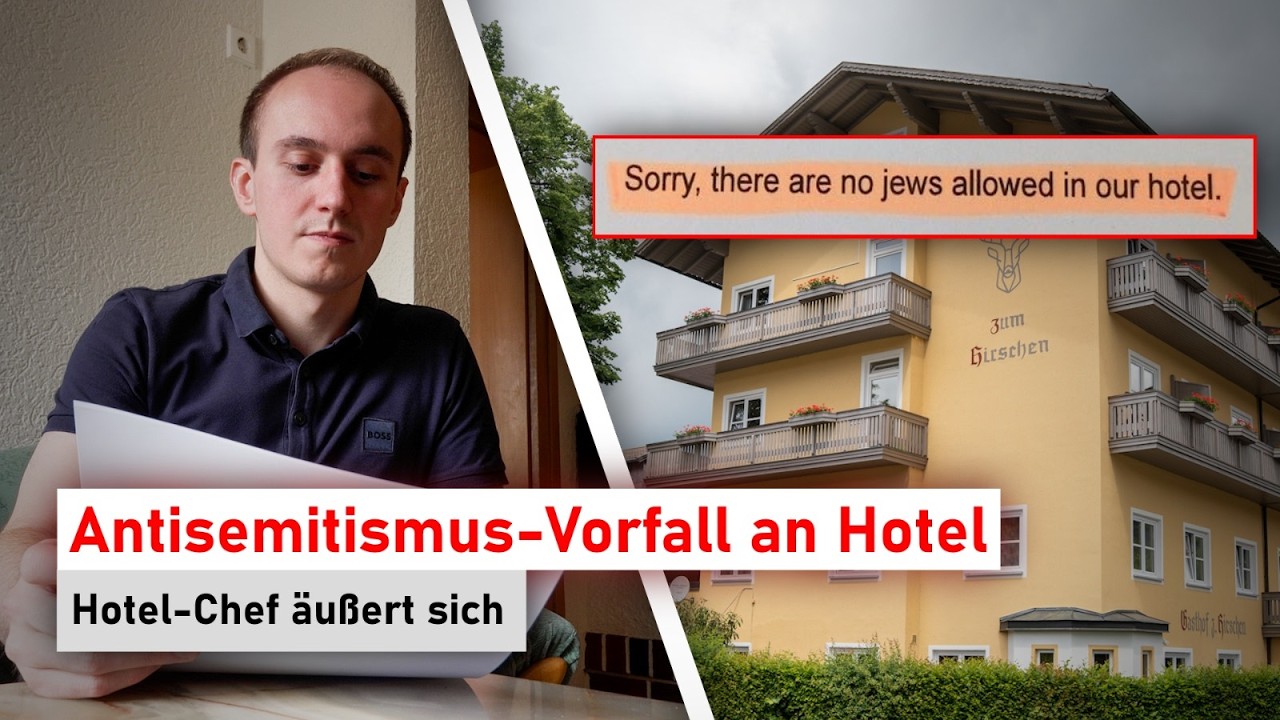
According to a report on Thursday by The Jewish News Syndicate (JNS), the travel platform Booking.com announced on Tuesday that it had suspended the property, Hotel zum Hirschen, located near Munich, following revelations that a staff member had sent a message to prospective Israeli visitors declaring that “Jews are not allowed” at the hotel.
The message quickly attracted international attention, generating outrage among Jewish organizations, Israeli officials, German media outlets, and members of the public who viewed the communication as shocking and deeply disturbing. The incident became even more explosive after Talya Lador, Israel’s consul general in Bavaria, publicly condemned the exchange on social media. “Is this the 1930s?” Lador wrote on X, according to reporting cited by JNS.
The brief but powerful question resonated widely because of Germany’s history and the symbolic weight attached to any allegation of discrimination directed at Jews.
As JNS reported, major German news organizations quickly began covering the story, while Bavarian authorities opened an investigation into possible discrimination by the owners of the hotel. The controversy has since evolved into a broader national discussion involving antisemitism, online fraud, hospitality industry practices, and the responsibilities of businesses operating in an era of increasing digital communication.
According to accounts referenced by JNS, the controversy began when Israeli travelers contacted the hotel through Booking.com regarding accommodations. In response, they allegedly received a message informing them that Jews were not permitted at the establishment. The language immediately raised alarm because it appeared to explicitly exclude guests based on their Jewish identity.
Within hours, screenshots of the exchange circulated online, prompting widespread criticism and demands for an explanation. Booking.com, one of the world’s largest online travel platforms, moved swiftly after learning of the incident. The company announced that it had suspended the hotel from its platform pending further review.
The suspension represented a significant development because online travel platforms serve as critical sources of visibility and reservations for hotels throughout Europe. JNS reported that the action came amid growing scrutiny from German authorities and mounting public pressure.
As public outrage intensified, German officials opened an investigation into the matter. According to reporting cited by JNS from the German newspaper Die Welt, authorities initiated a discrimination probe involving the hotel’s ownership. The investigation seeks to determine whether the communication constituted unlawful discrimination against Jewish travelers.
The inquiry also reflects Germany’s particularly stringent approach toward allegations involving antisemitism and religious discrimination. Over the past several years, Germany has undertaken numerous initiatives aimed at combating antisemitism amid rising concerns about anti-Jewish incidents throughout Europe. Consequently, allegations involving explicit exclusion of Jewish guests have been treated with exceptional seriousness.
The case rapidly became a prominent national story, with major German media organizations devoting substantial attention to the controversy.
Facing intense criticism, the hotel’s owners sought to explain the circumstances surrounding the message. According to the JNS report, members of the Sperl-Vogl family, which operates the approximately 40-room hotel, told Die Welt that the statement was never intended to be interpreted literally as an expression of hostility toward Jews.
Instead, they claimed the response was sent under highly unusual circumstances involving repeated fraudulent booking attempts. The family reportedly stated that staff members had been dealing for weeks with suspicious inquiries and fake reservations originating through Booking.com. According to their explanation, the employee who sent the controversial message believed that the inquiry from the Israeli travelers was not genuine. The staff member allegedly suspected that the communication was part of an ongoing pattern of fraudulent activity targeting the hotel.
The owners argued that the message was therefore intended as a dismissive response directed toward what was perceived to be a scam operation rather than an actual prospective guest. That explanation has become central to the family’s defense.
Additional details emerged through comments attributed to journalist Tobias Huch, who reportedly spoke directly with the hotel owners. According to the JNS report, Huch wrote on X that the family described a prolonged struggle with fraudulent Booking.com inquiries. The owners allegedly believed that numerous fake reservations had been submitted to the hotel over an extended period.
According to this account, staff members had become increasingly frustrated by repeated suspicious booking attempts. The inquiry from the Israeli travelers was reportedly mistaken for another fraudulent communication.
As a result, the employee allegedly responded in a manner intended to dismiss what was believed to be a fake reservation. Critics, however, have questioned whether frustration over fraudulent bookings could justify language explicitly referencing Jews.
The debate has become one of the central issues surrounding the controversy.
The incident has also drawn attention to the operational pressures faced by hotels utilizing online reservation systems. JNS reported that Booking.com evaluates businesses based in part on how quickly they respond to inquiries from prospective customers. Responsiveness can influence a property’s ranking and visibility on the platform.
Some observers have suggested that such systems create incentives for hotels to respond rapidly to large volumes of inquiries, potentially increasing the risk of poorly considered communications. Nevertheless, critics argue that regardless of any operational pressures, businesses must maintain professional standards and avoid language that could reasonably be interpreted as discriminatory.
The controversy therefore highlights broader questions about digital customer service, online fraud prevention, and appropriate communication practices.
Following complaints filed with Bavarian authorities, the hotel owners attempted to clarify their position through a formal written statement. According to the JNS report, the family sent a letter to the Bavarian State Chancellery acknowledging that the response was inappropriate. “It was definitely wrong of us to respond in this way in the chat,” the family reportedly wrote.
At the same time, they insisted that the message was not motivated by hostility toward Jews. “However, it is extremely important to us that you understand that this statement was not made with regard to people of Jewish faith,” the letter continued.
Instead, the family maintained that the response resulted from frustration stemming from repeated fake bookings and the mistaken belief that the inquiry represented another fraudulent reservation. The letter reportedly emphasized that the staff member believed the inquiry was “a further fake booking.”
Whether authorities ultimately accept that explanation remains unclear.
The controversy has attracted particularly intense attention because it occurred in Germany, where memories of the Holocaust continue to shape public discourse. Any suggestion that Jewish individuals might be denied service based on their identity carries enormous historical significance.
This reality helps explain why Lador’s question — “Is this the 1930s?” — generated such a strong reaction. For many observers, the phrase evoked memories of a period when anti-Jewish discrimination became institutionalized throughout Germany.
While no evidence has emerged suggesting the hotel implemented an actual policy excluding Jewish guests, the wording of the message nevertheless struck many people as profoundly disturbing. The incident therefore resonates far beyond a single hospitality dispute.
The controversy arrives at a time when many European governments are confronting concerns about rising antisemitism. Jewish communities across Europe have reported increased anxiety regarding anti-Jewish rhetoric, discrimination, and security threats.
Consequently, incidents involving alleged exclusion of Jewish travelers often attract significant attention and scrutiny. The case also demonstrates how quickly local disputes can become international controversies in the digital age. A single message exchanged through an online booking platform rapidly became the subject of diplomatic criticism, national media coverage, and government investigation.
For now, the future of Hotel zum Hirschen remains uncertain. Booking.com’s suspension of the property represents an immediate consequence of the controversy, while German authorities continue their investigation.
The outcome could determine whether officials conclude that unlawful discrimination occurred or whether the incident resulted from the misunderstanding described by the owners. Regardless of the ultimate findings, the episode has already become a powerful reminder of the sensitivity surrounding antisemitism, particularly in Germany, and the importance of responsible communication in an increasingly interconnected world.
As JNS reported, what began as a disputed hotel reservation inquiry has evolved into a national debate touching on discrimination, historical memory, digital communication, and public accountability.
Whether the explanation offered by the hotel’s owners ultimately satisfies investigators remains to be seen. What is already clear, however, is that the incident has sparked a conversation that extends far beyond the walls of a small Bavarian hotel.



