



















Hezbollah Rejects U.S.-Brokered Ceasefire Framework as Fighting Persists Along Israel-Lebanon Frontier
Iran-Backed Group Denounces American-Led Proposal as Israel Signals Continued Military Operations in Southern Lebanon
By: Jerome Brookshire
Efforts to secure a lasting cessation of hostilities along the volatile Israel-Lebanon border suffered a significant setback on Thursday after Hezbollah publicly rejected a ceasefire framework negotiated by the United States and accepted by the governments of Israel and Lebanon, according to report on Thursday by Reuters.
The development underscores the persistent challenges facing international diplomatic initiatives aimed at ending months of violence that have transformed southern Lebanon into one of the Middle East’s most dangerous flashpoints. While Washington hailed the proposed arrangement as a breakthrough capable of restoring stability to the region, Hezbollah’s leadership dismissed the plan outright, characterizing it as an unacceptable surrender to Israeli and American demands.
According to the Reuters report, the proposed ceasefire framework emerged following intensive U.S.-mediated negotiations between Israeli and Lebanese officials. The agreement, announced by American officials on Wednesday, called for a halt in hostilities contingent upon Hezbollah ceasing military operations and withdrawing its fighters from areas near the Israeli border.
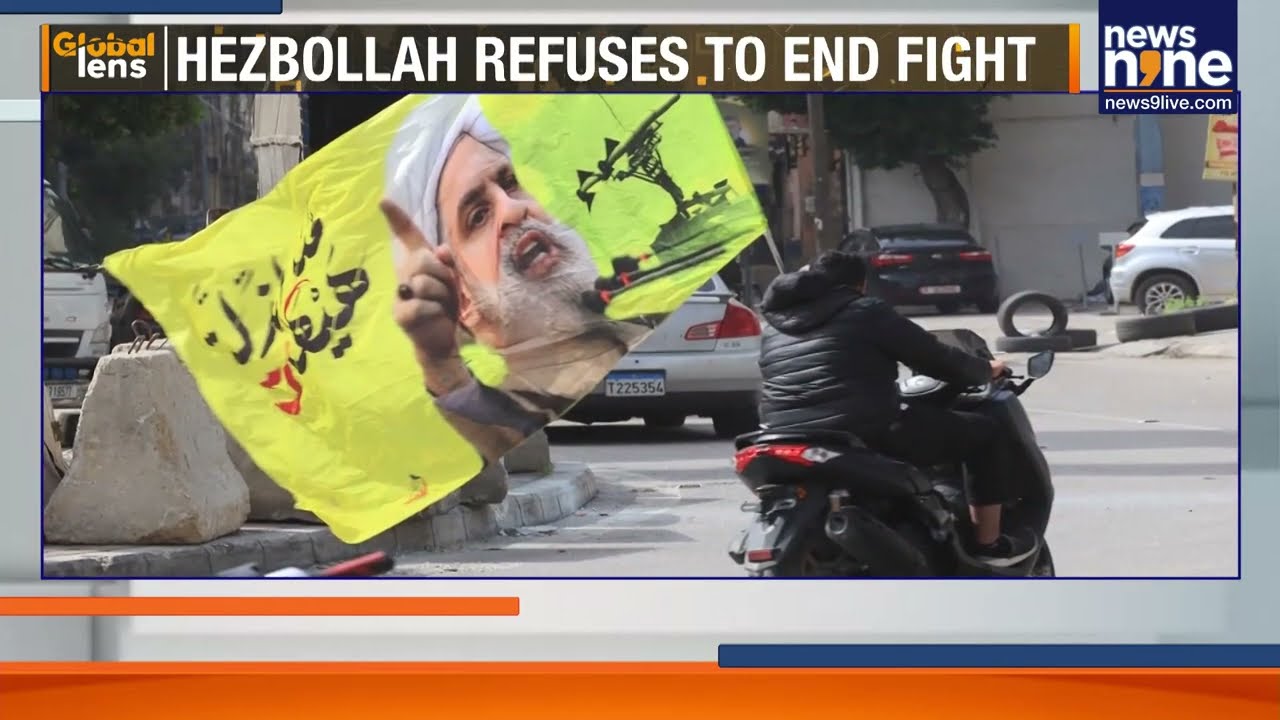
Yet the proposal was met with fierce opposition from Hezbollah Secretary-General Naim Qassem, who made clear that the organization does not consider itself bound by negotiations conducted without its direct participation.
In a strongly worded statement cited by Reuters, Qassem condemned the diplomatic initiative in unusually harsh terms, describing the negotiations as “shameless” and rejecting the American-backed framework as “a roadmap for the annihilation of a section of the Lebanese people and the enslavement of the rest.”
His remarks represented one of Hezbollah’s most unequivocal repudiations of international mediation efforts since the latest round of fighting erupted earlier this year.
Central to Hezbollah’s rejection is its insistence that armed resistance against Israel cannot cease while Israeli forces remain present in Lebanese territory. “As long as the occupation exists, the resistance will continue,” Qassem declared, according to the Reuters report.
The statement reflects a longstanding ideological position held by Hezbollah since its founding in 1982. The organization has consistently framed its military activities as resistance against Israeli occupation and has maintained that its weapons remain necessary to defend Lebanon.
Reuters reported that Qassem specifically objected to aspects of the proposed ceasefire that failed to address Israel’s continued military presence in portions of southern Lebanon. The Hezbollah leader argued that any meaningful ceasefire agreement must encompass all contested areas in southern Lebanon, including regions where Israeli forces have established what officials describe as a security zone.
Israel has maintained that these positions are necessary to protect communities in northern Israel from cross-border attacks and missile fire. However, Hezbollah views the Israeli presence as an occupation that justifies continued armed resistance. Qassem emphasized that Israeli civilians would not experience genuine security so long as Lebanese communities remain under threat.
According to the Reuters report, he stated that towns and cities in northern Israel would not be secure “as long as our villages are unsafe, bombed, destroyed, and our people are being killed.” Those remarks highlight the profound gap separating the two sides’ interpretations of security and stability.
The ceasefire proposal announced this week represents one of the most ambitious diplomatic efforts undertaken by the United States since fighting resumed along the Israeli-Lebanese frontier.
Reuters reported that American officials announced on Wednesday that both Israel and Lebanon had agreed to implement the ceasefire framework following extensive negotiations. Under the proposed arrangement, Hezbollah would be required to cease military operations and remove its fighters from sensitive areas near the border.
The framework also envisioned enhanced security measures designed to prevent renewed escalation. American diplomats have portrayed the proposal as an important step toward reducing tensions and preventing the conflict from expanding into a broader regional war.
However, Hezbollah’s refusal to endorse the agreement immediately casts doubt on its viability. Unlike traditional state-to-state agreements, any ceasefire involving Lebanon’s southern border must contend with the reality that Hezbollah operates as an independent military and political force whose decisions are not necessarily dictated by the Lebanese government.
This dynamic has complicated nearly every diplomatic initiative involving southern Lebanon during the past several decades.
While diplomatic discussions continued, military activity on the ground showed little sign of slowing. Reuters reported that Israel conducted additional strikes in southern Lebanon on Thursday and signaled that its military campaign would continue despite the ceasefire announcement.
Israeli Defense Minister Israel Katz indicated that military operations remain necessary under current conditions. According to the Reuters report, Katz stated that Israel would continue conducting strikes in Lebanon for the foreseeable future.
The Israeli military simultaneously issued warnings to residents in southern Lebanon, advising them that operations targeting Hezbollah infrastructure remained underway. Israeli officials have repeatedly argued that Hezbollah’s military capabilities pose an unacceptable threat to communities in northern Israel.
Military leaders contend that degrading Hezbollah’s operational infrastructure is essential to preventing future attacks. These concerns have intensified since fighting resumed on March 2.
Reuters reported that the latest phase of hostilities began when Hezbollah launched attacks in support of Iran during a period of heightened confrontation involving Tehran, Washington, and Jerusalem. The conflict has since evolved into a broader regional crisis that has resisted multiple diplomatic interventions.
Several ceasefires announced from Washington since April have failed to produce lasting stability.
Instead, intermittent pauses have repeatedly given way to renewed violence, missile launches, airstrikes, and cross-border military engagements. The persistence of the fighting has transformed Lebanon into a critical component of broader negotiations involving Iran and the United States.
According to the Reuters report, Tehran has consistently insisted that any comprehensive regional agreement must address Israeli military operations in Lebanon. This linkage has complicated efforts to isolate individual conflicts and negotiate separate settlements.
The conflict’s regional significance was further underscored by comments from senior Iranian military officials. Reuters reported that the commander of Iran’s Revolutionary Guards Quds Force weighed in on the ceasefire debate, emphasizing Tehran’s support for Hezbollah’s position.
The Quds Force commander described Israeli withdrawal as “the minimum demand of the resistance.” According to the Reuters report, he argued that Israeli forces must return to positions held before the current conflict erupted and before military operations expanded into southern Lebanon. Such statements reflect Iran’s continuing role as Hezbollah’s principal sponsor and strategic partner.
Since helping establish Hezbollah in 1982, Iran has provided the organization with financial support, weapons, training, and strategic guidance. That relationship has transformed Hezbollah into one of the most powerful non-state military organizations in the Middle East.
The organization’s refusal to endorse the American-backed ceasefire framework therefore carries implications extending far beyond Lebanon’s borders.
The rejection of the ceasefire proposal creates a substantial challenge for American diplomats seeking to stabilize the region. The Reuters report noted that the conflict has become a central issue in broader diplomatic discussions concerning the future of Middle Eastern security arrangements.
With Israel insisting on maintaining pressure against Hezbollah and Hezbollah refusing to cease operations while Israeli forces remain in Lebanese territory, negotiators face a difficult path forward. The competing demands leave little room for compromise.
For Israel, security requires preventing Hezbollah from rebuilding its military infrastructure near the border. For Hezbollah, resistance remains justified as long as Israeli troops remain in contested areas.
These fundamentally opposing positions continue to obstruct efforts to achieve a lasting settlement.
Despite the setback, diplomatic efforts are expected to continue. American officials have repeatedly emphasized the importance of preventing the conflict from escalating into a wider regional confrontation involving Iran and other Iranian-backed groups. Reuters reported that negotiations remain active even as fighting persists on the ground.
Yet Hezbollah’s latest statements suggest that any durable ceasefire will require far more extensive negotiations than those currently underway. The organization’s leadership has made clear that it does not view the existing framework as a basis for peace.
Instead, Hezbollah insists that Israeli military withdrawal must remain a central component of any future agreement. Until those differences are resolved, the prospect of a comprehensive settlement appears uncertain.
As southern Lebanon continues to absorb the consequences of renewed warfare and communities on both sides of the border remain under threat, the latest diplomatic initiative now faces its most serious test. Whether American mediators can bridge the gap between Israel’s security demands and Hezbollah’s insistence on continued resistance may ultimately determine whether the region moves toward stability or remains trapped in a cycle of recurring conflict.