



























|
Getting your Trinity Audio player ready...
|
By: Fern Sidman
In a moment of profound historical resonance and contemporary urgency, President Donald Trump has issued a sweeping proclamation designating May 2026 as Jewish American Heritage Month, a declaration that both honors the enduring contributions of Jewish Americans and confronts the alarming resurgence of antisemitism across the United States. The announcement, reported by Israel National News on Tuesday, arrives at a time when the reaffirmation of fundamental values—faith, liberty, and human dignity—has become not merely symbolic, but imperative.
The proclamation, rich in historical reference and moral clarity, underscores the indispensable role that Jewish Americans have played in shaping the nation’s civic, cultural, and intellectual landscape. It also delivers a forceful repudiation of antisemitism in all its manifestations, calling for both vigilance and action in the defense of religious freedom.
Drawing upon the earliest chapters of American history, the President invoked the words of George Washington, whose 1790 letter to the Hebrew Congregation in Newport remains one of the most eloquent affirmations of religious liberty ever articulated in the American tradition. In that letter, Washington expressed his hope that Jewish citizens would “continue to merit and enjoy the goodwill of the other Inhabitants,” a sentiment that has echoed across centuries.
The proclamation, as highlighted in the Israel National News report, situates Jewish American Heritage Month within this broader historical narrative, emphasizing the continuity of Jewish presence and contribution from the founding era to the present day.
Among the figures singled out for recognition is Haym Salomon, whose financial support and advocacy were instrumental in sustaining the Continental Congress during the Revolutionary War. His story, marked by sacrifice and unwavering commitment to liberty, exemplifies the profound impact of Jewish Americans on the nation’s founding.
Perhaps the most distinctive element of the proclamation is the announcement of a national Sabbath to be observed from sundown on May 15 through nightfall on May 16.
The President framed this observance as an opportunity for collective introspection, urging citizens to pause amid the demands of modern life and to reconnect with enduring values. In doing so, the proclamation elevates the concept of the Sabbath from a religious practice to a universal symbol of balance, gratitude, and moral clarity.
“In special honor of 250 glorious years of American independence and on the weekend of Rededicate 250 — a national jubilee of prayer, praise, and thanksgiving — Jewish Americans are encouraged to observe a national Sabbath,” the President wrote. “From sundown on May 15 to nightfall on May 16, friends, families, and communities of all backgrounds may come together in gratitude for our great Nation. This day will recognize the sacred Jewish tradition of setting aside time for rest, reflection, and gratitude to the Almighty.”
Shabbat is the cornerstone of the Jewish faith. The fourth of the Ten Commandments is: “Remember [Zachor] the Shabbat day to keep it holy … for G‑d created the world in six days and rested on the seventh” (Exodus 20:8). It is the one day in a week designated as a rest from the material concern and stresses of the week to instead concentrate on the spiritual purpose of life — to serve G‑d through the Torah and Mitzvot. In Deuteronomy 5:12, the Torah states: “Observe [shamor] the Shabbat day to keep it holy.”
“Through every trial and triumph, the contributions of Jewish Americans have shaped our past, have strengthened our communities, and will continue to inspire American greatness for generations to come,” the proclamation declares.
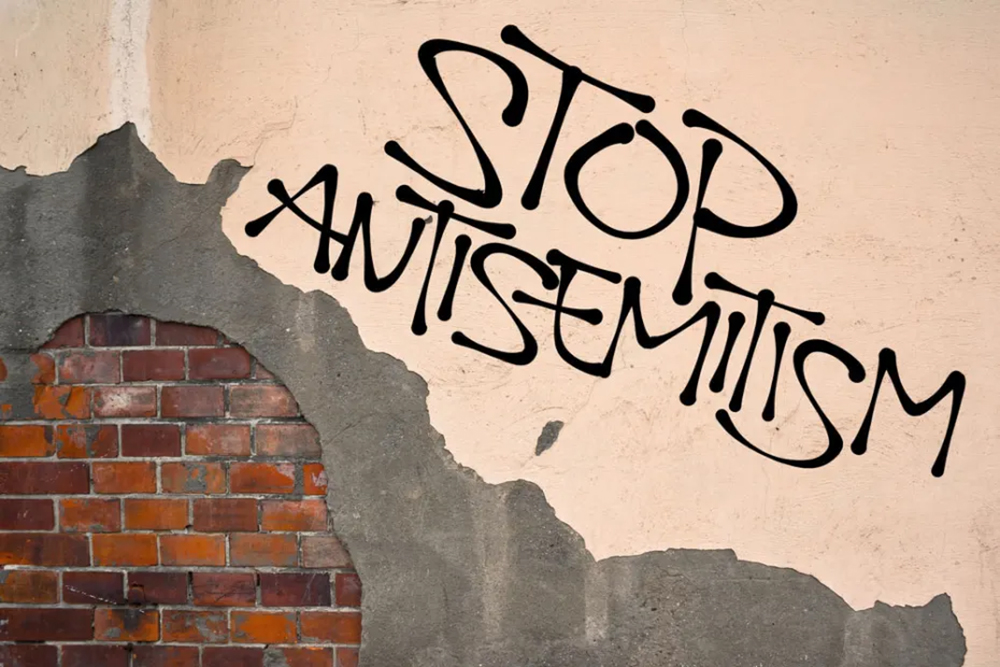
While the proclamation celebrates heritage and achievement, it is equally notable for its unequivocal stance against antisemitism. As the Israel National News report emphasized, the President reiterated his administration’s commitment to confronting hatred through both legal and institutional means.
This commitment includes the prosecution of crimes targeting Jewish Americans and the implementation of measures to address hostility, particularly on college campuses where incidents of intimidation and discrimination have become increasingly prevalent.
The emphasis on action reflects a recognition that antisemitism is not an abstract concern but a tangible threat that demands a robust response. The resurgence of antisemitic rhetoric and violence, both in the United States and globally, has underscored the urgency of this effort.
The proclamation has been met with widespread appreciation from Jewish organizations and community leaders, who view it as both a tribute and a call to action. Among the most prominent voices was Stephen M. Flatow, President of the Religious Zionists of America–Mizrachi, who articulated the significance of the announcement.
“The President’s proclamation is a meaningful tribute to the Jewish role in the American story and to America’s historic promise of religious liberty,” Flatow said.
He continued, “For generations, Jews in America have been blessed with the freedom to build synagogues, educate our children, observe Shabbat and contribute fully to the civic life of this great country.”
Flatow’s remarks highlight the reciprocal relationship between American ideals and Jewish experience—a dynamic in which the freedoms afforded by the United States have enabled Jewish communities to flourish, even as those communities have enriched the nation in return.
The Religious Zionists of America–Mizrachi also welcomed the proclamation’s recognition of the need to combat antisemitism, particularly at a time when Jewish students and communities have faced hostility, intimidation and violence.
“Religious liberty must be defended not only in words, but in action,” Flatow said. “That includes protecting Jewish students on campus, safeguarding synagogues and Jewish institutions, and ensuring that antisemitism is confronted wherever it appears.”
The RZA encourages synagogues, schools, families and communities to use the Shabbat of May 15–16 as an opportunity to reflect on the blessings of American freedom, the endurance of Jewish faith and the eternal bond between the Jewish people, Torah and the Land of Israel.
“As Religious Zionists, we are grateful for America and deeply committed to Israel,” Flatow said. “Those commitments do not conflict. They reinforce one another. A confident Jewish community, rooted in Torah and strengthened by Shabbat, can be both loyal citizens of the United States and devoted supporters of the State of Israel.”
Flatow also reflected on the deeper significance of the national Sabbath, framing it as a profound expression of identity and continuity.
“As America prepares to mark 250 years of independence, the call for a national Shabbat of gratitude is especially appropriate,” he said. “Shabbat is not merely a day of rest. It is one of the great pillars of Jewish faith, family and continuity. America gave Jews the freedom to keep Shabbat; Shabbat gave Jews the strength to remain Jews.”
This articulation captures the essence of the proclamation’s dual message: a celebration of freedom and a reaffirmation of the values that sustain it.
Rabbi Chaim Lazaroff, director of Chabad-Lubavitch of Houston and YJP Houston, welcomed the “Shabbat 250” initiative.
“Keeping Shabbat is always a beautiful and important thing,” he said. “It is taught that if the Jewish people only kept two Shabbats, Moshiach would be here — and the time for that has already come. Shabbat 250, in honor of America’s 250th birthday, is a beautiful idea. It’s the perfect opportunity to unplug and connect with G‑d, your family, and your community in a real and meaningful way.”
In a statement sent to the media, the Agudath Israel of America, the voice of Torah Jewry in the US, said: “President Donald Trump issued a proclamation in honor of Jewish American Heritage Month and included a call to Jewish Americans to observe a “national Sabbath” as part of the celebration of the 250th anniversary of the founding of America. The President specifically pointed to the Shabbos of Parshas Bamidbar (May 15-16) as a day to strengthen Sabbath observance and express gratitude for our great Nation.
Agudath Israel supports this initiative, which is referred to in some circles as “Shabbos 250.” We encourage our constituents to use the occasion of Shabbos 250 to reflect on the historic role America has played over the years in serving as a haven of religious freedom. Indeed, the basic obligation of hakaras hatov, recognizing and appreciating the incredible good of our host nation, is a fundamental principle worthy of public acknowledgement.
“Shabbos 250 is an opportunity to celebrate the religious liberty we enjoy in this great country and to reflect on the gratitude owed to the United States by each and every one of us,” said Rabbi A.D. Motzen, Agudath Israel of America’s national director of government affairs. “We thank President Trump for recognizing the important role of the Jewish People and Shabbos in the history of the United States.”
Even as the proclamation celebrates achievement, it does not shy away from confronting the darker realities of the present moment. The rise in antisemitic incidents—ranging from verbal harassment to physical violence—has cast a shadow over Jewish communities and prompted calls for decisive action.
The designation of Jewish American Heritage Month, coupled with the introduction of a national Sabbath, represents a significant moment in the ongoing conversation about identity, freedom, and responsibility in the United States. It is a moment that invites both celebration and reflection, recognizing the achievements of the past while addressing the challenges of the present.
In an era marked by division and uncertainty, the proclamation offers a vision of unity grounded in shared principles. It affirms that the fight against antisemitism is not merely a concern for one community but a moral imperative for the nation as a whole.
As the nation prepares to observe Jewish American Heritage Month, the message conveyed by the President’s proclamation is both clear and compelling. It is a message of gratitude for the contributions of Jewish Americans, a reaffirmation of the values that define the United States, and a resolute commitment to confronting hatred in all its forms.
In the final analysis, the proclamation serves as a reminder that the ideals of faith, freedom, and human dignity are not self-sustaining. They require constant vigilance, active defense, and a willingness to stand against those who would undermine them.
As communities across the country come together to mark this occasion, the hope is that the spirit of the proclamation will inspire not only reflection but action—ensuring that the promise of America remains accessible to all, and that the scourge of antisemitism is confronted with the full measure of the nation’s resolve.



