





















|
Getting your Trinity Audio player ready...
|
Congress Pressed to Confront Antisemitism in Health Care Unions Amid Growing Allegations of Anti-Israel Radicalization in Medicine
By: Fern Sidman
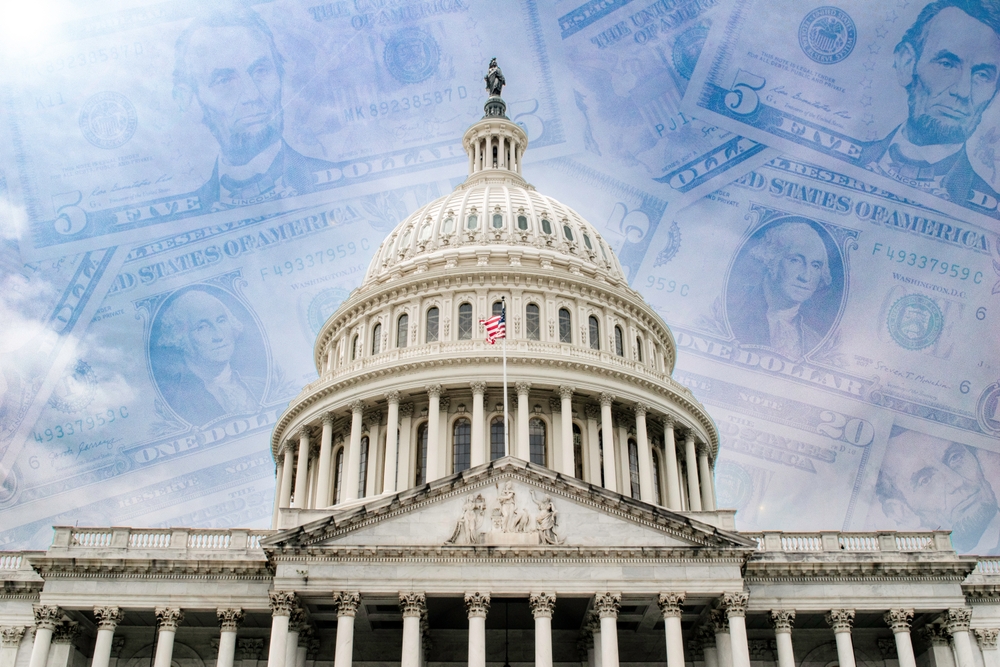
Jewish civil rights advocates, medical professionals, and legal experts delivered urgent testimony before Congress on Wednesday, warning that antisemitism has become increasingly entrenched within segments of the American health care labor movement and urging lawmakers to use federal legislative authority to combat what they described as systemic anti-Zionist discrimination in hospitals, universities, clinics, and medical unions across the country.
As reported on Wednesday in The Algemeiner, the hearing before the House Education and Workforce Subcommittee on Health, Employment, Labor, and Pensions exposed a growing conflict over the politicization of organized labor in the health care sector. Witnesses argued that several influential unions have drifted far beyond their traditional mission of workplace advocacy and collective bargaining, instead functioning as ideological vehicles for anti-Israel activism that has contributed to hostile and discriminatory environments for Jewish and Israeli medical professionals.
The testimony painted a deeply troubling picture of an increasingly toxic atmosphere in portions of the medical field, where some Jewish workers say they now face intimidation, ostracization, and ideological litmus tests tied to attitudes toward Israel and Zionism. Witnesses repeatedly emphasized that the issue is not rooted in legitimate political disagreement, but rather in what they described as the weaponization of anti-Zionist activism against Jewish identity itself.
“The issue is not whether health care workers may hold political views,” Deena Margolies, litigation staff attorney for the Louis D. Brandeis Center for Human Rights Under Law, told members of Congress during her testimony. “The problem arises when health care unions use their authority and resources to promote antisemitic campaigns outside their labor mission.”
Margolies argued that the transformation of unions into political advocacy engines has created impossible conditions for many Jewish employees. “Jewish and Israeli health care professionals are then placed in an impossible position,” she explained. “The union that is supposed to represent them is also helping to create the hostile work environment they must endure.”
According to testimony presented during the hearing, anti-Israel activism within organized labor has increasingly permeated professional spaces that were historically insulated from geopolitical ideological battles. Witnesses alleged that union leadership in certain sectors has embraced rhetoric and programming that portrays Zionism — a movement which overwhelming numbers of Jews view as central to Jewish identity and self-determination — as morally illegitimate or inherently oppressive.
Margolies further warned lawmakers that this ideological radicalization is beginning to affect patient care and mental health treatment. She cited reports of practitioners and counseling initiatives that explicitly advertise efforts to “decolonize” patients from pro-Israel or Zionist beliefs, an approach critics argue effectively pathologizes Jewish identity and political self-expression.
“The enterprise is predicated on the idea that Zionism is a pathology,” Margolies said. “Congress can and should act.”
Her remarks reflected a broader argument advanced throughout the hearing: that anti-Zionist activism inside labor unions has moved beyond protected political speech into discriminatory conduct that directly impacts employment conditions, workplace culture, and professional advancement.
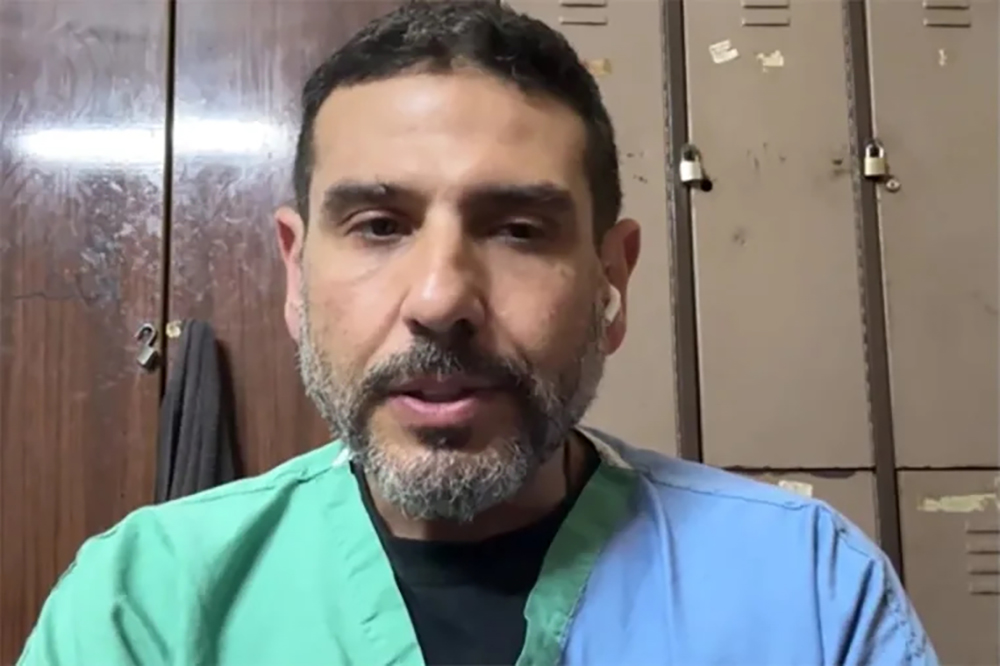
One of the most striking moments of the hearing came during testimony from Dr. Jacob Agronin, a cardiology fellow at Temple University Hospital, who argued that Jewish workers should no longer be compelled to financially support unions that advocate positions they believe are hostile to their identity and safety.
“What I would hope for is the option for those that disagree with this union on a fundamental level not be compelled to pay dues to this union,” Agronin told lawmakers.
“I think it’s absurd that the union can call for blatant discrimination against Israeli colleagues and then compel those same colleagues to pay them,” he continued.
Agronin’s testimony underscored a growing frustration among some Jewish professionals who believe organized labor structures have become ideologically captured by activists pursuing agendas unrelated to labor rights or workplace protections.
As The Algemeiner has documented in extensive reporting since the Hamas massacre across southern Israel on Oct. 7, 2023, antisemitism within portions of the medical and academic worlds has become a major source of alarm for Jewish professionals and advocacy organizations alike.
The hearing referenced multiple recent studies illustrating the scale of the problem.
One 2025 study found that 62.8 percent of Jewish health care professionals employed at campus-based medical centers reported experiencing antisemitism in the workplace — a figure dramatically higher than among Jewish practitioners working in private practice or community hospitals.
The study identified several contributing factors, including the failure of many DEI, or diversity, equity, and inclusion initiatives, to incorporate antisemitism education into institutional frameworks. According to researchers, this omission has frequently resulted in Jewish concerns being minimized, ignored, or excluded altogether from broader conversations about discrimination and bias.
The study further suggested that some DEI environments have unintentionally exacerbated antisemitic hostility by framing Jews primarily through racial or political lenses rather than recognizing Jewish identity as an ethnic, religious, and historical minority experience.
Months before that study’s publication, the StandWithUs Data & Analytics Department conducted its own survey of Jewish health care professionals in the United States. According to findings cited during the congressional hearing and reported by The Algemeiner, nearly 40 percent of respondents said they had either personally experienced or directly witnessed antisemitism in professional medical settings.
Among the 645 Jewish health workers surveyed, many described experiences of social exclusion, professional isolation, and intimidation. Approximately 26.4 percent reported feeling “unsafe or threatened” in workplace environments.
Witnesses at Wednesday’s hearing argued that these experiences cannot be dismissed as isolated incidents but instead reflect a broader ideological transformation within portions of academia, labor activism, and institutional medicine.
The problem, they argued, extends well beyond the United States.
The Algemeiner has also reported extensively on antisemitic incidents in medical settings across Europe, Australia, and South America, where Jewish doctors, nurses, and patients have increasingly reported harassment tied to anti-Israel activism following the Oct. 7 attacks and the subsequent war in Gaza.
Yet the congressional hearing focused specifically on the role organized labor may be playing in amplifying those tensions domestically.
The issue has increasingly become a central focus of Jewish civil rights litigation and advocacy campaigns.
Earlier this month, the Brandeis Center filed a sweeping civil rights complaint against the National Education Association, accusing the nation’s largest teachers union of systematically fostering antisemitic discrimination throughout its network of schools, offices, and union chapters.
According to the complaint, Jewish educators and staff members allegedly faced exclusion from promotions, mentorship opportunities, and social justice initiatives due to their Jewish identity or support for Israel.
The complaint went even further, alleging that anti-Zionist activists within the union had physically intimidated Jewish delegates during conferences and removed Holocaust education guidance from official materials.
“The NEA’s conduct is both completely illegal and morally unjustifiable,” Brandeis Center founder Kenneth Marcus said in a statement cited in The Algemeiner report. “This is exactly the type of discrimination against which Title VII was designed to protect.”
The allegations against labor organizations are not confined to teachers unions.
Federal investigators are currently reviewing complaints involving the United Federation of Teachers in New York City after reports emerged alleging that students were being recruited into anti-Zionist study groups portraying Israelis as “genocidal white supremacists” while glorifying Hamas operatives as “martyrs.”
According to the information provided in The Algemeiner report, the initiative allegedly received support from “Rethinking Schools,” a nonprofit organization that has itself received substantial financial backing connected to the NEA.
Meanwhile, at Columbia University, tensions between Jewish students and labor activists have escalated dramatically in recent months.
Students there recently filed a federal complaint with the National Labor Relations Board accusing Student Workers of Columbia — an affiliate of the United Auto Workers union — of prioritizing radical anti-Israel activism over labor representation.
According to the complaint, union leadership has pushed Columbia University to adopt boycott, divestment, and sanctions measures against Israel, terminate partnerships with the NYPD, and sever academic ties with Tel Aviv University.
Critics argue such initiatives fall entirely outside the scope of labor advocacy and instead transform unions into ideological political organizations.
“All of this adds up to a union that is out of control,” Glenn Taubman, staff attorney for the National Right to Work Foundation, told The Algemeiner during a previous interview.
Taubman questioned why Israel had become such a singular focus of organized labor activism while other authoritarian regimes receive comparatively little attention.
“They don’t have an agenda against the mullahs in Iran, against the dictator who runs Turkey, against the Chinese communists who oppress their citizens or the North Koreans,” Taubman said. “But they have an agenda against Israel, the one democracy in the Middle East.”
The hearing before Congress reflected growing momentum among lawmakers and advocacy organizations to confront what they view as a dangerous convergence of labor activism, ideological extremism, and antisemitic discrimination.
Witnesses repeatedly emphasized that anti-Jewish hostility increasingly manifests through anti-Zionist rhetoric and institutional activism that many Jews experience not as abstract political disagreement but as direct attacks on identity, belonging, and professional security.
For supporters of legislative action, the stakes extend far beyond labor politics.
They argue the issue ultimately concerns whether Jewish Americans can participate fully and equally in professional life without being subjected to ideological coercion, social exclusion, or institutional hostility because of their connection to Israel or their Jewish identity.
As The Algemeiner has reported, the growing conflict over antisemitism in organized labor, academia, and medicine represents one of the most consequential civil rights battles now unfolding in American public life.
Whether Congress ultimately acts remains uncertain. But Wednesday’s hearing made one point unmistakably clear: concerns about antisemitism within labor institutions are no longer confined to advocacy groups or isolated lawsuits. They have now reached the center of the national political and legislative arena.