
































|
Getting your Trinity Audio player ready...
|
By: Fern Sidman
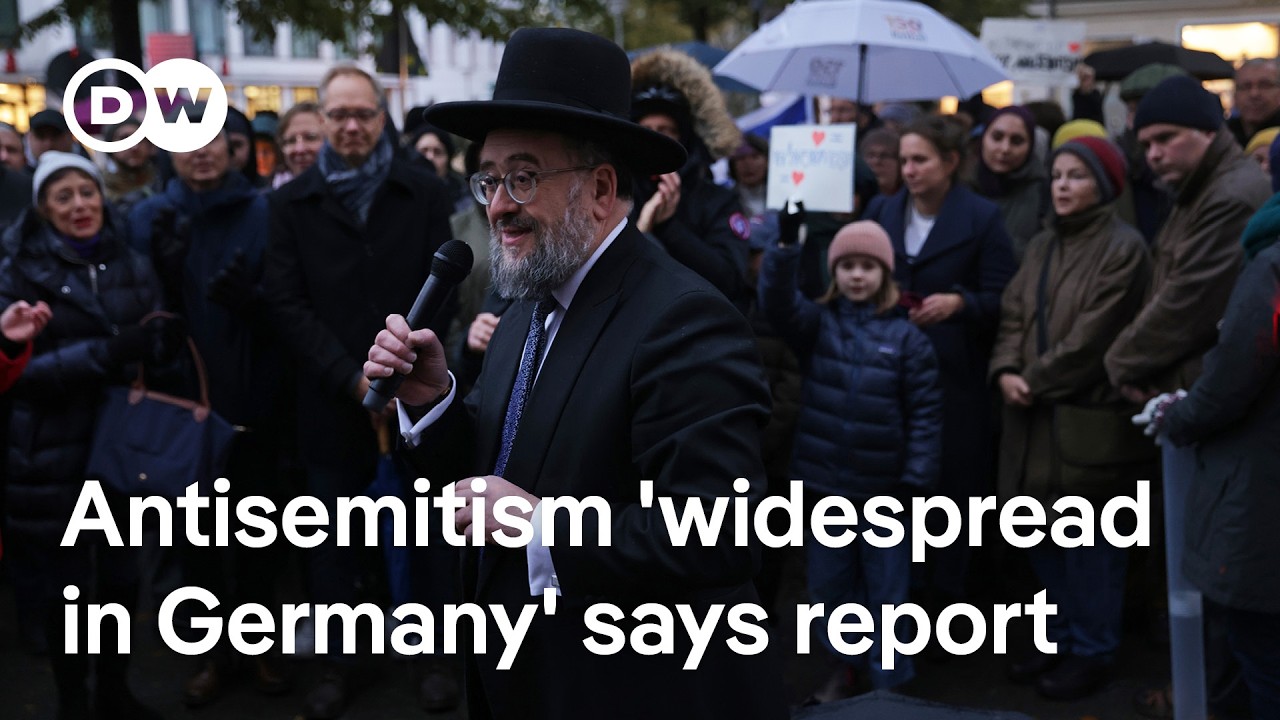
Germany is confronting an increasingly ominous resurgence of antisemitism, as newly released data from Berlin and the western state of Hesse reveal a sustained and deeply troubling escalation in hostility toward Jews and Israelis. As documented in a report on Wednesday in The Algemeiner, the latest findings from the Federal Association of Departments for Research and Information on Antisemitism (RIAS) paint a stark portrait of a society in which harassment, violence, and intimidation have become disturbingly routine elements of Jewish daily life.
The newly published RIAS annual report records 2,197 antisemitic incidents in Berlin over the past year, a figure that, while representing a decline of approximately 13 percent from the 2,521 incidents reported in 2024, remains alarmingly elevated when viewed in historical context. Prior to the Hamas-led massacre across southern Israel on Oct. 7, 2023, Berlin documented roughly 1,200 such cases annually. The current figures, therefore, represent more than a doubling of pre-October 7 levels—a reality that, as The Algemeiner report emphasized, underscores the persistence rather than the attenuation of antisemitic sentiment in Germany’s capital.
What is perhaps most unsettling is not merely the volume of incidents but the qualitative transformation of the environment in which they occur. According to the RIAS report, antisemitism has permeated the quotidian rhythms of urban life, rendering even mundane activities fraught with risk. “Everyday situations such as riding the subway or taking a taxi, or visiting concerts and cafés, often suddenly and unexpectedly became threatening,” the report states, encapsulating a climate in which Jewish identity itself has become a potential catalyst for confrontation.
Indeed, many Jews and Israelis in Berlin now report a growing reluctance to display visible symbols of their identity, whether through religious attire, linguistic expression, or cultural markers. The simple act of speaking Hebrew in public, once an unremarkable aspect of cosmopolitan life, has increasingly been perceived as an invitation to hostility. As The Algemeiner has noted in its coverage, this pervasive sense of vulnerability reflects not only isolated acts of prejudice but a broader erosion of social trust.
The spectrum of antisemitic incidents documented by RIAS spans a wide range of behaviors, from verbal abuse and intimidation to property damage and physical violence. The report details repeated instances of harassment targeting individuals, as well as vandalism directed at Jewish-owned businesses, communal institutions, and even memorial sites dedicated to the victims of the Holocaust. These acts, taken collectively, suggest a systematic pattern of hostility rather than sporadic or isolated occurrences.
Particularly alarming is the documented rise in violent antisemitic attacks. The report records 40 such incidents over the past year, highlighting an increasingly aggressive trajectory. Among the most shocking cases was an attempted murder at Berlin’s Holocaust Memorial, where a young man was stabbed in the neck—an act of violence that carries profound symbolic as well as physical implications. Other incidents included victims being punched, shoved, spat upon, stripped of personal belongings, or subjected to chemical irritants such as pepper spray.
Such acts of violence not only inflict immediate harm but also reverberate through the broader community, reinforcing a climate of fear and insecurity. The normalization of such behavior, coupled with what critics describe as an inadequate societal response, has contributed to a growing perception among Jewish residents that their concerns are neither sufficiently acknowledged nor effectively addressed.
The rise in antisemitism has also been closely linked to an increase in anti-Israel demonstrations, many of which have crossed the boundary from political protest into explicit incitement. According to the RIAS report, Berlin witnessed 239 such demonstrations over the past year, many characterized by antisemitic slogans, inflammatory imagery, and rhetoric that not only denies Israel’s right to exist but actively glorifies acts of violence. Chants calling to “kill Jews” have been reported at several of these events, further blurring the line between political expression and hate speech.
Sigmount Königsberg, the antisemitism commissioner for Berlin’s Jewish community, has issued stark warnings regarding this evolving dynamic. “Israel-related antisemitism is by far the most prevalent form of Jew-hatred we encounter,” he stated, as cited in The Algemeiner report. Königsberg further emphasized that the tendency to downplay or relativize such incidents has exacerbated the problem, creating an environment in which perpetrators feel emboldened and victims feel increasingly marginalized.
“Politics and society must ensure conditions in which all Jews feel safe,” Königsberg asserted, adding that the perception of Berlin as a haven for Jewish life has been fundamentally undermined. “Many in the community once believed Berlin was a safe place, but that has changed. I know of people who are now considering leaving the city, with life plans upended—especially young people who want to go.”
The situation in Hesse presents an equally troubling, if not more acute, manifestation of this broader trend. The RIAS report documents a record-high 1,099 antisemitic incidents in the state during 2025, representing an increase of approximately 18 percent from the 926 cases recorded in 2024. Even more striking is the comparison with pre-October 7 figures: the current total is nearly six times higher than the 179 incidents documented prior to the escalation in regional tensions.
This translates to an average of approximately three antisemitic incidents occurring each day in Hesse—a frequency that underscores the systemic nature of the problem. Uwe Becker, the state’s antisemitism commissioner, did not mince words in his assessment of the situation. “The threat to Jewish life is worse than at any time since the Holocaust,” Becker declared, a statement that carries profound historical resonance and underscores the severity of the current crisis.
The RIAS report further highlights the diverse settings in which antisemitic incidents are occurring. In Hesse alone, 190 cases were recorded in educational institutions, including schools and universities, raising serious concerns about the transmission of prejudice to younger generations. Public transportation systems accounted for 84 incidents, while cultural and artistic venues—traditionally viewed as spaces of inclusivity—were the sites of 52 reported cases.
The report categorizes the incidents in Hesse as including 27 physical assaults, 41 threats, 58 instances of deliberate property damage, and a staggering 960 cases of offensive behavior, ranging from verbal abuse to discriminatory exclusion. “Antisemitic experiences carry far-reaching consequences, affecting not only individuals but also families and wider social circles,” the report noted. “They shape everyday routines, future plans, and even decisions about whether it feels safe to take the S-Bahn in the evening.”
Susanne Urban, a project leader at RIAS, has warned that the sheer frequency of these incidents risks normalizing antisemitism within the broader societal framework. “Hesse has a problem. For Jews, full social participation is no longer possible,” she stated, as reported by The Algemeiner. This normalization, she suggests, represents one of the most insidious aspects of the current crisis, as it erodes the very foundations of a pluralistic and democratic society.
Marc Grünbaum, chairman of the Jewish community in Frankfurt, echoed these concerns, emphasizing the broader societal implications of the phenomenon. “The fight against antisemitism must be a societal fight,” he asserted. “The window of opportunity for Jewish life and for a liberal society in which minorities have their place is becoming increasingly narrow.”
Taken together, the data from Berlin and Hesse reveal a deeply unsettling trajectory. While Germany has long grappled with the legacy of its past, the current resurgence of antisemitism suggests that historical reckoning alone is insufficient to prevent the reemergence of deeply ingrained prejudices. As The Algemeiner report highlighted, the challenge now facing German society is not merely one of acknowledgment but of decisive and sustained action.
The persistence of antisemitism at such elevated levels raises fundamental questions about the effectiveness of existing policies and the willingness of political and social institutions to confront the problem with the urgency it demands. It also underscores the need for a comprehensive approach that addresses not only the symptoms but the underlying causes of this phenomenon.
For Germany’s Jewish communities, the stakes could scarcely be higher. The erosion of safety and security, the normalization of hostility, and the growing consideration among some individuals of leaving the country altogether all point to a crisis that extends far beyond statistics. It is, at its core, a test of Germany’s commitment to the principles of tolerance, inclusion, and human dignity.
As The Algemeiner report makes abundantly clear, the outcome of this test will have profound implications not only for the future of Jewish life in Germany but for the broader trajectory of European society in an era marked by increasing polarization and uncertainty.



