












|
Getting your Trinity Audio player ready...
|
By: Chaya Abecassis
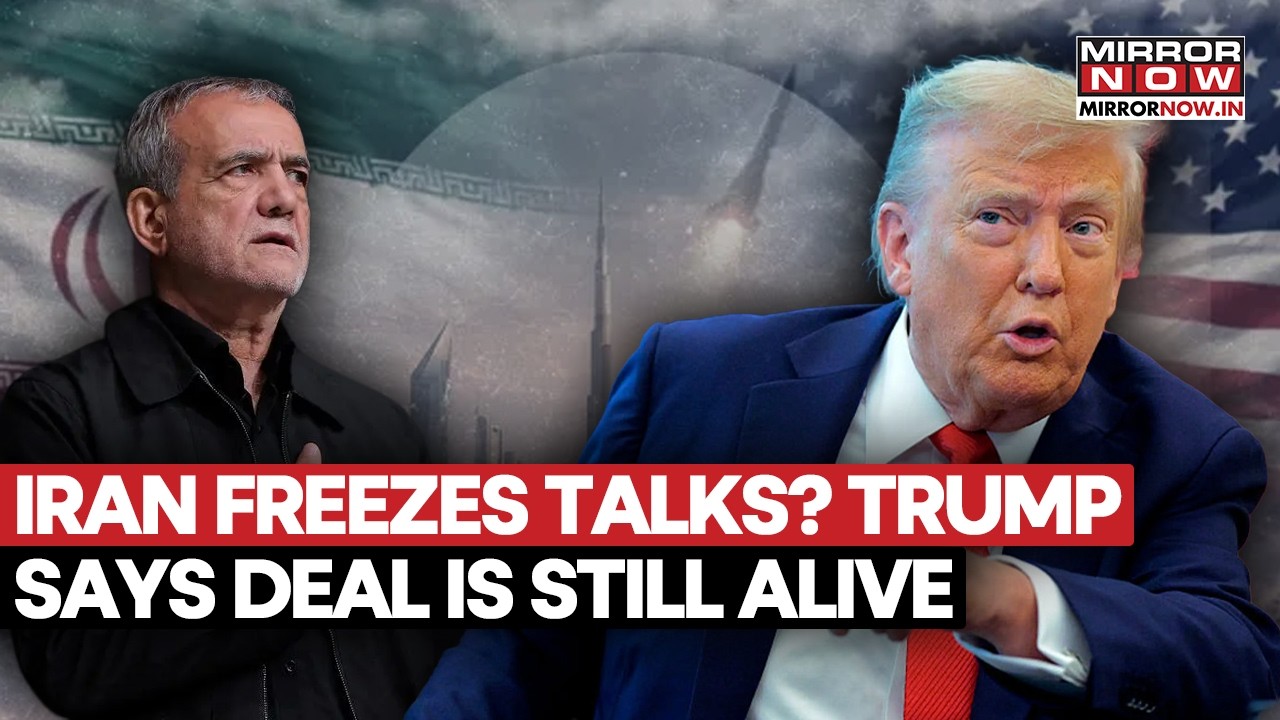
In a striking declaration that underscores both the complexity and volatility of the ongoing confrontation with Iran, President Donald Trump has made clear that the United States is operating without a fixed timetable for resolution. In an interview aired Wednesday on Fox News, the president articulated a strategic posture defined not by deadlines, but by conditional outcomes—emphasizing that the duration of the conflict will be determined by results rather than political pressures.
Speaking with Fox News anchor Martha MacCallum, Trump rejected speculation that domestic electoral considerations might influence his approach, asserting that his administration is focused on securing what he described as a “good deal for the American people.” The remarks reflect a broader recalibration of expectations, as the conflict enters a phase marked by both restrained military engagement and sustained economic pressure.
Central to Trump’s comments was his decision to extend a previously announced ceasefire—initially framed as a temporary measure—into an indefinite arrangement. The ceasefire, which pauses direct military strikes, is not accompanied by a defined endpoint, nor is it tied to a specific diplomatic timeline. Instead, it appears to function as a strategic pause, allowing for potential negotiations while maintaining pressure through other means.
According to the information provided in the Fox News report, the president emphasized that there is “no time pressure” for either the ceasefire or the initiation of peace talks. This approach signals a departure from conventional diplomatic frameworks, which often rely on deadlines to incentivize progress. In this case, the absence of a timeline appears intended to shift the burden of action onto Iran, compelling its leadership to formulate a coherent and unified response.
Trump’s characterization of Iran’s internal political landscape as “seriously fractured” further contextualizes this strategy. By highlighting divisions between competing factions within the Iranian government, the administration suggests that the lack of consensus in Tehran is a key obstacle to meaningful engagement.
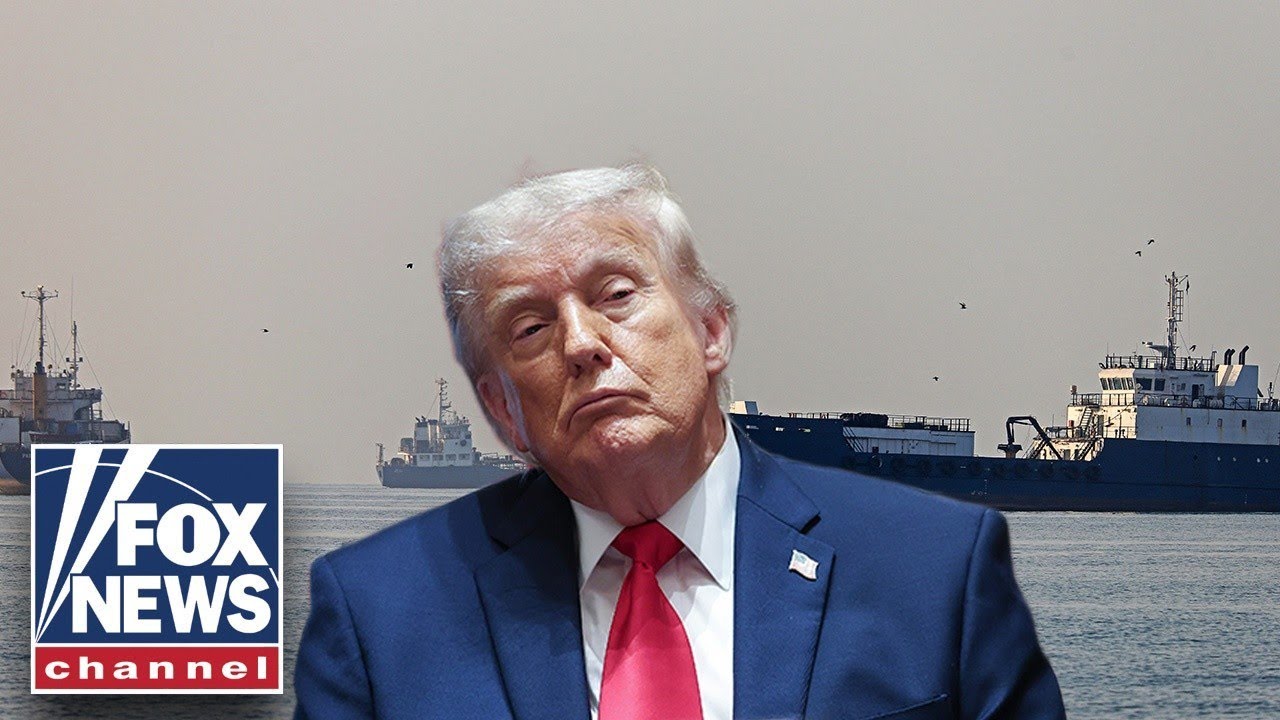
While military operations have been temporarily suspended, the United States continues to exert significant economic pressure on Iran through a comprehensive naval blockade. This blockade, described by administration officials as both “effective and successful,” targets vessels traveling to and from Iranian ports, thereby constraining the country’s ability to conduct international trade.
White House Press Secretary Karoline Leavitt elaborated on this strategy in remarks reported by Fox News, describing the blockade as a central component of what she termed “Operation Economic Fury.” According to Leavitt, the measures have resulted in substantial financial losses for Iran, estimated at approximately $500 million per day.
The economic impact of the blockade is further amplified by its effect on critical maritime routes, including the Strait of Hormuz. This narrow passage, through which a significant portion of global energy supplies transit, holds both strategic and symbolic importance. Trump has asserted that Iran’s public statements regarding the potential closure of the strait are motivated by a desire to “save face,” rather than a genuine intention to disrupt traffic.
In a post on his Truth Social platform, the president argued that Iran’s economic dependence on the strait—particularly its ability to generate substantial daily revenue—renders its closure impractical. By maintaining control over access to this critical corridor, the United States seeks to leverage economic necessity as a means of influencing Iranian decision-making.
Despite the continuation of economic measures, the administration has not foreclosed the possibility of diplomatic resolution. Trump has indicated that a deal remains achievable, provided that Iran meets certain conditions. However, the contours of such an agreement remain undefined, and the path toward negotiation is complicated by both internal and external factors.
Leavitt emphasized that the United States has not imposed a firm deadline for Iran to present a proposal, contradicting reports suggesting otherwise. “The timeline will be dictated by the commander-in-chief,” she stated, reinforcing the administration’s flexible approach. This lack of temporal constraints allows for adaptability but also introduces an element of uncertainty into the process.
Fox News has highlighted the contrast between public statements issued by Iranian officials and the positions conveyed in private discussions with U.S. negotiators. According to Leavitt, this discrepancy underscores the need for caution in interpreting Iranian rhetoric, as public messaging may not accurately reflect underlying intentions.
The Iranian government’s own position remains somewhat ambiguous. A spokesperson for the foreign ministry has acknowledged acceptance of the ceasefire but has stopped short of committing to formal negotiations. This tentative stance reflects the broader uncertainty within Iran’s political establishment, where competing factions may hold divergent views on how to proceed.
The administration’s characterization of Iran’s leadership as divided points to a critical dimension of the conflict: the interplay between pragmatists and hardliners within the Iranian system. These internal dynamics have long influenced the country’s foreign policy, shaping its approach to both confrontation and compromise.
Leavitt described the current moment as a “battle” between these factions, suggesting that the outcome will have significant implications for the trajectory of the conflict. The United States’ decision to withhold a deadline may be intended to allow these internal debates to unfold, potentially increasing the likelihood of a proposal that aligns with American objectives.
However, this approach carries inherent risks. Prolonged uncertainty may exacerbate tensions, while the absence of clear benchmarks could complicate efforts to assess progress. Fox News has noted that the evolving situation requires careful monitoring, as developments within Iran may occur rapidly and with limited transparency.
Compounding the complexity of the situation are recent incidents involving attacks on vessels in the Strait of Hormuz. According to reports, Iranian forces have targeted ships traveling southward through the passage on multiple occasions. These actions, while not constituting a full-scale escalation, introduce an additional layer of risk, particularly given the strategic importance of the waterway.
Such incidents highlight the fragile nature of the current ceasefire, which, while halting direct military strikes, does not eliminate the potential for confrontation. The presence of U.S. naval forces in the region, combined with the ongoing blockade, creates a volatile environment in which miscalculations could have significant consequences.
Fox News has emphasized that these developments underscore the need for vigilance, as the line between restraint and escalation remains precariously thin.
The administration’s approach to the conflict can be understood as a synthesis of patience and pressure. By extending the ceasefire indefinitely while maintaining economic constraints, the United States seeks to create conditions conducive to negotiation without relinquishing leverage.
Trump’s assertion that there is “no rush” reflects a confidence in the effectiveness of this strategy. By prioritizing outcomes over timelines, the administration aims to avoid the pitfalls of agreements reached under duress or within artificially imposed deadlines.
At the same time, the emphasis on securing a “good deal” suggests that any eventual resolution will be measured against specific criteria, including security guarantees and economic considerations. The absence of a defined framework for such a deal, however, leaves open questions about its feasibility and scope.
The open-ended nature of the conflict has implications beyond the immediate context of U.S.-Iran relations. Domestically, the administration’s approach may influence perceptions of leadership and strategic competence, particularly as the nation approaches future electoral cycles. Trump’s dismissal of midterm considerations indicates an effort to frame the conflict as a matter of national interest rather than political expediency.
Internationally, the situation is being closely watched by allies and adversaries alike. The interplay between military restraint and economic pressure serves as a test case for the effectiveness of hybrid strategies in managing complex geopolitical challenges.
Fox News has reported that the administration’s actions are being interpreted through multiple lenses, with some observers viewing them as a demonstration of resolve, while others express concern about the potential for prolonged instability.
As the United States and Iran continue to navigate this uncertain and evolving confrontation, the absence of a defined timeline introduces both flexibility and unpredictability. The administration’s reliance on economic measures, coupled with its willingness to engage in diplomacy under certain conditions, reflects a multifaceted approach to a deeply entrenched conflict.
The coming weeks and months will likely prove decisive, as internal developments within Iran intersect with external pressures and diplomatic initiatives. Whether the current strategy will yield a sustainable resolution remains to be seen.
For now, the message from Washington, as conveyed through Fox News, is clear: the path forward will not be dictated by the calendar, but by the convergence of conditions deemed acceptable by the United States. In a conflict where timing is often as critical as substance, this approach represents both a calculated risk and a statement of strategic intent.