




























|
Getting your Trinity Audio player ready...
|
By: Fern Sidman
In a rare and deeply personal disclosure, Israeli Prime Minister Benjamin Netanyahu has revealed that he quietly underwent treatment for early stage prostate cancer following a routine medical examination, choosing to delay public disclosure in the midst of ongoing regional conflict. The announcement, detailed in his annual health report and covered on Friday by Israel National News, provides a comprehensive account of both the medical circumstances and the strategic considerations that informed the timing of its release.
The revelation offers not only a glimpse into the personal health of one of the most consequential political figures of the modern era but also raises broader questions about leadership transparency, medical privacy, and the intersection of personal vulnerability with national security concerns.
According to the official report, the sequence of events began with what was initially a standard medical procedure. In late December 2024, Netanyahu underwent surgery to address benign prostatic hyperplasia, a common condition affecting men of advanced age. The procedure was completed successfully and without complications, marking what appeared at the time to be a routine medical intervention.
However, subsequent follow-up imaging revealed an unexpected finding. A magnetic resonance imaging scan identified a minute abnormality within the prostate, measuring less than one centimeter. While initially characterized as suspicious, further diagnostic evaluation confirmed that the lesion represented an early stage malignant tumor.
Israel National News reported that the discovery was entirely incidental, emerging not from symptoms or clinical suspicion but from routine monitoring. This element of chance underscores the critical role of regular medical surveillance, particularly for individuals within higher risk age groups.
Medical experts involved in Netanyahu’s care emphasized the significance of the early detection. The tumor was identified at a stage in which it had not spread beyond its original location, with no evidence of metastasis. Such findings are generally associated with highly favorable outcomes, provided that appropriate treatment is undertaken.
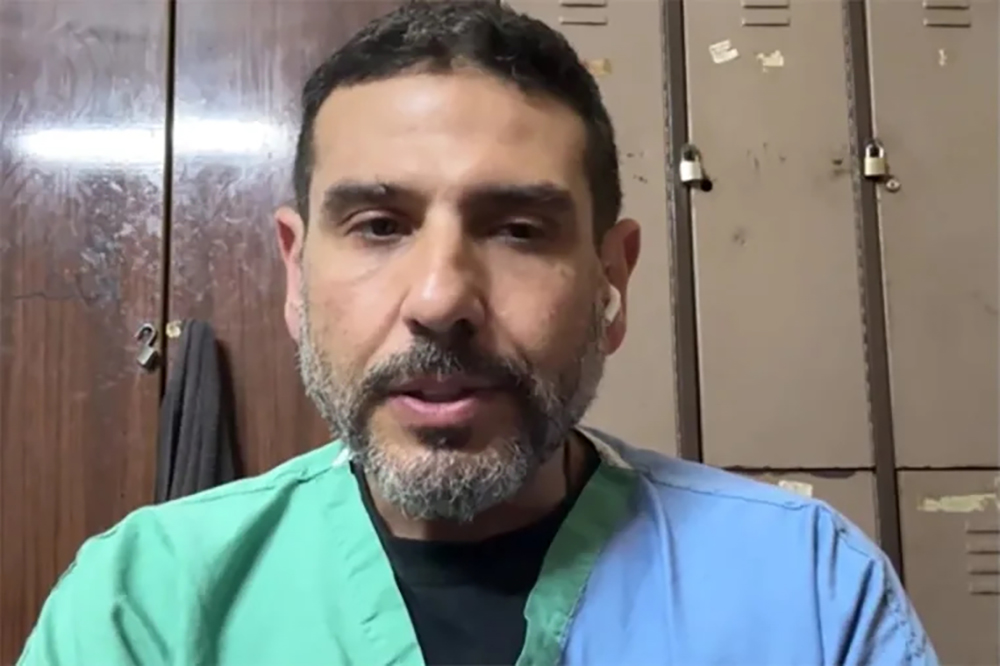
Professor Aharon Popovtzer, who led the treatment team at Hadassah Hospital in Jerusalem, described the case as a textbook example of early stage disease. He noted that patients in similar circumstances are typically presented with two primary options: active surveillance or targeted intervention.
Active surveillance involves close monitoring of the condition without immediate treatment, a strategy often employed when the risk of progression is deemed low. Alternatively, patients may opt for definitive treatment aimed at eliminating the lesion entirely.
In Netanyahu’s case, the decision was unequivocal. Reflecting a broader pattern of decisiveness that has characterized his political career, he chose to proceed with targeted radiation therapy. This approach, delivered over a relatively short period, was designed to eradicate the tumor while minimizing side effects.
The results of the treatment, as detailed in the report and corroborated by Israel National News, were overwhelmingly positive. Follow-up evaluations, including imaging studies and laboratory tests, indicated that the tumor had been completely eliminated.
Professor Popovtzer confirmed that there was no evidence of residual disease, describing the outcome as a full clinical resolution. The Prime Minister has since returned to routine monitoring, consistent with standard medical practice for patients who have undergone similar treatment.
The success of the therapy highlights the advancements in modern oncology, where early detection combined with precise intervention can yield outcomes that would have been far less certain in previous decades.
Perhaps the most striking aspect of the announcement is not the diagnosis itself but the decision to withhold the information from the public for a period of approximately two months. Netanyahu explained that this delay was a deliberate choice, motivated by concerns about national security and the potential for adversarial exploitation.
According to the Israel National News report, the Prime Minister expressed concern that disclosure during a particularly sensitive phase of the ongoing conflict could provide an opportunity for hostile actors to disseminate misinformation or propaganda. In his view, maintaining confidentiality during this period was essential to preserving both national morale and strategic stability.
This decision reflects the unique pressures faced by leaders in times of conflict, where personal matters can take on broader geopolitical significance. It also raises important questions about the balance between transparency and discretion, particularly when the health of a national leader is involved.
In a statement released alongside the report, Netanyahu sought to reassure the public regarding his health and capacity to lead. He emphasized that he is in excellent physical condition and that the medical issue has been fully resolved.
His remarks also offered a window into his personal philosophy. Drawing a parallel between his approach to governance and his handling of his health, he noted that timely information about potential threats necessitates prompt and decisive action.
This perspective, he suggested, guided his decision to pursue treatment rather than adopt a wait and see approach. By addressing the issue immediately, he aimed to eliminate any uncertainty and ensure a swift return to full health.
Beyond the specifics of his own case, Netanyahu used the opportunity to deliver a broader message on the importance of health awareness and preventive care. He urged citizens to undergo regular medical examinations and to follow professional guidance, emphasizing that early detection can be lifesaving.
This message resonates particularly strongly in the context of prostate cancer, which is among the most common forms of cancer in men, especially those over the age of seventy. As Israel National News has noted, the condition is often asymptomatic in its early stages, making routine screening a critical component of effective management.
The Prime Minister also expressed his gratitude to the medical team at Hadassah Hospital, acknowledging their expertise and dedication. His remarks highlighted the role of healthcare professionals in delivering not only technical treatment but also reassurance and support during periods of uncertainty.
In addition, he extended his thoughts to those affected by the ongoing conflict, offering prayers for the recovery of individuals who have suffered physical and emotional injuries. This gesture reflects an effort to connect his personal experience with the broader challenges facing the nation.
The disclosure of Netanyahu’s medical condition inevitably invites scrutiny, as the health of a national leader is often viewed through the lens of governance and stability. While the successful treatment and current state of health provide reassurance, the episode underscores the inherent vulnerability of even the most powerful figures.
At the same time, the manner in which the information has been presented—comprehensive, transparent, and accompanied by medical verification—may serve to strengthen public confidence. The Israel National News report noted that the detailed nature of the report reflects a commitment to accountability while respecting the complexities of the situation.
The revelation of Netanyahu’s recent health challenge represents a moment of both personal and national significance. It highlights the importance of early detection, the effectiveness of modern medical treatment, and the unique considerations that arise when personal health intersects with public leadership.
As reported by Israel National News, the outcome is ultimately a positive one: a serious condition identified at an early stage, addressed decisively, and resolved successfully. Yet the broader implications extend beyond the individual, offering lessons on vigilance, resilience, and the delicate balance between transparency and strategic discretion.
In a world where uncertainty is a constant, the episode serves as a reminder that even in the highest offices, human vulnerability persists—and that with timely action and expert care, it can be overcome.



