























|
Getting your Trinity Audio player ready...
|
After 78 Years, an Israeli Soldier Returns Home: The Long-Lost Burial of a 17-Year-Old Hero Finally Revealed
By: Fern Sidman
In a discovery that bridges nearly eight decades of uncertainty, grief, and national memory, the Israel Defense Forces has confirmed the final resting place of Private Dov Premat, a 17-year-old soldier who fell during Israel’s War of Independence and whose burial site remained unknown for 78 years. The revelation, reported on Wednesday by Israel National News, represents not only the resolution of a decades-long mystery but also a profound reaffirmation of Israel’s enduring moral commitment to its fallen.
For nearly eight decades, Premat had been classified among those soldiers whose fate was known, but whose burial place remained shrouded in uncertainty—a painful limbo that has afflicted many families since the earliest days of the state. Now, through painstaking investigative work conducted by the IDF’s Missing Persons Unit, it has been determined that Premat was interred in a mass grave at Maoz Haim, alongside 16 other soldiers who perished in the same conflict.
This long-awaited identification marks a deeply emotional milestone, both for Premat’s surviving family and for a nation that continues to honor the sacrifices made during its formative years.
To fully grasp the significance of this discovery, one must return to the harrowing circumstances of June 1948, when the young state of Israel was fighting for its very survival. According to detailed historical accounts cited by Israel National News, Premat served in Company A of the 11th Battalion of the “Oded” Brigade, a unit tasked with defending strategic positions in the northern Galilee.
On June 1, 1948, his company advanced to the village of Malkiya, replacing a Palmach force that had captured the area just days earlier. The strategic importance of Malkiya, situated near the Lebanese border, made it a focal point of fierce combat.
The decisive confrontation came on June 5. At noon, Lebanese forces—comprising infantry supported by armored vehicles—launched a coordinated assault from three directions. The Israeli defenders, though resolute, were significantly outmatched in both numbers and firepower.
The battle that followed was brutal and chaotic. Positions were contested with relentless intensity, and casualties mounted rapidly. Under sustained enemy fire, elements of the Israeli force were compelled to retreat toward the village center, where their command post was located.
It was during this desperate withdrawal that many of the fallen were left behind on the battlefield.
Among those left behind was Private Dov Premat, a teenager who had barely reached adulthood before being thrust into the crucible of war. According to findings referenced by Israel National News, Premat was likely struck while positioned at a location known as “Tree Hill,” a strategic vantage point west of the village.
His body remained there, near a shallow defensive position, as the surviving members of his unit withdrew under cover of darkness. The retreating soldiers, facing overwhelming pressure, were able to evacuate only a single wounded comrade, leaving others behind in the chaos.
In the aftermath of the battle, the bodies of fallen Israeli soldiers were reportedly collected and buried by enemy forces in temporary graves. These initial burials, conducted under wartime conditions, were often rudimentary and poorly documented—circumstances that would later complicate efforts to identify and recover the remains.
The uncertainty surrounding Premat’s burial was not unique. The War of Independence left numerous families without definitive answers regarding the fate of their loved ones. Over the years, the IDF has undertaken extensive efforts to locate and identify missing soldiers, driven by what it describes as a fundamental moral obligation.
As Israel National News has consistently reported, the IDF’s Missing Persons Unit has employed a combination of historical research, forensic analysis, and archival investigation to resolve such cases. In Premat’s case, this meticulous work ultimately led investigators to conclude that his remains had been transferred in November 1948 to a mass grave at Maoz Haim.
This grave, containing the remains of multiple soldiers, had itself been established following the relocation of bodies from earlier temporary burial sites, including those created by enemy forces on the battlefield.
The identification of Premat’s burial site thus represents the culmination of years of investigative persistence—a process that underscores the complexity of reconstructing events that occurred amid the chaos of early statehood.
The announcement of the findings was accompanied by remarks from Brigadier General Edna Ilia, the IDF’s Chief Human Resources Officer and head of the Casualties Division. Her statement, as reported by Israel National News, emphasized the ethical imperative that underpins the IDF’s efforts.
“The IDF and the Missing Persons Unit have been working and investigating cases of missing soldiers and fallen troops whose burial places have been unknown for many years,” she said. “This stems from the IDF’s moral duty and obligation to bring its fallen to burial in Israel.”
Her words reflect a deeply ingrained principle within Israeli society: that no soldier is ever forgotten, and that the passage of time does not diminish the responsibility to account for those who gave their lives in defense of the state.
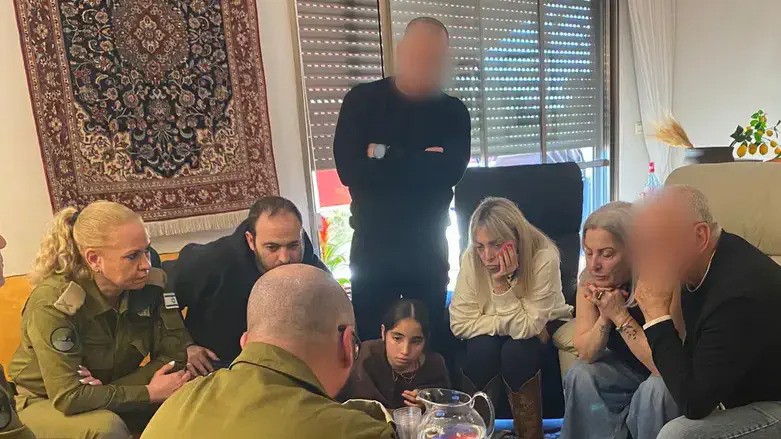
In a poignant gesture, the findings were presented to Premat’s family during a meeting held on the eve of Passover—a timing that imbues the moment with additional symbolic resonance. The holiday, which commemorates liberation and redemption, provided a fitting context for the resolution of a decades-long search for truth and closure.
“It is our duty to return those who fell for the state,” Ilia continued. “It is a privilege for us to be part of an army that does not rest even after many years.”
While the identification of Premat’s burial site marks a significant achievement, it also serves as a reminder that the work is not yet complete. According to information cited by Israel National News, several soldiers who fell in the same battle remain unaccounted for.
The bodies of Shmuel Bernstein, Yaakov Leibovitz, Shmuel Moldavsky, Yitzhak Glick, and Shlomo Kron have yet to be located—a sobering indication of the enduring challenges faced by investigators.
For the families of these soldiers, the passage of time has not diminished the desire for answers. Each unresolved case represents a story interrupted, a life cut short, and a family left without closure.
The story of Dov Premat is, in many ways, emblematic of a generation that bore the weight of Israel’s founding struggles. At just 17 years old, he was among the youngest of those who took up arms to defend a nascent state under existential threat.
His sacrifice, like that of countless others, forms part of the foundational narrative of Israel—a narrative defined by resilience, courage, and an unwavering commitment to survival.
The eventual discovery of his burial site does not alter the tragic circumstances of his death, but it does restore a measure of dignity and recognition. It ensures that his name is not merely recorded in history, but anchored in a specific place—a place where remembrance can take root.
As Israel continues to confront contemporary challenges, the rediscovery of Dov Premat’s burial site serves as a powerful reminder of the enduring bonds between past and present. It underscores the nation’s commitment to honoring its fallen, not only through memorialization but through the relentless pursuit of truth.
Through its coverage, Israel National News has illuminated the significance of this discovery, capturing both its historical context and its emotional impact.
For Premat’s family, the announcement brings a long-awaited sense of closure. For the nation, it reaffirms a collective promise: that even after the passage of decades, those who fell in its defense will never be forgotten, and their stories will continue to be told with the reverence they deserve.