
















|
Getting your Trinity Audio player ready...
|
By: David Avrushmi
In a development that underscores both the volatility and the delicate diplomatic choreography defining the current Middle Eastern crisis, US Middle East Envoy Steve Witkoff has confirmed that the United States is actively engaged in direct dialogue with Iran, even as profound disagreements persist over the terms of a potential cessation of hostilities. The revelation, reported on Monday by Israel National News, offers a rare glimpse into the fragile and often opaque process of negotiation unfolding behind the scenes of an ongoing conflict that has reshaped regional dynamics.
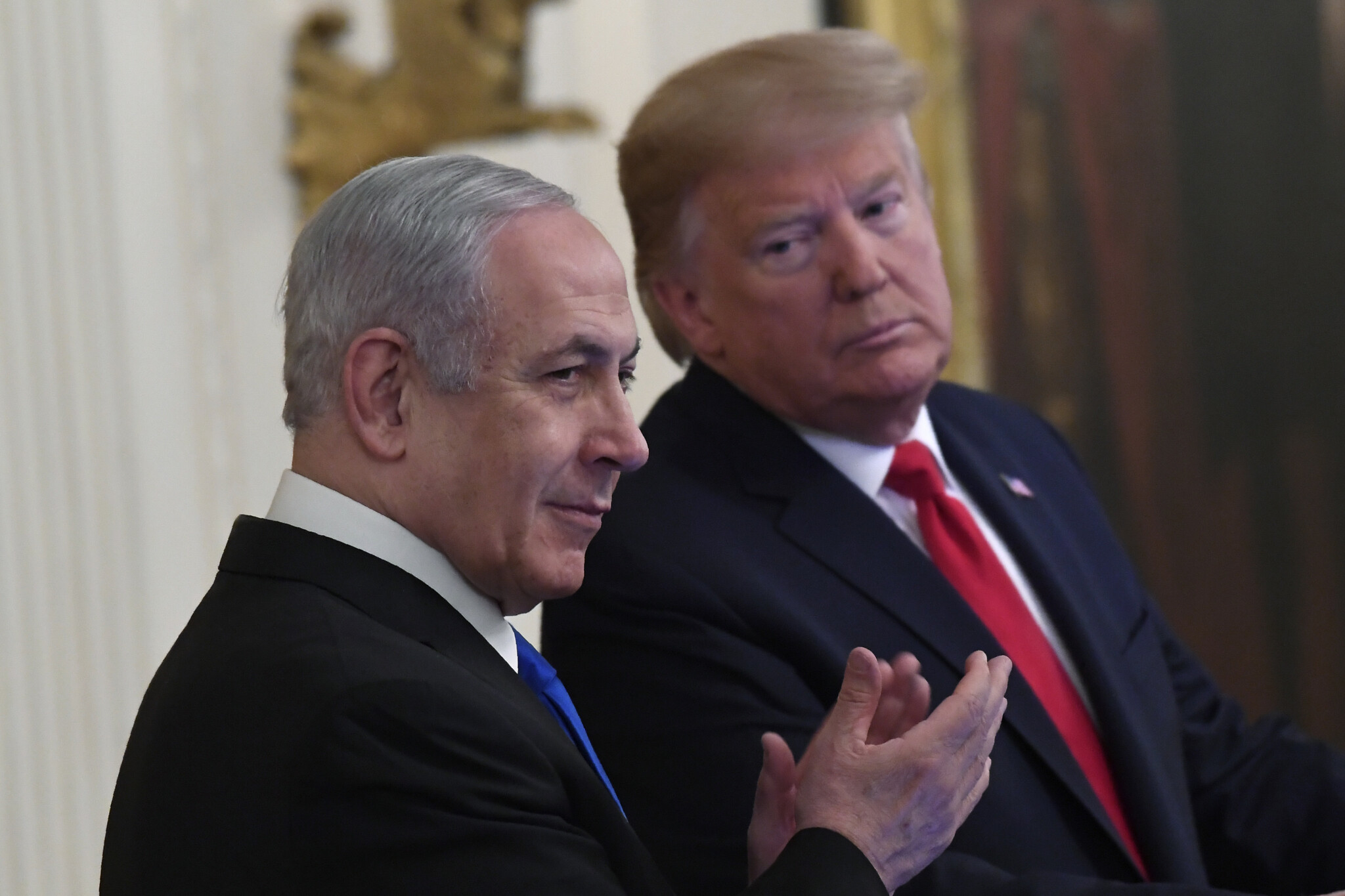
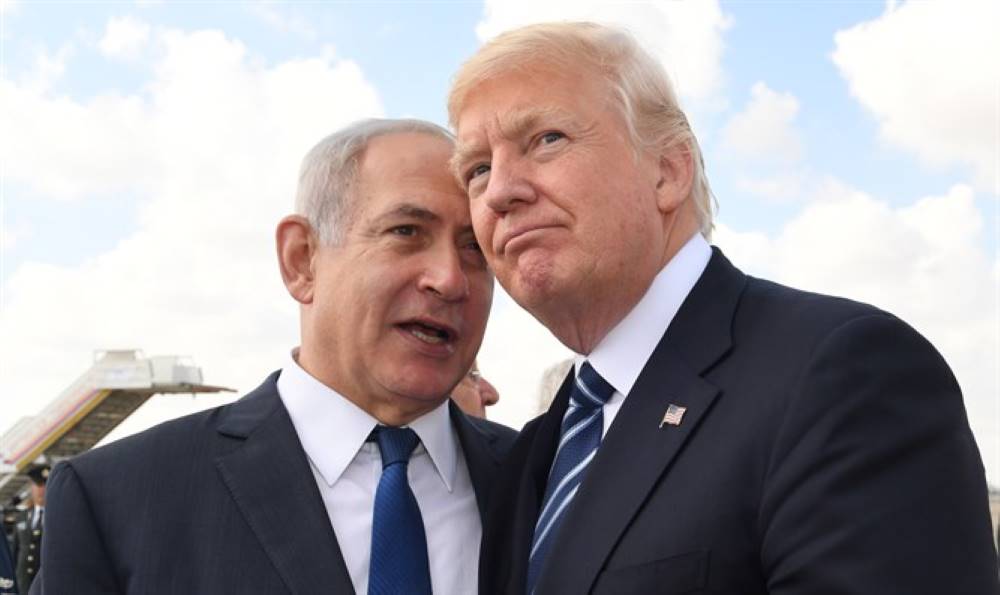
Witkoff’s confirmation, delivered during a public appearance alongside President Trump at a high-profile golf tournament in Florida, signals that despite escalating rhetoric and military posturing, diplomatic channels remain open. Yet the brevity of his remark—“We’re in conversation”—belies the complexity and uncertainty that continue to define the engagement between Washington and Tehran.
The setting in which Witkoff’s statement emerged was itself emblematic of the unusual juxtaposition of diplomacy and public spectacle that has characterized much of the current administration’s approach. Appearing at the PGA Cadillac Championship at the Doral golf club, Witkoff was approached by journalists seeking clarity on the status of negotiations.
As detailed by Israel National News, the envoy’s succinct acknowledgment came shortly after Iranian officials indicated that they were reviewing a formal response from the United States to Tehran’s latest proposal. The timing of these parallel disclosures suggests a synchronized, albeit cautious, effort by both sides to signal engagement without committing to substantive concessions.
The brevity of Witkoff’s comment, however, should not be mistaken for a lack of significance. In the context of a conflict marked by mutual distrust and competing narratives, even a minimal affirmation of dialogue represents a noteworthy development.
The current round of discussions builds upon earlier efforts to establish a framework for negotiation. As Israel National News has reported, Witkoff, alongside Jared Kushner, participated in an initial series of talks with Iranian representatives in Oman earlier this year.
Those discussions, while groundbreaking in their directness, ultimately failed to produce a tangible agreement. In subsequent remarks, Witkoff characterized the Iranian position as intransigent, noting that Tehran appeared more interested in asserting its capabilities than in pursuing compromise. He recounted claims by Iranian officials regarding their capacity to develop multiple nuclear weapons, a disclosure that further complicated the diplomatic landscape.
The collapse of those early talks set the stage for a more circuitous approach to negotiation, with indirect communication channels serving as the primary conduit for dialogue in the months that followed.
Efforts to revive direct engagement encountered an abrupt setback when a planned visit by Witkoff and Kushner to Pakistan—intended as a venue for renewed talks—was unexpectedly canceled by President Trump. The decision, reported at the time by Israel National News, underscored the fluidity and unpredictability of the administration’s diplomatic strategy.
In the wake of that cancellation, negotiations reverted to indirect exchanges, mediated through intermediaries and characterized by a series of proposals and counterproposals. The latest Iranian submission, now under review by Washington, represents the most recent iteration of this ongoing process.
Despite the continuation of dialogue, the prospects for a near-term resolution appear uncertain. President Trump has adopted a notably skeptical stance toward Iran’s latest proposal, expressing doubts about its adequacy and signaling a reluctance to accept terms that he perceives as insufficient.
“I will soon be reviewing the plan that Iran has just sent to us, but can’t imagine that it would be acceptable,” Trump stated in a public message, as cited by Israel National News. His remarks framed the proposal within a broader historical context, emphasizing what he described as decades of Iranian actions that, in his view, necessitate a more substantial reckoning.
The President’s subsequent comments to journalists reinforced this position. When asked about the possibility of renewed military action, he declined to rule it out, stating that such measures remain “a possibility.” This dual messaging—engagement paired with implicit threat—reflects a strategy that seeks to maintain pressure while preserving the option of escalation.
The ambiguity surrounding the U.S. response was further clarified in a subsequent interview, in which Trump declared the Iranian proposal “not acceptable.” This unequivocal assessment, reported by Israel National News, effectively resets the negotiating process, signaling that significant revisions would be required for any agreement to move forward.
At the same time, Trump expressed confidence in the broader trajectory of the conflict, asserting that “the campaign is progressing very well.” This juxtaposition of diplomatic rejection and strategic optimism highlights the administration’s belief that its current approach—combining military pressure with selective engagement—is yielding favorable results.
The interplay between diplomacy and coercion that defines the current U.S. approach is rooted in a complex strategic calculus. On one hand, maintaining open lines of communication with Iran is essential to preventing unintended escalation and exploring avenues for de-escalation. On the other, the administration appears determined to leverage its military and economic advantages to extract concessions.
As the Israel National News report observed, this dual-track strategy reflects a broader effort to balance immediate tactical considerations with longer-term strategic objectives. The challenge lies in navigating the inherent tensions between these goals, particularly in an environment marked by deep-seated mistrust.
The outcome of the current negotiations will have far-reaching implications not only for the United States and Iran but also for the broader Middle East and the international community. The conflict has already disrupted key economic and security dynamics, with ripple effects extending to global energy markets and geopolitical alliances.
The continued uncertainty surrounding the Strait of Hormuz—a critical artery for global oil shipments—has heightened concerns about the potential for further disruption. In this context, the success or failure of diplomatic efforts will play a crucial role in shaping the trajectory of the crisis.
Despite the challenges, the confirmation of ongoing dialogue offers a measure of cautious optimism. The fact that both sides are engaged, even indirectly, suggests a recognition of the need to explore alternatives to sustained conflict.
Yet significant obstacles remain. The divergence between the positions of Washington and Tehran appears substantial, and the absence of a mutually acceptable framework for negotiation continues to impede progress.
As the Israel National News report emphasized, the path to a durable resolution is likely to be protracted and fraught with setbacks. The current moment, therefore, should be understood not as a breakthrough but as a tentative step within a much longer process.
The confirmation by Steve Witkoff that the United States and Iran are “in conversation” encapsulates the paradox of the current situation: a war that persists even as negotiations continue, a dialogue that unfolds in the shadow of potential escalation.
President Trump’s rejection of Iran’s latest proposal underscores the difficulty of reconciling competing demands and expectations. Yet the continuation of talks, however limited, suggests that both sides remain open to the possibility of a negotiated outcome.
In the intricate and often unpredictable theater of international diplomacy, such moments of engagement are both fragile and essential. As events continue to unfold, the world will watch closely, aware that the stakes extend far beyond the immediate conflict to encompass the broader contours of regional and global stability.
In the measured coverage provided by Israel National News, one theme emerges with clarity: the outcome of these negotiations will not only determine the fate of the current conflict but also shape the future of diplomacy in one of the world’s most volatile regions.



