




















|
Getting your Trinity Audio player ready...
|
By: Yisroel David
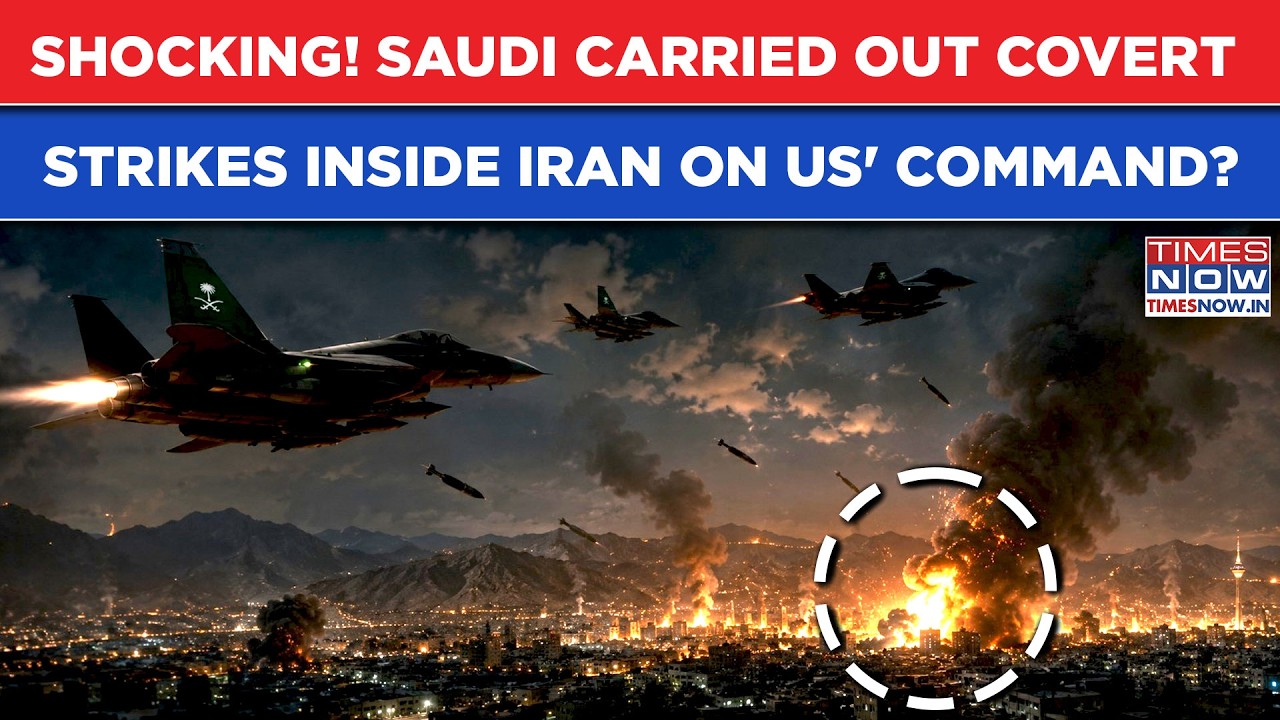
In a revelation that has dramatically reshaped the understanding of the ongoing Middle East conflict, newly disclosed intelligence indicates that Saudi Arabia quietly launched a series of retaliatory airstrikes against Iran earlier this year—an unprecedented move that underscores a profound shift in the strategic posture of the kingdom. As reported on Tuesday by Reuters and further contextualized by The Algemeiner, the covert operations mark the first known instance of direct Saudi military action on Iranian soil, signaling a notable departure from Riyadh’s traditionally restrained approach to its long-standing regional rival.
According to two Western officials briefed on the matter and corroborated by two Iranian officials, the Saudi Air Force conducted the strikes in late March as part of what one official described as “tit-for-tat strikes in retaliation for when Saudi [Arabia] was hit.” While the precise targets remain unconfirmed, the operations themselves carry immense geopolitical significance, illuminating the extent to which the conflict—initially sparked by United States and Israeli airstrikes on Iran on February 28—has expanded into a far broader and more volatile regional confrontation.
Neither Riyadh nor Tehran has officially acknowledged the strikes. A senior Saudi foreign ministry official, when pressed for comment, declined to directly confirm the operations, instead reiterating the kingdom’s broader strategic doctrine: “We reaffirm Saudi Arabia’s consistent position advocating de-escalation, self-restraint, and the reduction of tensions in pursuit of the stability, security, and prosperity of the region and its people.” Similarly, Iran’s foreign ministry offered no response to inquiries, maintaining a conspicuous silence that has only fueled speculation about the scope and implications of the clandestine engagement.
Yet the absence of official confirmation has done little to obscure the underlying reality: Saudi Arabia has crossed a threshold that it had long avoided, transitioning from a posture of defensive reliance on external security guarantees to one of direct military assertiveness. For decades, the kingdom’s defense strategy was heavily anchored in its robust alliance with the United States, whose military presence in the Gulf served as a deterrent against Iranian aggression. However, as Reuters has reported, the protracted 10-week war exposed vulnerabilities in that security architecture, with Iranian missiles and drones successfully penetrating defenses and striking targets across the region.
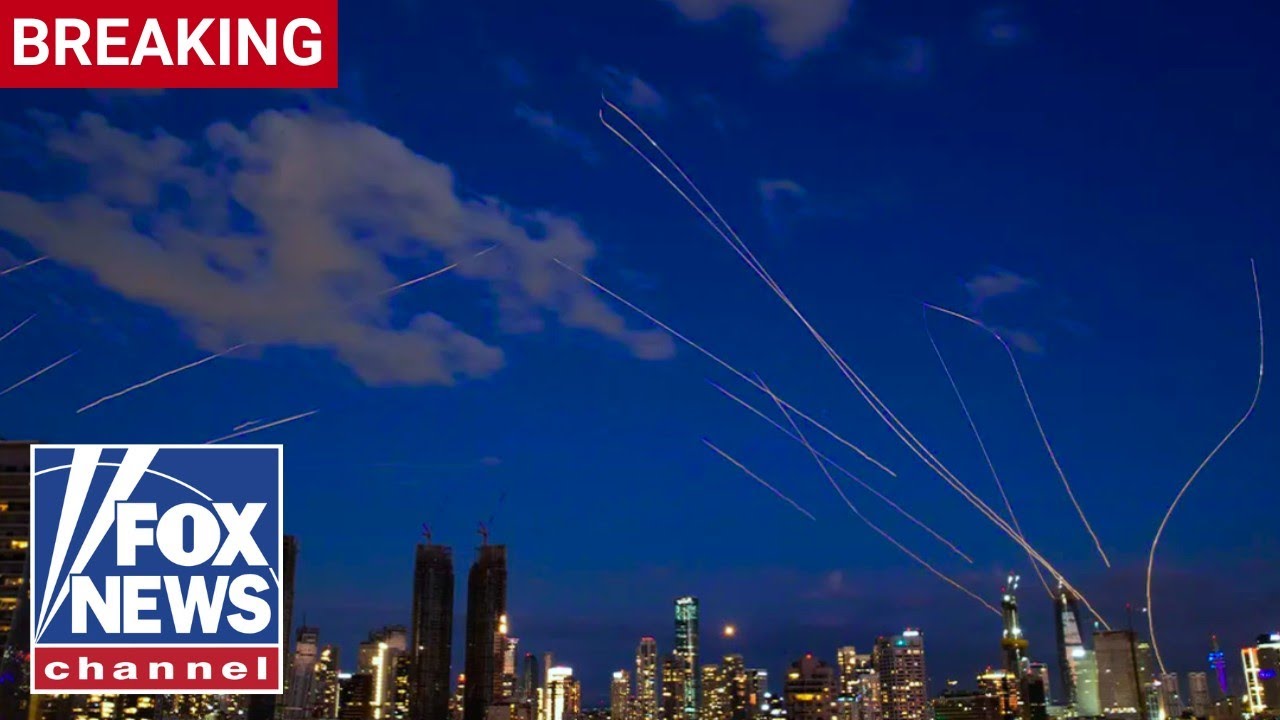
The scale and intensity of Iranian attacks during this period were staggering. Since the onset of hostilities, Tehran launched missiles and drones at all six Gulf Cooperation Council states, targeting not only United States military installations but also critical civilian infrastructure, including airports and oil facilities. The closure of the Strait of Hormuz—a vital artery for global energy shipments—further exacerbated the crisis, sending shockwaves through international markets and underscoring the far-reaching consequences of the conflict.
Within this context, Saudi Arabia’s decision to retaliate directly against Iran appears less an act of escalation than a calculated assertion of deterrence. As one Western official noted, the strikes were a measured response designed to impose costs on Tehran while avoiding an uncontrolled spiral into full-scale war. This interpretation is echoed by analysts cited in both Reuters and The Algemeiner, who view the episode as indicative of a broader recalibration in Gulf security policy.
The Saudi actions were not undertaken in isolation. The United Arab Emirates, another key Gulf power, also reportedly conducted strikes against Iranian targets, as detailed in separate reporting. Together, these developments reveal a conflict whose true dimensions have remained largely obscured from public view—a shadow war in which Gulf monarchies, long accustomed to absorbing Iranian pressure, have begun to respond in kind.
Despite this convergence in military activity, the strategic approaches of Riyadh and Abu Dhabi have diverged in notable ways. The UAE has adopted a more overtly hawkish stance, emphasizing punitive measures and maintaining a relatively limited diplomatic engagement with Tehran. Saudi Arabia, by contrast, has sought to balance its retaliatory actions with sustained diplomatic outreach, maintaining communication channels with Iranian officials even at the height of hostilities.
This dual-track strategy—combining calibrated military force with persistent diplomacy—appears to have yielded tangible results. According to the sources cited by Reuters, Saudi Arabia informed Iran in advance of its strikes, a move that was followed by intensive diplomatic engagement and explicit warnings of further retaliation. This sequence of events ultimately culminated in an informal understanding between the two adversaries to de-escalate tensions.
Ali Vaez, director of the Iran Project at the International Crisis Group, characterized this dynamic as a pragmatic acknowledgment of shared interests. Retaliatory strikes followed by de-escalation, he said, would “show pragmatic recognition on both sides that uncontrolled escalation carries unacceptable costs.” Crucially, Vaez emphasized that such an arrangement reflects not mutual trust but rather “a shared interest in imposing limits on confrontation before it spiraled into a wider regional conflict.”
The timeline of events lends credence to this interpretation. The informal de-escalation agreement took effect in the days leading up to April 7, when Washington and Tehran reached a broader ceasefire in their own confrontation. One Iranian official confirmed the existence of the understanding, stating that it was intended to “cease hostilities, safeguard mutual interests, and prevent the escalation of tensions.”
The impact of this de-escalation was immediately evident in the pattern of attacks. According to a Reuters tally of Saudi defense ministry statements, the number of drone and missile strikes targeting the kingdom fell sharply—from more than 105 incidents between March 25 and March 31 to just over 25 in the period from April 1 to April 6. This dramatic reduction suggests that Tehran took deliberate steps to curb direct attacks on Saudi territory, even as allied militias in Iraq and elsewhere continued to operate.
Indeed, Western intelligence assessments indicated that projectiles launched in the final days before the ceasefire originated primarily from Iraqi soil rather than Iran itself, pointing to a nuanced strategy in which Tehran sought to maintain pressure while avoiding actions that could trigger a renewed Saudi response. Riyadh, for its part, summoned Iraq’s ambassador on April 12 to protest these attacks, signaling its determination to hold regional actors accountable.
The delicate equilibrium achieved through these maneuvers was not without its challenges. On April 7 and April 8, coinciding with the onset of the broader ceasefire, Saudi Arabia reported a fresh wave of 31 drones and 16 missiles targeting its territory. The surge prompted serious consideration within the kingdom of additional retaliatory strikes against both Iran and Iraq, highlighting the fragility of the de-escalation framework.
Amid these tensions, external actors played a stabilizing role. Pakistan, a longstanding ally of Saudi Arabia, deployed fighter jets to the kingdom as a demonstration of support while simultaneously urging restraint. Such interventions underscore the intricate web of alliances and interests that define the regional security landscape.
The broader historical context of Saudi-Iranian relations further illuminates the significance of these developments. For decades, the two powers have been locked in a multifaceted rivalry, rooted in sectarian, ideological, and geopolitical differences. Saudi Arabia, the leading Sunni Arab state, and Iran, the preeminent Shi’ite power, have supported opposing factions in conflicts across the Middle East, from Yemen to Syria and beyond.
A notable thaw in relations occurred in 2023, when a China-brokered agreement facilitated the restoration of diplomatic ties between Riyadh and Tehran. This détente, which included a ceasefire between Saudi Arabia and the Iran-backed Houthi movement in Yemen, raised hopes of a more stable regional order. Yet the events of recent months suggest that underlying tensions remain deeply entrenched.
The strategic calculus guiding Saudi Arabia’s actions was articulated with striking clarity by former intelligence chief Prince Turki al-Faisal in an opinion piece published in Arab News, as cited by Reuters. Reflecting on the kingdom’s approach, he wrote: “When Iran and others tried to drag the kingdom into the furnace of destruction, our leadership chose to endure the pains caused by a neighbor in order to protect the lives and property of its citizens.” The subsequent decision to launch retaliatory strikes, while maintaining a commitment to de-escalation, can be seen as an extension of this philosophy—an effort to balance resilience with resolve.
The weeks leading up to the strikes were marked by escalating tensions and increasingly explicit warnings from Saudi officials. At a press conference in Riyadh on March 19, Foreign Minister Prince Faisal bin Farhan declared that the kingdom “reserved the right to take military actions if deemed necessary.” Just three days later, Saudi Arabia expelled Iran’s military attaché and four embassy staff members, a move widely interpreted as a precursor to more forceful measures.
The convergence of these diplomatic signals and military actions paints a picture of a region in flux, where traditional boundaries between overt and covert conflict are increasingly blurred. As The Algemeiner has emphasized in its coverage, the emergence of direct Saudi strikes on Iranian territory represents a watershed moment—one that may redefine the parameters of engagement between the two rivals.
Looking ahead, the durability of the current de-escalation remains uncertain. While the informal understanding between Riyadh and Tehran has succeeded in reducing immediate hostilities, the underlying drivers of conflict—ranging from ideological rivalry to competing regional ambitions—persist. Moreover, the broader geopolitical environment, shaped by the involvement of global powers and the volatility of energy markets, adds further layers of complexity.
For now, however, the revelations reported by Reuters and analyzed by The Algemeiner offer a rare glimpse into the hidden dynamics of a conflict that has largely unfolded beyond public scrutiny. They reveal a Middle East in which traditional alignments are shifting, new forms of deterrence are emerging, and the line between war and diplomacy is increasingly difficult to discern.
In this evolving landscape, Saudi Arabia’s covert strikes on Iran stand as both a symbol and a signal—a symbol of the kingdom’s growing willingness to assert itself militarily, and a signal that the region’s strategic equilibrium is entering a new and uncertain phase.