
















|
Getting your Trinity Audio player ready...
|
By: Max Schleifer
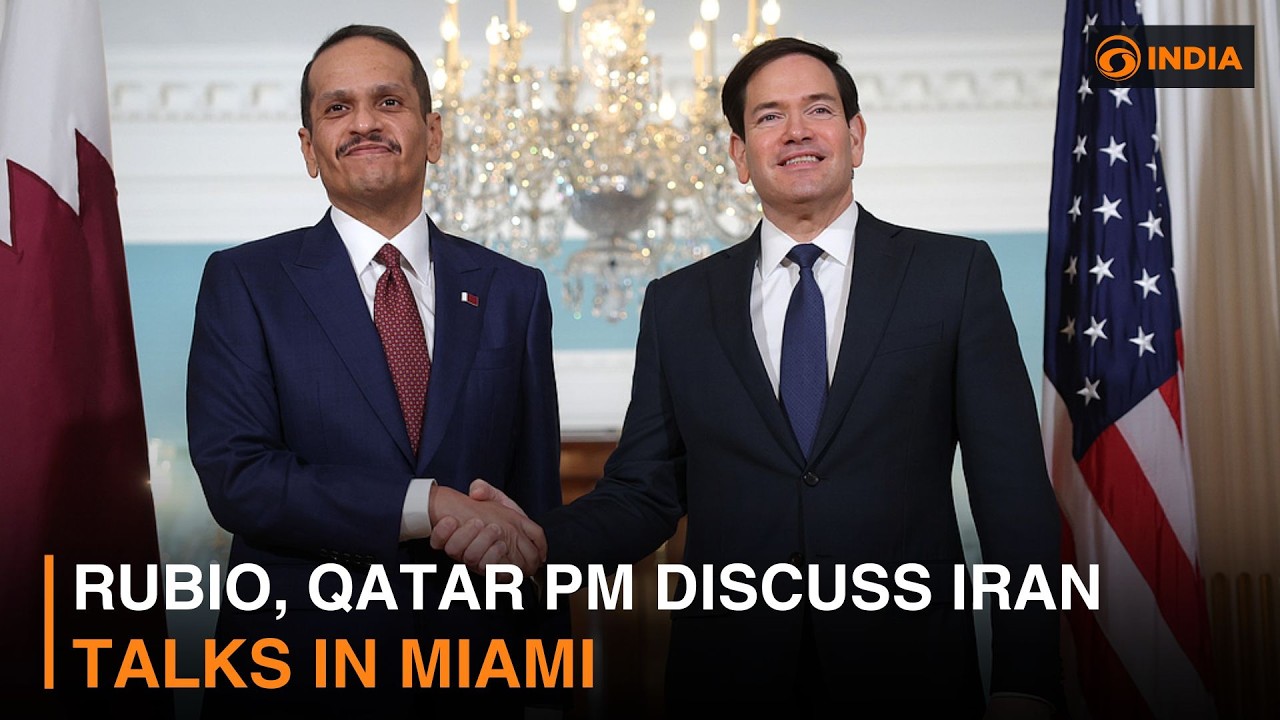
In a moment of acute geopolitical consequence, the United States has intensified its diplomatic engagement across the Middle East, with Secretary of State Marco Rubio holding a high-level meeting with Mohammed bin Abdulrahman Al Thani as Washington continues to press for a negotiated framework to end the ongoing conflict with Iran. The meeting, confirmed in an official State Department statement and reported on Sunday by Israel National News, underscores the central role of regional intermediaries in what has become one of the most delicate diplomatic undertakings in recent years.
The talks, which reportedly took place in Miami and included White House envoy Steve Witkoff, form part of a broader, multi-layered effort to secure a memorandum of understanding that would halt hostilities while laying the groundwork for more comprehensive negotiations. Yet even as these diplomatic channels expand, uncertainty remains high, with U.S. officials still awaiting Iran’s formal response to the latest proposal.
According to the State Department’s account, Rubio’s meeting with Al Thani focused on reinforcing bilateral cooperation while addressing the broader regional crisis. “The Secretary expressed appreciation for Qatar’s partnership on a range of issues,” the statement noted, as cited by Israel National News.
The discussions extended beyond immediate crisis management to encompass long-term strategic considerations. “The Secretary and the Foreign Minister also discussed U.S. support for Qatar’s defense, and the importance of continued close coordination to deter threats and promote stability and security across the Middle East,” the statement added.
This language reflects Washington’s recognition of Qatar’s evolving role as both a security partner and a diplomatic intermediary. Over the past decade, Doha has cultivated a reputation for maintaining lines of communication with actors across the political spectrum, positioning itself as a valuable conduit in complex negotiations.
While Pakistan has formally served as the principal mediator between Washington and Tehran since the onset of the conflict, Israel National News reported that Qatar has been operating in a parallel, less visible capacity. According to a report by Axios cited by Israel National News, U.S. officials increasingly regard Qatari interlocutors as particularly effective in navigating the intricacies of Iranian diplomacy.
Two sources familiar with the discussions indicated that the Miami meeting centered on advancing a “one-page memo” intended to serve as a preliminary agreement to end the war. This document, while limited in scope, is designed to establish a framework for more detailed and binding negotiations in subsequent phases.
“The mediators are urging both parties to de-escalate and focus on getting a deal,” one source told Axios, according to Israel National News. The statement captures the urgency felt by regional stakeholders, many of whom view the current moment as a narrow window of opportunity to avert further escalation.
The mediation effort is not confined to a single country. Israel National News highlighted that a coalition of regional actors—including Qatar, Pakistan, Egypt, Turkey, and Saudi Arabia—is working in tandem to facilitate dialogue between the United States and Iran.
This coordinated approach reflects a shared interest among Middle Eastern states in stabilizing the region and preventing the conflict from expanding. Each of these countries brings distinct capabilities and relationships to the table, creating a complex but potentially effective network of diplomatic channels.
The involvement of multiple mediators also underscores the high stakes of the negotiations. With the Strait of Hormuz serving as a critical artery for global energy supplies, any prolonged disruption could have far-reaching economic and geopolitical consequences.
Even as diplomatic efforts intensify, U.S. officials have maintained a firm stance on key issues. Speaking on Friday, Rubio made clear that Washington expects a substantive response from Tehran in the near term.
“We should know something today. I mean, we’re expecting a response from them,” Rubio said, as reported by Israel National News.
At the same time, he emphasized the importance of engaging in a “serious process of negotiation,” signaling that the United States remains committed to a diplomatic resolution, provided that its core concerns are addressed.
Rubio also issued a pointed warning regarding Iran’s reported ambitions to exert control over international waterways. “That would be very problematic. That would actually be unacceptable,” he stated, according to the Israel National News report. “The normalizing of their controlling of international waterways is both illegal and it’s just something that’s unacceptable.”
His remarks highlight a central tenet of U.S. policy: the preservation of freedom of navigation in international waters, a principle that Washington views as non-negotiable.
President Trump has likewise underscored the importance of Iran’s forthcoming response. Speaking to reporters, he indicated that the administration is closely monitoring the situation.
“We’re still waiting for Iran’s response,” Trump said, according to the Israel National News report. When asked whether Tehran might be deliberately delaying the process, he responded, “We’ll find out soon enough.”
The President’s comments reflect both anticipation and skepticism, a duality that has characterized much of Washington’s deal with Tehran. While expressing openness to a negotiated outcome, U.S. officials have repeatedly questioned the reliability of Iranian commitments.
For its part, Iran has adopted a measured but defiant tone. Esmaeil Baghaei, spokesperson for the Iranian Foreign Ministry, indicated that Tehran is still reviewing the U.S. proposal.
“Iran’s response to the U.S. proposal to end the war is still under review,” Baghaei said, as reported by Israel National News. He added that the country would announce its position once a conclusion has been reached.
Significantly, Baghaei emphasized that Iran does not consider itself bound by external timelines. “It is not affected by deadlines or ultimatums,” he stated, signaling a refusal to be pressured into a decision.
This posture aligns with Iran’s broader negotiating strategy, which often involves protracted deliberation and incremental concessions. However, it also introduces additional uncertainty into the process, particularly as regional tensions remain elevated.
The current diplomatic effort represents a delicate balancing act, with both sides seeking to secure their interests while avoiding a broader escalation. The proposed memorandum of understanding, though limited in scope, could serve as a critical first step toward de-escalation.
Yet the success of this initiative hinges on several variables, including Iran’s willingness to engage in good faith and the ability of mediators to bridge significant gaps in perception and priorities.
The Israel National News report highlighted the complexities of this process, noting that even a preliminary agreement would leave many contentious issues unresolved. These include questions related to Iran’s nuclear program, its regional activities, and the broader security architecture of the Middle East.
The outcome of the negotiations will have profound implications not only for the United States and Iran but also for the broader region. Countries such as Israel, Saudi Arabia, and the United Arab Emirates are closely monitoring developments, aware that any agreement could reshape the strategic landscape.
For Israel in particular, the stakes are especially high. The prospect of an agreement that fails to address core security concerns—such as Iran’s missile capabilities or its support for proxy groups—remains a source of significant apprehension.
At the same time, the involvement of multiple mediators offers a measure of reassurance that regional interests are being taken into account.
As the United States awaits Iran’s response, the diplomatic process stands at a decisive juncture. The meeting between Rubio and Al Thani underscores the importance of sustained engagement and the potential for creative solutions in even the most challenging circumstances.
Whether the current initiative will yield a breakthrough remains uncertain. What is clear, however, is that the coming days will be critical in determining the trajectory of the conflict—and the future of stability in one of the world’s most volatile regions.
For now, the international community watches closely, aware that the decisions made in this moment could reverberate far beyond the immediate crisis, shaping the contours of global politics for years to come.



