
















|
Getting your Trinity Audio player ready...
|
By: Tzirel Rosenblatt
In a development that underscores both the urgency and fragility of ongoing diplomatic efforts, Iran has submitted a counterproposal to the United States aimed at ending the current phase of conflict in the Middle East, even as hostilities continue to flare across the Gulf. The proposal, which seeks to narrow negotiations to an immediate cessation of violence and the reopening of the Strait of Hormuz, has introduced a new dimension into an already intricate geopolitical contest—one marked by competing priorities, escalating military pressure, and a widening circle of regional stakeholders.
According to a report on Sunday by The Telegraph, Tehran’s latest initiative represents a deliberate recalibration of its negotiating posture. Rather than engaging immediately on the contentious issue of its nuclear program, Iran is advocating for a phased approach that prioritizes de-escalation and maritime stability before addressing longer-term strategic disputes.
Iran’s counterproposal, as relayed through the state-run IRNA news agency and cited by The Telegraph, centers on a two-step process. First, both parties would agree to a memorandum of understanding designed to halt all military activity and restore freedom of navigation through the Strait of Hormuz. Only after this initial phase would negotiations proceed to a broader agreement encompassing Iran’s nuclear ambitions.
This approach stands in contrast to the 14-point plan advanced by President Trump, which called for simultaneous progress on reopening the Strait and securing a comprehensive nuclear agreement. Tehran’s insistence on sequencing reflects its determination to decouple immediate security concerns from the more complex and politically sensitive issue of nuclear capabilities.
Sources familiar with the discussions told Reuters, as cited by The Telegraph, that both sides are contemplating a preliminary framework that would “halt all attacks and reopen the Strait” as a prerequisite for deeper engagement. However, as of Sunday afternoon, the United States had not yet issued a formal response to Iran’s proposal.
Even as diplomatic channels remain active, the ceasefire between the United States and Iran has come under increasing pressure. The Telegraph reported that the truce was tested once again when Iranian forces launched two drones toward the United Arab Emirates, while an Abu Dhabi-flagged vessel was struck in Qatari waters.
The UAE confirmed that its air defense systems intercepted the incoming drones, marking the third such incident within less than a week. These repeated attacks have raised serious concerns about the durability of the ceasefire and the willingness of parties to adhere to its terms.
Qatar’s foreign ministry issued a strongly worded condemnation of the strike on the cargo vessel, describing it as a “flagrant violation of the principle of freedom of navigation” and warning against what it termed a “dangerous and unacceptable escalation.”
Notably, while Qatar has played a central role as a mediator, it stopped short of explicitly attributing responsibility to Iran, reflecting the delicate balance it must maintain in its diplomatic efforts.
The evolving crisis has drawn in a constellation of regional actors seeking to prevent further escalation. Qatar, Pakistan, Saudi Arabia, and Egypt have all been actively engaged in efforts to broker a settlement, with each country leveraging its unique relationships and diplomatic channels.
Pakistan has served as the primary mediator since the outset of the conflict. However, officials within the Trump administration have increasingly turned to Qatar as a particularly effective interlocutor with Tehran. The Telegraph highlighted that Qatari officials have been working “behind the scenes” to facilitate dialogue, even as formal mediation remains under Pakistan’s purview.
In a series of high-level meetings, Mohammed bin Abdulrahman Al Thani engaged with key U.S. figures, including Vice President JD Vance, Secretary of State Marco Rubio, and special envoy Steve Witkoff. These discussions, held in Washington and Miami, focused on advancing a framework for peace.
While in Miami, Al Thani also reportedly contacted Saudi Arabia’s foreign minister to coordinate regional efforts, underscoring the importance of a unified approach among Gulf states.
Even as it engages in diplomacy, Iran has adopted a posture of overt deterrence. Iranian military officials have issued a series of warnings aimed at both the United States and regional actors.
An Iranian army spokesman declared that any country attempting to enforce U.S. sanctions would “face difficulties in passing through the Strait of Hormuz,” a statement cited by The Telegraph that highlights the strategic leverage Tehran seeks to exert over this critical maritime corridor.
The same spokesman warned that the United States could face “surprising options” in the event of further military action, asserting that Iran now possesses “more advanced and modern military equipment, new methods of warfare, and, most importantly, new arenas of conflict.”
Brigadier General Majid Mousavi reinforced this message with a stark declaration: “Drones are locked onto enemy targets and awaiting orders to fire.”
These statements reflect a broader strategy of calibrated escalation, designed to strengthen Iran’s negotiating position while deterring potential adversaries.
The repercussions of the conflict are being felt across a widening geographical scope. In addition to incidents in the Strait of Hormuz, The Telegraph reported that a drone strike targeted an Iranian Kurdish opposition camp near Erbil in Iraq.
Meanwhile, Kuwait’s defense ministry announced that its armed forces had detected “a number of hostile drones” within its airspace, further illustrating the regional spillover of hostilities.
These developments underscore the danger of miscalculation in a densely interconnected security environment, where actions in one theatre can rapidly reverberate across others.
The United Arab Emirates, despite being a frequent target of Iranian strikes, has thus far refrained from direct military retaliation. Instead, it has pursued a strategy of economic and administrative measures aimed at exerting pressure on Iranian nationals within its borders.
The Telegraph reported that Emirati authorities have cancelled visas and frozen assets belonging to Iranian residents. These actions have had significant consequences for individuals and businesses.
“With work permits cancelled, people can no longer use their own assets,” a 40-year-old Iranian man told Iran International, as cited by The Telegraph. “A food wholesaler’s store has been shut down and, because he no longer has a business license, he cannot even sell the goods sitting in his warehouse.”
This approach reflects a deliberate effort to avoid further military escalation while nonetheless imposing tangible costs.
The conflict has also had profound implications for global energy markets and regional alliances. In a notable move, Abu Dhabi recently announced its decision to withdraw from OPEC, a step that could enable it to increase oil and gas production independently.
As one of the region’s largest energy producers, the UAE’s decision carries significant weight, particularly at a time when disruptions in the Strait of Hormuz have already contributed to rising global energy prices.
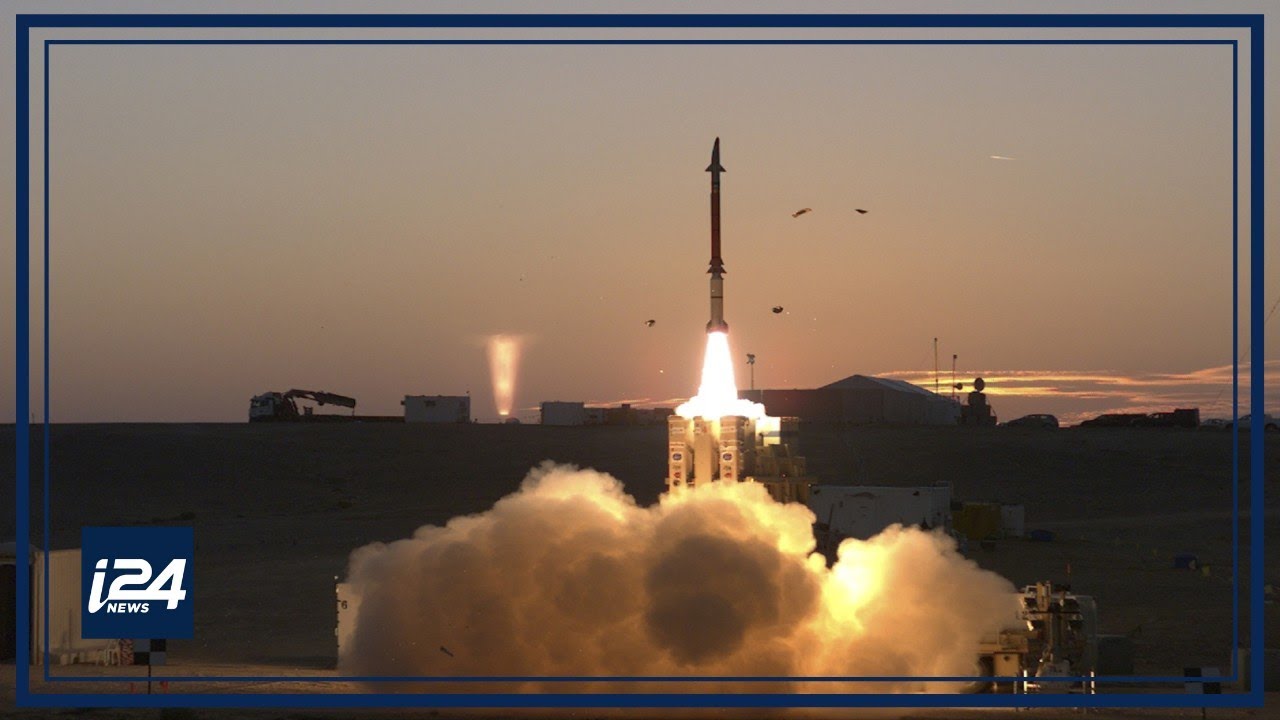
At the same time, the UAE has deepened its cooperation with Israel following its participation in the Abraham Accords in 2020. The Telegraph reported that Israel deployed air defense systems to the UAE at the outset of the conflict, providing critical support in intercepting missile and drone attacks.
This collaboration highlights the evolving strategic alignment between Israel and Gulf states, driven by shared security concerns.
The current situation represents a precarious equilibrium between ongoing military confrontation and sustained diplomatic engagement. On one hand, the exchange of attacks and counterattacks continues to test the limits of the ceasefire. On the other, the willingness of both sides to entertain proposals for de-escalation suggests that a path toward resolution remains open.
The Telegraph’s reporting emphasized the complexity of this balance, noting that even minor incidents have the potential to derail negotiations. The challenge for mediators is to maintain momentum toward a deal while managing the immediate risks of escalation.
As the United States deliberates Iran’s counterproposal, the stakes could scarcely be higher. The outcome of these negotiations will not only determine the trajectory of the current conflict but also shape the future of security and stability across the Middle East.
Iran’s phased approach offers a potential pathway to de-escalation, but it also raises questions about the sequencing and scope of any eventual agreement. For Washington, the challenge lies in balancing the urgency of reopening the Strait of Hormuz with the strategic imperative of addressing Iran’s broader capabilities.
In the meantime, the region remains on edge, with each new incident serving as a reminder of the fragility of the current truce. As The Telegraph report highlighted, the interplay between diplomacy and conflict in this crisis is both intricate and unforgiving.
Whether the coming days will bring a breakthrough or further escalation remains uncertain. What is clear is that the decisions made in this moment will reverberate far beyond the immediate theater, influencing the geopolitical landscape for years to come.



