
















|
Getting your Trinity Audio player ready...
|
Digital Frontlines Ignite: Iran Threatens Global Tech Titans as War Continues and Alliances Fracture
By: Fern Sidman
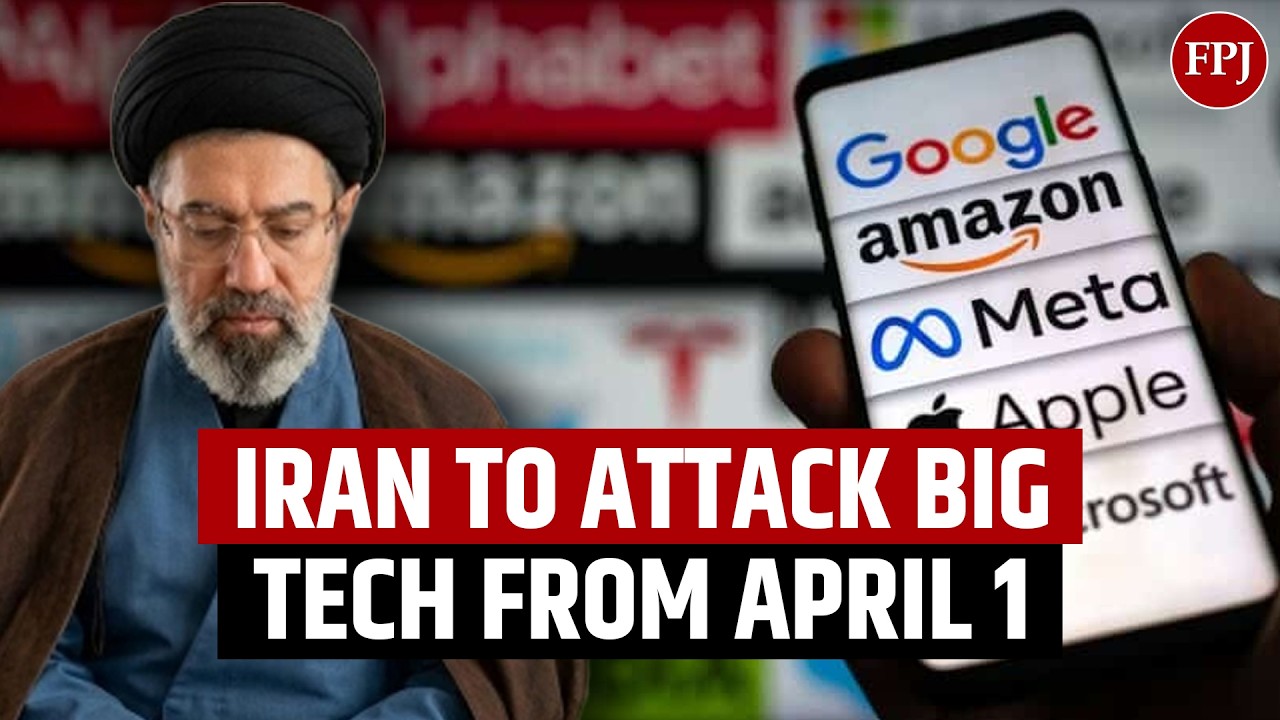
In a dramatic escalation that underscores the increasingly unconventional dimensions of modern warfare, Iran’s Islamic Revolutionary Guard Corps has issued a sweeping and unprecedented threat against some of the world’s most influential technology companies. As reported on Tuesday by Israel National News, the warning signals a potentially dangerous expansion of the conflict beyond traditional military targets into the realm of global commerce, digital infrastructure, and civilian enterprise.
The Revolutionary Guard’s declaration, which explicitly named eighteen major multinational corporations—including Apple, Google, Intel, Microsoft, and Meta—marks a striking evolution in Tehran’s retaliatory posture. These firms, long regarded as pillars of the global digital economy, now find themselves cast as alleged participants in covert operations, specifically accused by Iranian authorities of complicity in assassination activities within the country.
According to the report at Israel National News, the Iranian warning was not merely rhetorical but operationally specific. The Revolutionary Guard announced that beginning at 8 p.m. Tehran time on Wednesday, facilities associated with these companies could be targeted in response to what it described as “terrorist plans” carried out on Iranian soil.
The language of the statement was stark and unambiguous. Employees of the named corporations were urged to evacuate their workplaces “to save their lives,” while residents living within a one-kilometer radius of such facilities across the Middle East were advised to relocate immediately. This expansive geographic framing suggests that the threat is not confined to Iran itself but extends to any regional footprint maintained by these corporations.
Such warnings represent a profound departure from traditional norms of conflict, wherein military and strategic assets constitute the primary targets. By implicating private sector entities—particularly those integral to global communication and information systems—Iran appears to be signaling a willingness to broaden the battlefield into domains that were previously considered peripheral to kinetic warfare.
The inclusion of leading technology firms in Iran’s crosshairs reflects the increasingly blurred boundaries between civilian infrastructure and strategic capability. In an era defined by digital interconnectedness, companies that manage data, communications, and technological innovation occupy a unique position at the intersection of economic power and geopolitical influence.
As the Israel National News report noted, the Iranian allegations—though unverified—suggest a perception within Tehran that technological platforms and expertise are being leveraged in support of intelligence operations. Whether or not these claims hold merit, their articulation highlights a broader reality: that the tools of the digital age are now inextricably linked to the conduct of modern warfare.
This development raises profound questions about the vulnerability of global corporations in conflict zones. Unlike traditional military assets, these companies operate across multiple jurisdictions, often maintaining facilities and personnel in regions characterized by varying degrees of stability. The prospect of targeted attacks against such entities introduces a new layer of risk, not only for the companies themselves but for the broader ecosystems they support.
Against this backdrop of escalating threats, President Donald Trump has articulated a forceful and unapologetic stance regarding the ongoing conflict. In remarks cited by Israel National News, Trump characterized the military campaign against Iran in unequivocal terms, asserting that American forces are “obliterating” the regime’s capabilities.
“We’re not going to be there too much longer,” he stated, suggesting that the current phase of operations is approaching its culmination. Yet this assertion was tempered by an acknowledgment that additional objectives remain. “We have more work to do in terms of killing their offensive capability,” he added, indicating that the administration remains committed to ensuring the comprehensive degradation of Iran’s military potential.
Central to Trump’s strategic framework is the prevention of Iranian nuclear armament. He reiterated that this objective supersedes all others, describing it as his “sole function” in the conflict. “They’re not going to have a nuclear weapon,” he declared, reinforcing a policy that has long defined American engagement with Iran.
While the immediate focus remains on military operations and retaliatory threats, the broader economic ramifications of the conflict are increasingly coming into view. The Strait of Hormuz, a critical artery for global energy supplies, has emerged as a focal point of concern.
Trump, however, appeared to downplay the strategic centrality of the waterway, expressing confidence that it would “automatically reopen” with the conclusion of hostilities. Instead, he emphasized the primacy of neutralizing Iran’s nuclear ambitions, suggesting that other issues would resolve themselves in due course.
This perspective, as highlighted by Israel National News, reflects a prioritization of long-term security objectives over immediate economic considerations. Yet it also raises questions about the potential for disruption in global energy markets, particularly if the conflict persists or escalates further.
Compounding the complexity of the situation are emerging tensions among Western allies, particularly in relation to their respective roles in the conflict. Trump’s pointed criticism of France illustrates the fragility of international cohesion in the face of divergent national interests.
In a sharply worded statement, the President condemned France’s decision to deny overflight rights to aircraft carrying military supplies to Israel, describing the country as “very unhelpful.” He further indicated that such actions would not be forgotten, signaling a potential recalibration of diplomatic relations.
Israel’s response has been equally decisive. As reported by Israel National News, the Israeli government has announced a suspension of all defense procurement from France, citing what it characterized as a “hostile” posture during a “necessary and just war.” This move, driven by Defense Minister Israel Katz, reflects a broader effort to reduce reliance on external suppliers and to prioritize domestic production.
These developments underscore the challenges inherent in maintaining a unified front among allies with differing strategic priorities and domestic considerations. They also highlight the potential for the conflict to reshape longstanding partnerships and alliances.
Trump’s remarks extended beyond France to encompass a broader critique of allied participation in the conflict. In a particularly striking statement, he urged the United Kingdom to take independent action to secure access to the Strait of Hormuz, suggesting that reliance on American intervention may no longer be sustainable.
“You’ll have to start learning how to fight for yourself,” he declared, emphasizing a vision of international relations characterized by greater self-reliance among allies. This perspective, as noted by Israel National News, reflects a broader shift in American foreign policy, one that prioritizes national interests while encouraging partners to assume greater responsibility for their own security.
The convergence of military escalation, technological vulnerability, and diplomatic tension has created a volatile and unpredictable landscape. Iran’s threats against global technology companies represent a significant expansion of the conflict’s scope, introducing new risks and challenges that extend far beyond traditional battlefields.
At the same time, the assertive posture adopted by the United States, coupled with evolving dynamics among allied nations, underscores the complexity of the geopolitical environment. As the situation continues to unfold, the interplay between military action, economic stability, and international cooperation will be critical in shaping the trajectory of the conflict.
As Israel National News has consistently observed, the current moment represents a turning point—one in which the boundaries of warfare are being redefined and the stakes are as high as they have been in decades. Whether this transformation will lead to a resolution or further escalation remains uncertain, but its implications are likely to reverberate across the global stage for years to come.



