





















|
Getting your Trinity Audio player ready...
|
After Six Decades, Syria Signals It May Finally Let Eli Cohen’s Remains Come Home
By: Fern Sidman
In a development that has stirred deep emotion across Israel and renewed interest in one of the most legendary espionage stories of the modern Middle East, i24 News and other regional outlets reported on Sunday that the remains of famed Israeli spy Eli Cohen may soon be returned to Israel — nearly sixty years after his execution in Damascus.
According to Saudi broadcaster Al-Hadath, negotiations are underway for the possible transfer of Cohen’s remains, which have been kept hidden by Syrian authorities since his 1965 hanging in Marjeh Square. The report, citing regional intelligence sources, suggests that the move may form part of a quiet diplomatic overture from Syrian President Bashar al-Assad to both Israel and Western intermediaries.
Cohen’s story is one that has long transcended the world of intelligence and entered Israeli national mythology. As the i24 News report recounted, Eli Cohen — born in 1924 in Alexandria, Egypt, to a Syrian Jewish family — was recruited by Mossad in the early 1960s and deployed to Syria under the alias Kamel Amin Thaabet, posing as a wealthy Arab businessman returning from Argentina. Over a period of just four years, Cohen penetrated the highest levels of Syrian political and military power, developing personal friendships with generals, ministers, and even future leaders.
His information, transmitted via coded radio messages to Israel, provided key insights into Syrian defense strategies — including details about fortifications on the Golan Heights, intelligence that later helped Israel secure decisive victories during the Six-Day War of 1967.
But Cohen’s meteoric rise within Damascus’s elite came to a sudden end in 1965, when Syrian counterintelligence — assisted by Soviet electronic surveillance teams — traced radio transmissions to his apartment. After months of interrogation and a show trial, he was publicly hanged in Damascus on May 18, 1965, in front of thousands of spectators. His last words, captured by grainy film reels, have since become part of Israeli national consciousness: “I am only sorry for my family and for my country.”
As the i24 News report noted, since Cohen’s death, successive Israeli governments have sought his remains through both direct and indirect diplomatic channels. All such efforts — whether through third-party mediation by France, the United Nations, or the Red Cross — were rebuffed by Damascus, which has never disclosed where Cohen’s body was buried. Syrian officials treated the site as a state secret, both to preserve national pride and to prevent it from becoming a site of Israeli or Jewish pilgrimage.
In 2019, unconfirmed reports surfaced that Russian forces had located Cohen’s remains while operating in Syria, but neither Israel nor Moscow ever confirmed this. Yet the persistence of those rumors has underscored the continuing importance of Cohen’s case — not only as an issue of national memory but also as a matter of moral obligation within Israel’s defense establishment.
The latest developments come in the wake of a remarkable intelligence operation earlier this year. As first reported by i24 News, 2,500 pages of classified Syrian documents, photographs, and personal effects belonging to Eli Cohen were covertly exfiltrated to Israel in what has been described as one of Mossad’s most daring postwar recovery missions.
According to the information provided in the i24 News report, the trove included interrogation transcripts, correspondences, official Syrian Ministry of Defense memos, and even personal items seized from Cohen’s apartment after his arrest. These materials were held for decades by Syrian security services, forming part of an official “Cohen Archive.”
A Syrian source told i24 News that on May 2, a helicopter landed in the southern city of Sweida, delivering the collection in what was described as a symbolic act sanctioned by the Assad government. The same source characterized the transfer as a “gesture” — a signal both to Israel and to the West — emphasizing that the operation “eliminated the need to fly over Jordanian or Lebanese airspace,” thereby keeping it entirely within Syrian control.
Analysts speaking to i24 News interpret the gesture as part of a broader Syrian attempt to re-enter regional diplomacy amid shifting Middle Eastern alignments. Facing growing domestic instability, sanctions pressure, and the slow normalization of relations with neighboring Arab states, President Assad may be seeking symbolic avenues to soften Syria’s isolation and present himself as a pragmatic actor capable of humanitarian gestures.
According to one intelligence expert quoted in the i24 News report, the potential return of Cohen’s remains “would serve as a low-cost, high-visibility move for Damascus — one that appeals to Western sensibilities without committing to substantive political concessions.” Another analyst noted that any such act would require quiet coordination with Moscow, given Russia’s military footprint in Syria and its role in past discussions surrounding the Cohen case.
In Israel, news of the potential repatriation has elicited both deep emotion and cautious optimism. The Cohen family, long at the center of national appeals for his return, has maintained public dignity despite decades of disappointment. In earlier interviews, Nadia Cohen, the late agent’s widow, had often spoken of her “eternal hope” to bury her husband on Israeli soil.
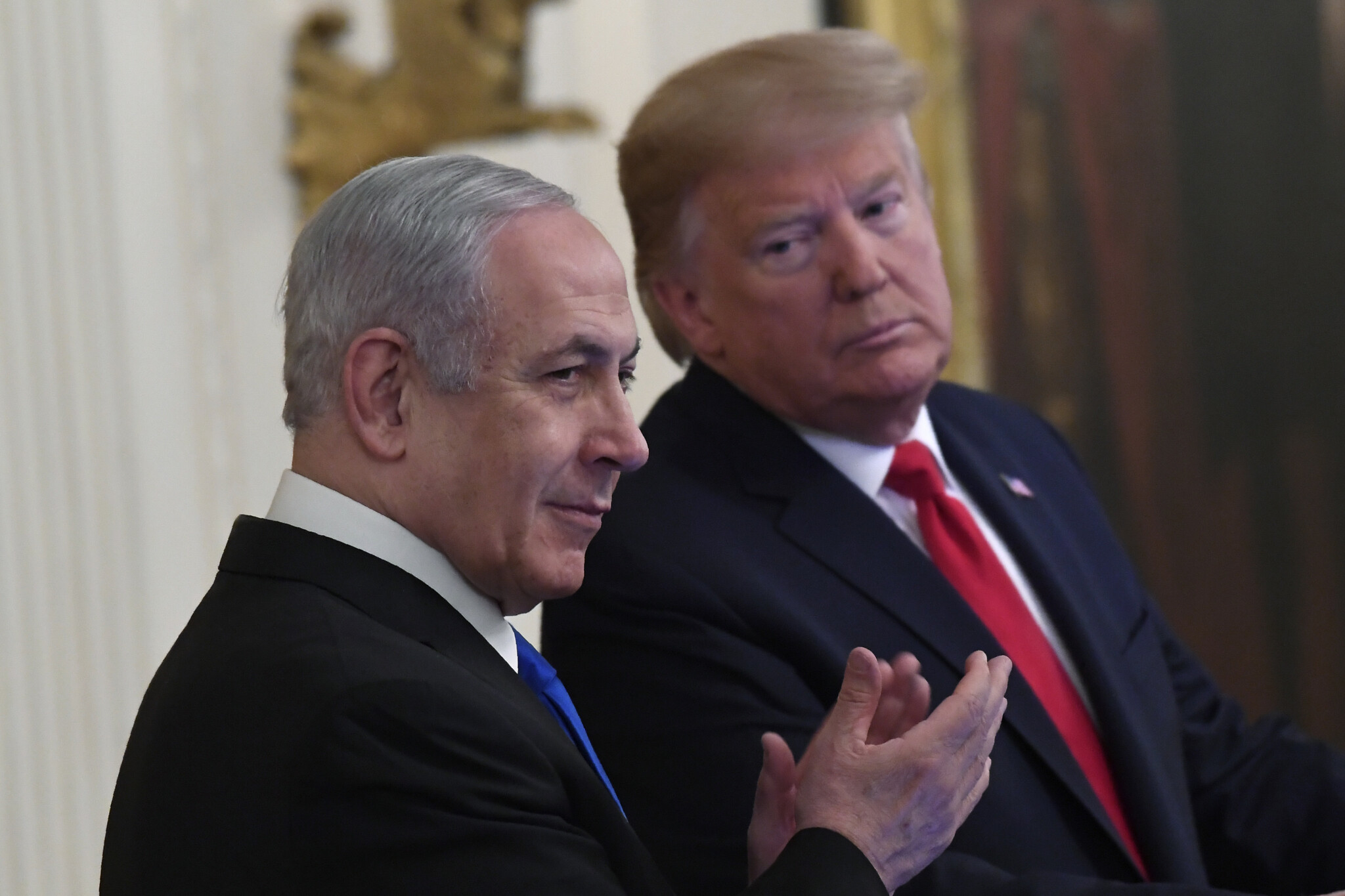
Israeli Prime Minister Benjamin Netanyahu has frequently invoked Cohen’s legacy, referring to him as a “national hero whose courage and sacrifice shaped the destiny of our country.” Mossad chiefs, too, have described the mission to recover his remains as a moral imperative that transcends time.
A senior Israeli intelligence official told i24 News on Sunday night that while the reports of an imminent return could not yet be verified, “any credible movement on the Cohen file is treated with utmost seriousness.” The official added: “For the intelligence community, Eli Cohen is not just a legend; he represents the eternal bond between risk, duty, and love of country.”
The possible transfer of Cohen’s remains, if it materializes, would carry immense symbolic weight — both for Israel and for the region. For Israel, it would close one of the longest-standing emotional chapters in its national security history. For Syria, it could signal a willingness to engage, however tentatively, in confidence-building gestures toward the West and perhaps toward eventual normalization with Israel under international mediation.
As the i24 News report emphasized, the timing of such a move could be significant. The Middle East is witnessing an unusual thaw in regional hostilities — with ceasefires, prisoner exchanges, and diplomatic overtures redefining once-immutable divisions. Within that climate, the return of a long-dead spy may serve not only as an act of closure but as a metaphor for a region slowly exhuming its own buried conflicts.
Nearly six decades after his death, Eli Cohen remains a defining figure in Israel’s collective consciousness — the ultimate embodiment of personal sacrifice and clandestine heroism. Streets, schools, and intelligence training centers bear his name; his life has inspired books, films, and, most recently, a globally streamed television series.
As one Israeli commentator told i24 News, “For us, Cohen was not just a spy — he was the conscience of an entire generation that believed in the survival of the state above all else. To bring him home, even now, would be to bring back a piece of Israel’s soul.”
Whether the reports prove accurate or not, the very suggestion that Damascus might release Cohen’s remains after six decades speaks to the enduring power of his legend — and to the delicate balance of memory, morality, and politics that continues to shape the modern Middle East.
As the i24 News report observed, “Eli Cohen’s story has never truly ended — it merely waits, suspended between history and redemption.”



