































By: Noam Tchotchke
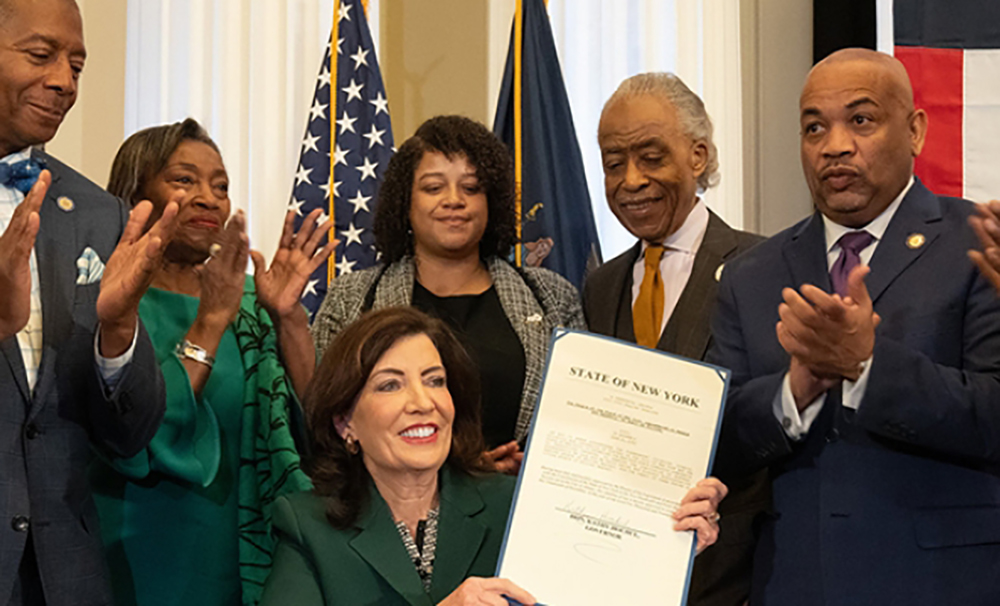
A New York state reparations commission hearing drew intense attention after some participants called for direct cash payments that could reach up to $800,000 per eligible person, according to the NY Post. The hearing is part of an ongoing state process examining potential reparations policies tied to the historical legacy of slavery and long-term discrimination against Black New Yorkers.
The commission was created by New York lawmakers to study the lasting effects of slavery and systemic discrimination and to evaluate possible remedies. Those options, as outlined in the process, could include financial compensation, housing assistance, education funding, and other forms of restitution. The NY Post reported that the commission has been holding public hearings to gather testimony from residents, advocacy groups, and experts before issuing formal recommendations to state lawmakers in Albany.
During the hearing, several speakers supported the idea of direct payments as a form of restitution. According to the NY Post, some participants proposed that eligible individuals could receive substantial cash payouts, with figures discussed reaching as high as $800,000 per person. Supporters argued that the scale of historical economic harm and persistent racial wealth gaps requires large-scale remedies rather than symbolic policy measures.
The NY Post reported that other participants focused more broadly on structural inequality, pointing to disparities in housing, education, employment, and wealth accumulation that they said stem from generations of discrimination. These speakers argued that reparations should be designed to address measurable economic gaps and provide tangible support to affected communities.
The discussion of large direct payments immediately sparked controversy. Critics raised concerns about the potential cost to taxpayers and the feasibility of implementing such a program. According to the NY Post, opponents argued that if payments of this size were applied broadly, the total cost could reach tens of billions of dollars, depending on eligibility rules and the number of people included in any final plan.
Questions about eligibility were also raised. Critics cited by the NY Post asked how the state would determine who qualifies for reparations, including whether eligibility would be limited to descendants of enslaved people, what documentation would be required, and whether residency or other factors would play a role in determining qualification.
Additional concerns focused on implementation. Opponents questioned whether the state would need to create a new administrative system to verify claims, process applications, and distribute payments. The NY Post reported that some critics warned such a system could become complex and costly, adding further strain on state resources.
Supporters at the hearing countered that administrative challenges should not overshadow what they view as the moral and historical justification for reparations. They argued that the economic impact of slavery and discrimination has accumulated over generations and continues to shape disparities in wealth and opportunity today.



