






















|
Getting your Trinity Audio player ready...
|
By: Jerome Brookshire
A leading Democratic contender in New Jersey’s closely watched 12th Congressional District race is confronting mounting scrutiny after revelations surfaced regarding his volunteer work in Bosnia during the 1990s with a charity later identified by federal investigators as a front organization for al-Qaeda operations.
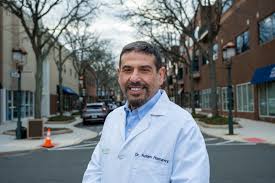
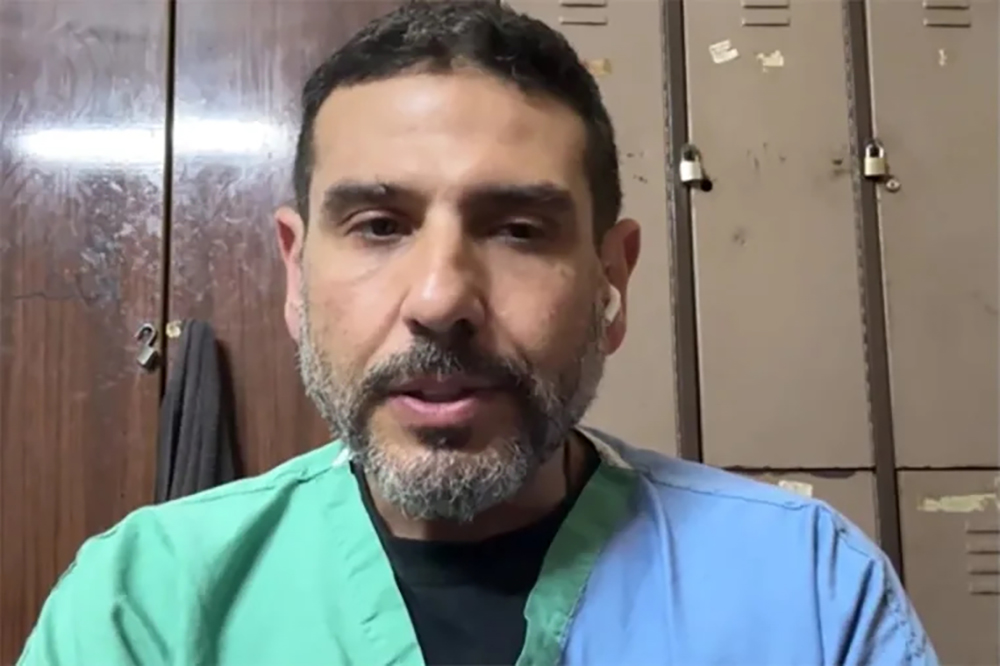
The controversy surrounding Adam Hamawy, an Egyptian-born former Army combat surgeon and Iraq War veteran, has rapidly evolved into one of the most politically combustible issues in the race to succeed retiring Democratic Rep. Bonnie Watson Coleman, as opponents and critics revisit decades-old associations involving extremist figures and organizations later implicated in international terrorism investigations.
Leading N.J. Dem Congressional candidate Adam Hamawy volunteered with Al-Qaida-tied group in Bosnia.
After traveling with the ‘Blind Sheikh,’ Hamawy worked with Benevolence International Foundation, later shuttered as an Al-Qaida front https://t.co/yLWTxO7Aig
— Matthew Levitt (@Levitt_Matt) May 27, 2026
According to a report on Wednesday in The New York Post, Hamawy previously volunteered with the now-defunct Benevolence International Foundation, a Chicago-based nonprofit whose offices in Bosnia were raided by authorities in 2002 after investigators concluded the organization functioned as part of an extensive logistical and financial support network tied to Osama bin Laden and al-Qaeda.
Hamawy, who has emerged as one of the leading candidates in the crowded Democratic primary ahead of next month’s election, has vehemently denied any wrongdoing and insists his involvement was strictly humanitarian in nature during the height of the Bosnian conflict.
The revelations have nevertheless reignited scrutiny regarding Hamawy’s past associations, particularly his documented interactions during the early 1990s with Sheikh Omar Abdel-Rahman, the notorious Islamist cleric widely known as “The Blind Sheikh,” who was later convicted for conspiring to wage terrorism against the United States.
The New York Post reported that Hamawy had openly discussed his Bosnia volunteer work years before entering politics.
In a 1996 interview with the Newark Star-Ledger, Hamawy described his experience assisting medical relief operations in war-ravaged Bosnia during 1994.
“I worked in Sarajevo for 10 days and then the rest in Zenica, a large regional center in central Bosnia,” Hamawy told the newspaper.
“We went out to hospitals around the area and in the mountains to check what supplies they needed and we tried to deliver them,” he explained.
At the time, the Bosnian war had drawn international humanitarian workers, foreign volunteers, journalists, and relief organizations from across the globe amid horrific violence and ethnic cleansing campaigns that shocked the international community.
However, years later, federal investigations into Islamist terror financing uncovered what the 9/11 Commission Report described as an “impressive array of offices” covertly supporting extremist operations under the guise of charitable work.
The New York Post report noted that the 9/11 Commission specifically referenced Benevolence International Foundation’s operations in Bosnia as part of a broader support infrastructure relied upon by Osama bin Laden during the 1990s.
Federal agents conducting raids on the organization’s Bosnian offices reportedly discovered weapons, letters from al-Qaeda leaders, operational documents connected to terrorist activities, and photographs of bin Laden himself.
Authorities alleged that the foundation had functioned as a strategic front organization used “to establish a base for operations in Europe against al Qaeda’s true enemy, the United States.”
Importantly, The New York Post report emphasized that Hamawy himself has never been charged with any crime, nor accused by authorities of participating in terrorism or knowingly supporting extremist activities.
The controversy instead centers on whether his association with the organization — combined with his historical relationship with Abdel-Rahman — raises broader questions regarding judgment, political associations, and ideological proximity during a turbulent period in Islamist political movements.
The initial reporting regarding Hamawy’s Bosnia volunteer work was first uncovered by Jewish Insider before drawing broader national attention through The New York Post and other media outlets.
Hamawy’s campaign swiftly denounced the scrutiny as politically motivated character assassination.
“It must be the final days of the election, because the attacks are getting more desperate than ever,” a spokesperson for Hamawy told The New York Post.
The spokesperson forcefully defended Hamawy’s record of military service and humanitarian work.
“Dr. Adam Hamawy, as a young medical student and member of the U.S. military, volunteered to provide medical assistance to victims of the Bosnian genocide, per the suggestion the Bosnian mission made to him on how to help via a United Nations-approved route,” the statement declared.
The campaign further condemned any insinuation linking Hamawy to terrorism as deeply offensive given his subsequent military service and contributions to the United States.
“The idea that this absurd claim could be seriously entertained about the work of a veteran who served our country for twenty years, was awarded the Global War on Terrorism medal for his service in Iraq, and climbed the rubble at Ground Zero searching for survivors on 9/11 would be laughable if it weren’t so gross and bigoted,” the spokesperson added.
Hamawy’s military credentials are indeed substantial.
A decorated combat surgeon, he gained national recognition after helping save the life of Sen. Tammy Duckworth during the Iraq War after the helicopter carrying her was shot down.
Duckworth has publicly credited Hamawy’s emergency medical intervention with preserving her life following catastrophic battlefield injuries.
Hamawy also became widely known for humanitarian missions conducted in Gaza, where he volunteered medical services amid wartime conditions.
According to The New York Post report, one such mission temporarily stranded Hamawy and his medical team after the Rafah border crossing closed during regional instability.
Yet despite those accomplishments, questions surrounding Hamawy’s earlier associations have persisted throughout the congressional campaign.
Much of the scrutiny has centered on his historical relationship with Sheikh Omar Abdel-Rahman.
Abdel-Rahman rose to notoriety in the United States during the early 1990s after authorities linked him to extremist conspiracies connected to the 1993 World Trade Center bombing and other planned attacks in New York City.
Ultimately convicted for advocating what prosecutors described as a “war of urban terrorism” against the United States, Abdel-Rahman became one of the most infamous Islamist figures ever imprisoned in America.
The New York Post reported that Hamawy first met Abdel-Rahman in 1991 while attending medical school.
Court transcripts later revealed that Hamawy accompanied the cleric on a 13-hour road trip to Detroit for a conference focused on issues involving the Muslim economy.
During that conference, according to testimony referenced in court records, Abdel-Rahman spoke about “conquering the land of the infidels.”
Hamawy acknowledged hearing the remarks but argued that prosecutors later removed the comments from their broader context.
According to the transcript cited by The New York Post, Hamawy contended that the prosecution was “kind of taking it out of context.”
Hamawy also reportedly served as a translator for Abdel-Rahman at various points during that period.
Later, during Abdel-Rahman’s terrorism trial, Hamawy was called by the defense to challenge accusations from a government informant who alleged that “The Blind Sheikh” had advocated murdering Egyptian President Hosni Mubarak.
Those revelations have become particularly politically sensitive given Hamawy’s emergence as a progressive Democratic candidate endorsed by several prominent figures associated with the party’s left wing.
The New York Post reported that Hamawy has received endorsements from a number of high-profile progressive lawmakers, including Reps. Alexandria Ocasio-Cortez, Ilhan Omar, Rashida Tlaib, and Ro Khanna, along with Sen. Bernie Sanders.
Those endorsements have elevated Hamawy’s national profile while simultaneously intensifying scrutiny from critics who argue the Democratic Party has become increasingly tolerant of controversial associations involving radical Islamist rhetoric or anti-Israel activism.
Supporters of Hamawy counter that such accusations represent unfair smears directed at a Muslim-American candidate with an extensive record of military service and humanitarian sacrifice.
Indeed, Hamawy’s life story embodies a remarkable personal trajectory.
Born in Egypt, he immigrated to the United States, pursued medical training, served honorably in the U.S. Army, participated in combat operations during the Iraq War, assisted rescue efforts after the September 11 attacks, and built a reputation as a trauma surgeon and humanitarian physician.
Many supporters view the current controversy as a politically motivated effort to distort isolated historical interactions from decades ago while ignoring Hamawy’s subsequent record of service to the United States.
Nevertheless, the revelations arrive at a politically perilous moment in the campaign.
The Democratic primary in New Jersey’s 12th District has become increasingly competitive as candidates vie to inherit one of the state’s safest Democratic congressional seats.
With voting rapidly approaching, opponents appear determined to elevate concerns regarding Hamawy’s past associations into a defining campaign issue.
The controversy also reflects broader anxieties within American politics concerning the lingering aftershocks of the post-9/11 era, the legacy of Islamist extremism, and the political sensitivities surrounding Muslim-American public figures.
For some voters, Hamawy’s volunteer work in Bosnia during the 1990s may appear entirely plausible within the chaotic humanitarian environment of the time, particularly given that many charitable organizations operating in conflict zones later proved compromised by extremist infiltration without the knowledge of rank-and-file volunteers.
Others, however, may view the cumulative pattern of associations — involving both Benevolence International Foundation and Abdel-Rahman — as troubling regardless of intent or legality.
The New York Post’s reporting has now thrust those questions squarely into the center of one of New Jersey’s most consequential congressional contests.
As election day approaches, the political consequences remain uncertain.
What is already clear, however, is that Hamawy’s past — once largely obscure outside legal transcripts and archival newspaper interviews — has suddenly become one of the most fiercely debated issues shaping the future of New Jersey’s 12th Congressional District and perhaps the broader national conversation surrounding extremism, political vetting, and public trust.



